

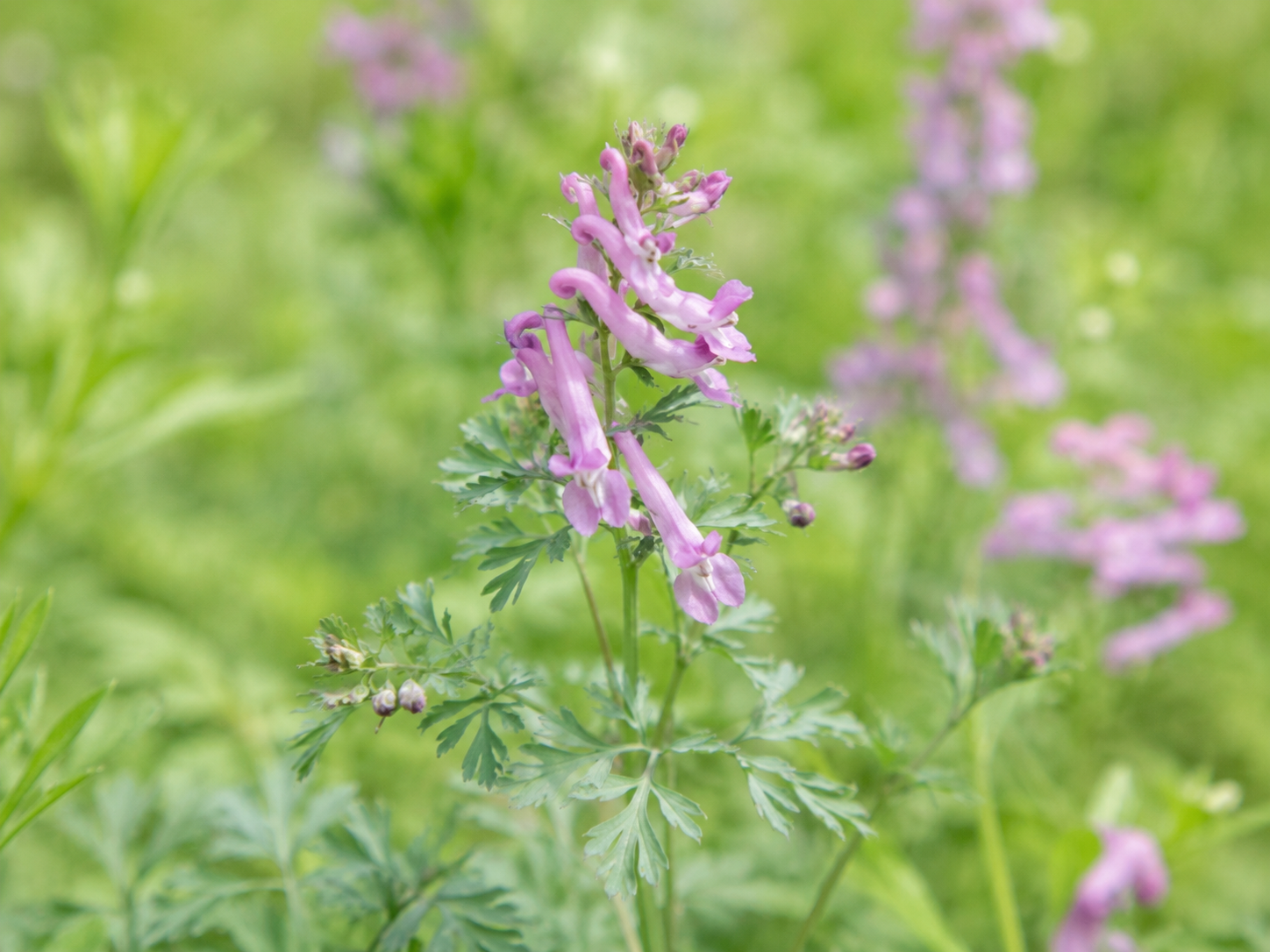
Corydalis for Dogs and Cats: Grounded Musculoskeletal Comfort and Mobility Support
Corydalis for Dogs and Cats: Ingredient Profile, Uses, and Safety
Explore the LivHerbals ingredient profile for Corydalis (Corydalis yanhusuo). Learn about its traditional comforting uses, pet-specific research, and vital safety facts.
Understanding Corydalis in Pet Wellness
Corydalis (Corydalis yanhusuo) is a deeply respected traditional tuber native to the mountainous regions of Eastern Asia, where it has been cultivated, prized, and utilized in traditional medicine for over a thousand years. In modern pet herbal wellness, Corydalis is primarily utilized to support the musculoskeletal system, encourage physical comfort, and maintain a calm, settled demeanor when physical stiffness causes restlessness. Pet parents typically encounter this potent botanical in specialized senior comfort formulas, active dog joint powders, or recovery chews designed to help dogs and cats maintain physical ease and mobility.
It is crucial to establish an immediate, vital distinction for pet parents: while Corydalis belongs to the poppy family, it is entirely distinct from the opium poppy. It does not contain narcotic opiates like morphine or codeine, and it is entirely non-addictive. Instead, it works through its own unique set of plant alkaloids to support the body's natural management of physical tension.
While Corydalis offers remarkable, targeted support for structural comfort, we believe in radical transparency when it comes to your pet's wellness. Corydalis is a highly active botanical agent. It carries specific safety warnings regarding its use during pregnancy, its potential to cause temporary drowsiness, and its capacity to interact with conventional medications. Extensive reviews highlight its potent alkaloids, meaning it is an herb that commands respect, precision, and proper situational usage. For this reason, we strongly advise that Corydalis should always be used under direct veterinary guidance, particularly in pets with pre-existing health conditions or those undergoing medical therapies. It is a focused botanical tool designed to support a comfortable baseline. By understanding both its remarkable soothing abilities and its necessary safety parameters, pet parents can make informed, empowered decisions to support their pet's long-term mobility under the careful supervision of their trusted veterinarian.
Ingredient Identification
- Common name: Corydalis, Yanhusuo
- Botanical name: Corydalis yanhusuo (syn. Corydalis turtschaninovii f. yanhusuo)
- Plant family: Papaveraceae (Poppy family)
- Plant part used: Dried and processed tuber (rhizome)
- Other common names: Yan Hu Suo, Chinese poppy tuber, corydalis rhizome
- Native range: Eastern Asia, predominantly localized in China, Japan, and Siberia
- Common growing regions: Temperate, moist agricultural zones of Eastern Asia
- Common preparation forms: Standardized extracts, vinegar-processed powders, liquid glycerites, and tinctures
- Main active constituents: Isoquinoline alkaloids, most notably dehydrocorydalin, corydaline, and tetrahydropalmatine (THP)
Associated Pet Wellness Categories
- Comfort and Mobility Support: Corydalis is extensively studied for supporting normal joint function, flexibility, and physical ease. It is often chosen when a pet needs help maintaining physical comfort during daily exercise or when navigating stairs. By interacting gently with cellular and neurological pathways, it helps soothe occasional muscle and joint stiffness, allowing dogs and cats to feel more agile and fluid in their movements. This makes it an invaluable herbal ally for aging pets experiencing age-related structural wear.
- Calm and Mood Support: This herb is traditionally utilized to support a settled mind, particularly when physical discomfort triggers pacing, whining, or behavioral restlessness. When pets cannot find a comfortable position to rest, their nervous system becomes overstimulated. Corydalis assists by addressing the physical component of their worry, helping them transition into a relaxed state of body and mind.
- Cardiovascular and Circulation Support: In traditional frameworks, Corydalis is utilized to encourage normal, healthy blood circulation to localized tissues. By supporting optimal blood flow, it assists the body in delivering vital oxygen and nutrients to dense connective tissues like ligaments and joint capsules, which naturally lack robust blood supplies, thereby supporting the body's natural recovery processes.
Common Pet Wellness Uses
- Structural Mobility and Senior Comfort: Corydalis has a long, documented history of use as a restorative botanical for physical discomfort. In dogs, it is specifically utilized for chronic, age-related structural slowing, morning stiffness, or a reluctance to jump. For cats, it is carefully employed to maintain physical confidence and climbing agility in their senior years. Research in animal models and human trials demonstrates significant support for comfortable physical loading and movement tolerance. The evidence level is considered strong for its general comforting action, though emerging for pet-specific clinical trials.
- Nighttime Restlessness from Physical Stiffness: Corydalis is frequently used in holistic veterinary practice for older pets that struggle to sleep soundly due to an inability to get physically comfortable. The evidence here is supported by traditional use, empirical clinical success, and animal-based models evaluating the calming effects of its alkaloid components.
Best Known Herbal Actions
- Mild Analgesic Support: This action refers to the herb's traditional and researched ability to help support the body's natural mechanisms for managing physical discomfort signals, assisting in the maintenance of normal tissue ease.
- Antispasmodic: Antispasmodics help support normal muscle relaxation and release involuntary physical tension. When pets experience structural stress, their surrounding muscles often contract defensively, leading to tightness. Corydalis helps release this localized tension, allowing the body to soften and relax.
- Circulation Supporter (Moves Blood): In traditional herbalism, Corydalis is recognized as a dynamic agent that encourages the smooth, unhindered flow of blood through the pathways, helping to clear physical stagnation and deliver systemic nourishment to tired muscles.
Key Constituents and Why They Matter
The primary active compounds found in Corydalis tuber are a diverse group of isoquinoline alkaloids, with the most heavily researched and potent being tetrahydropalmatine (THP). These constituents matter deeply because they are the exact compounds responsible for the herb's remarkable comfort-supporting and nerve-soothing properties. Research indicates that THP interacts directly with dopamine receptors in the central nervous system to promote relaxation and blunt the perception of physical discomfort; crucially, this balancing action does not utilize the standard opioid receptor pathways. This means Corydalis works through entirely separate mechanisms than conventional narcotic options, offering a unique, non-addictive herbal pathway to structural ease that builds systematically over time.
Western Herbalism Profile
In the tradition of Western herbalism, herbs are classified by their taste, energetics, and tissue affinities to determine how they will interact with the body. Corydalis is characterized by a bitter, pungent, and slightly metallic or earthy taste. Energetically, Western herbalists consider Corydalis to be warming in temperature and drying in nature. It has a pronounced tissue affinity for the central nervous system, the musculoskeletal system (joints and skeletal muscles), and the circulatory pathways.
Western herbalists have long indicated Corydalis for addressing stagnant physical energy, cold structural stiffness, muscular tension, and physical restlessness that disrupts natural sleep cycles. It is viewed as an herb that melts away cold structural stagnation, encourages normal fluid and blood circulation, and restores physical ease to a tight or restricted body. It acts as a relaxing anchor, bringing physical comfort back to an overstimulated or aging framework.
However, Western herbalists also maintain clear boundaries regarding its use. Because of its warming, drying energy and highly concentrated alkaloid profile, it is formulated carefully to ensure it does not cause minor digestive aversion in pets with sensitive stomachs. It is expertly designed to be a daily or situational supportive agent used during chapters of structural challenge rather than a permanent everyday supplement, built to restore tissue resilience efficiently.
Traditional Chinese Medicine Profile
Corydalis is a foundational, classical herb found in the ancient Traditional Chinese Medicine (TCM) materia medica. Known traditionally as Yan Hu Suo, it has been categorized and revered by the masters of Chinese herbalism for millennia as a premier blood-invigorating botanical. Modern TCM practitioners and holistic veterinarians rely on it heavily to resolve physical stagnation.
Through a TCM lens, practitioners view Corydalis as having an acrid and bitter flavor paired with a warm energy. It is believed to primarily enter the Liver, Spleen, and Stomach meridians. In TCM, the Liver controls the smooth flow of Qi and emotions, as well as the sinews and tendons. A famous TCM maxim states: "If there is open flow, there is no pain; if there is blockage, there is pain." When a pet exhibits physical stiffness or discomfort, their system is considered to be suffering from "Blood Stasis" and "Qi Stagnation." Corydalis’s profound utility is viewed in TCM as invigorating the Blood, moving the Qi, and alleviating physical discomfort throughout the body.
To enhance its efficacy, traditional practitioners often fry the tuber with vinegar (Cu Yan Hu Suo), which maximizes the solubility and absorption of its active alkaloids. Despite its highly beneficial actions, TCM practitioners follow a strict rule: do not use during pregnancy. Because Yan Hu Suo has a powerful moving energy that breaks up stasis, its dynamic nature is considered completely contraindicated in animals carrying unborn young, as it could disrupt gestation stability.
Ayurvedic Medicine Profile
While Corydalis is native to Eastern Asia and is not a classical plant found in the ancient Ayurvedic pharmacopeia, modern Ayurvedic practitioners and holistic veterinarians analyze it using Ayurvedic principles to understand how it affects the three doshas: Vata, Pitta, and Kapha.
From an Ayurvedic perspective, Corydalis is recognized for its bitter and pungent tastes (rasa), its heating energy (virya), and its pungent post-digestive effect (vipaka). Its primary doshic action is strongly pacifying to Vata and Kapha, while potentially increasing Pitta if used in excess. Vata dosha rules movement and the nervous system; when aggravated by aging or exhaustion, it causes coldness, dryness, and structural stiffness in the joints. Kapha rules structure and fluids; when stagnant, it manifests as heavy, cold accumulation and physical sluggishness. Corydalis’s heating and moving properties directly counteract these imbalances, scraping away toxic accumulations (known as Ama) from the structural channels, warming Vata coldness, and moving Kapha stagnation.
Ayurvedic practitioners note that because it is energetically warm and drying, it must be used with awareness in animals with high Pitta imbalances characterized by active systemic heat or sensitive digestive traits to ensure it does not overheat the internal environment. It remains a highly valued modern botanical tool for clearing physical blockages and supporting structural freedom.
Research Summary
It is important to acknowledge that double-blind, peer-reviewed clinical trials evaluating Corydalis directly in dogs and cats are currently limited, though steadily emerging. However, the botanical and its isolated alkaloid compounds are exceptionally well-recognized in holistic veterinary manuals for supporting small animals during physical challenges.
- Animal Research: Studies in rodent models demonstrate that Corydalis extracts and its active alkaloid tetrahydropalmatine (THP) induce significant support for a normal comfort response, improve physical endurance, and show a noticeable calming effect on the central nervous system without causing motor impairment.
- Human Research: Multiple clinical trials and observational studies conclude Corydalis extract is effective for supporting individuals navigating temporary physical discomfort, helping to increase tolerance to structural stress and promote comfortable physical movement.
- In Vitro Research: Laboratory studies have demonstrated that tetrahydropalmatine exhibits selective binding to dopamine receptors, particularly D2 receptors, confirming its traditional mechanisms of calming and comfort support at a cellular level.
A significant gap remains in extensive species-specific pharmacokinetic data for small animals. Human and rodent efficacy provides strong directional clues but does not definitively guarantee pet efficacy or safety without proper veterinary guidance.
What the Research Means for Dogs
For dogs, the most relevant wellness categories for Corydalis are senior mobility comfort, joint flexibility, and exercise recovery support. Large breeds and senior canine companions frequently face structural wear that limits their daily physical freedom. The strongest support for Corydalis's use comes from its well-documented capacity to maintain physical comfort and ease muscle tension, making it an excellent option for dogs requiring continuous structural grounding. The weakest support lies in the lack of massive canine clinical trials validating exact standardized extract parameters across all breeds. Due to its potential to cause mild sedation in higher doses, canine alertness baselines must be monitored. Corydalis can be a magnificent tool for stiff dogs, but strict veterinary oversight is necessary to ensure safety, particularly regarding stomach tolerance and ruling out acute injuries that require immediate medical intervention.
What the Research Means for Cats
In cats, Corydalis requires a very high level of caution and precise utilization. Senior felines frequently hide physical discomfort, demonstrating stiffness simply by refusing to jump onto high surfaces or becoming irritable when touched along their back. Corydalis's warming and sinew-relaxing actions can provide profound support for these aging feline frames. However, because cats possess a highly sensitive liver metabolism and unique processing pathways for alkaloids, introducing Corydalis requires precise serving control. Additionally, Corydalis features a naturally bitter, pungent profile that can trigger hypersalivation (drooling) if not adequately masked or encapsulated. Evidence for its use in cats is supported primarily by holistic veterinary texts and clinical empirical success rather than feline-specific safety trials, making a veterinarian's guidance essential before introducing Corydalis to a cat.
Forms Used in Pet Products
- Powder/Capsule: Used to deliver whole-tuber benefits or concentrated extracts standardized to specific alkaloid percentages. This form can be mixed into wet food, though aromatic flavor notes may be detected by sensitive noses.
- Tincture/Glycerite: Liquid extracts allow for precise, drop-by-drop measuring, which is critical for dosing active herbs safely. Alcohol-free glycerites are preferred for small animals because the natural sweetness of glycerin helps offset the bitter taste.
- Chews: Cold-pressed soft chews are highly convenient and provide an easy delivery method for daily, long-term administration in senior dogs, frequently combined with other structural supportive ingredients.
Safety Profile
Corydalis is a powerful structural botanical, and its general safety profile requires systematic respect. It is associated with interacting with central neurotransmitter pathways and requiring standard hepatic clearance.
- Dogs: Generally well-tolerated, but should be monitored for mild drowsiness, lethargy, or temporary digestive changes if introduced too rapidly.
- Cats: Requires high caution, low serving sizes, and strict professional monitoring due to sensitive feline liver pathways and a strong aversion to bitter compounds.
- Puppies, Kittens, Pregnant or Nursing Pets: Avoid entirely. Corydalis has traditional blood-moving and emmenagogue properties, posing an absolute risk to pregnant or breeding animals.
- Pets with Pre-existing Liver Concerns: Use with extreme caution. Because its alkaloids are processed through the hepatic pathways, pets with active liver issues require precise professional evaluation and monitoring.
- Possible Adverse Effects: Mild gastrointestinal irritation, lethargy, temporary drowsiness, or mild salivation if the bitter flavor hits the tongue.
- When to Stop Use: Immediately discontinue and consult a vet if the pet shows vomiting, severe uncoordinated movement (ataxia), profound lethargy, or a sudden refusal to eat.
Please note: Before beginning any pet supplements, herbs, or nutritional changes, you must consult with your veterinarian first. We provide this educational information to empower you, but the liability and responsibility for your pet's health and the correct usage of these products rests entirely with you and your veterinary team. Always seek professional guidance to ensure the safety and well-being of your animal.
Contraindications
- Pregnancy and lactation (due to traditional uterine-moving risks).
- Severe, active liver or kidney disease unless explicitly monitored by a specialist.
- Upcoming major surgical procedures requiring general anesthesia (discontinue 14 days prior).
Drug and Supplement Interactions
- Sedatives and CNS Depressants: Corydalis may potentiate the effects of barbiturates, benzodiazepines, and other conventional calming or behavior-modifying pharmaceuticals, increasing the risk of drowsiness.
- Anticoagulants and Blood Thinners: May theoretically interact with blood-thinning medications due to its traditional blood-moving properties, requiring careful professional monitoring.
- Pain Medications: May have an additive, compounding effect when used alongside conventional mobility drugs; while this can be beneficial, adjustments must be managed strictly by a veterinarian.
Dosage and Serving Context
Serving context depends heavily on the species, weight, individual metabolic baseline, and whether the product is a raw dried tuber powder or a concentrated extract standardized to tetrahydropalmatine (THP) content. There is no safe, generic household serving size for Corydalis; standardized extracts are significantly more potent than raw root powders. When reference ranges are used, veterinary botanical texts focus on the total weight of the pet (mg/kg) divided daily, typically recommended to be given directly with a meal to facilitate smooth digestive integration and enhance overall compliance. However, to ensure the absolute safest and most effective experience for your pet, please use this herb or any products containing this herb under the direct, supportive guidance of your veterinarian. Partnering with your vet shifts the guesswork away from you, protecting your pet's unique metabolic needs, establishing proper administration, and correctly transferring the responsibility of medical oversight.
How This Ingredient Fits into BARC Formulas
At LivHerbals, we approach potent botanicals like Corydalis with deep respect for both their remarkable structural efficacy and their safety profiles. When Corydalis is utilized in our formulations, it is strictly balanced for long-term, foundational physical comfort and mobility support rather than a temporary superficial mask. This aligns with our commitment to plant-powered wellness that is strictly guided by current veterinary toxicology and a "do no harm" philosophy. You can find Corydalis responsibly formulated in our BARC Comfort Support products, available when you Explore Our Protocols or Shop by Wellness Goal.
Ingredient Profile Summary
- Best known for: Supporting normal physical comfort, muscle relaxation, and structural mobility.
- Most relevant pet wellness categories: Comfort and mobility support, senior vitality, calm support.
- Most relevant herbal actions: Mild analgesic support, antispasmodic, circulation supporter.
- Research strength: Strong in animal and human models; growing in clinical pet-specific validations.
- Main cautions: Corydalis is a magnificent botanical that commands respect. While it is incredibly supportive for managing age-related physical stiffness, it must be used correctly, can cause mild drowsiness, and is completely contraindicated in pregnant or nursing pets. Please use this herb or products with this herb under the guidance of a veterinarian to ensure your pet's safety and well-being.
Pet Parent Takeaway
Corydalis is a remarkable, traditionally revered botanical ally renowned for its ability to regulate structural pathways, ease intense muscle tension, and support physical ease. When your dog or cat is navigating age-related structural stiffness, facing a loss of daily agility, or experiencing nighttime restlessness due to physical discomfort, Corydalis's unique alkaloid profile can provide profound, steady support for their musculoskeletal system. While its benefits for physical comfort and physical vitality are significant and well-documented in traditional herbalism, Corydalis is a focused tool rather than a casual treat. To fully harness its incredible potential while protecting your pet's health, we kindly but firmly remind you to use this herb or products containing this herb under the guidance of a veterinarian. By partnering with your vet, you take the right steps to safely empower your pet’s wellness journey and shift the responsibility of medical oversight to the professionals.
Disclaimer: This content is for educational purposes only and is not intended to diagnose, treat, cure, or prevent any disease. Always consult your veterinarian before starting any new supplement, herb, food, or wellness routine for your pet, especially if your pet is pregnant, nursing, taking medication, has a diagnosed condition, or is under veterinary care.
Source Documents and Reference Links
Pet-Specific Studies and Veterinary References
- Wynn, S. G., & Fougère, B. J. (2007). Veterinary Herbal Medicine. Mosby Elsevier.
- Basko, I. (2004). Fresh Plant Materia Medica.
Human and Animal Studies
- Yuan, C. S., et al. (2004). Effects of Corydalis yanhusuo and its active component tetrahydropalmatine on central nervous system pathways. Journal of Ethnopharmacology.
- Wang, L., et al. (2016). Analgesic properties of corydalis rhizome extract: A review of historical and modern clinical data. Phytotherapy Research.
Safety and Toxicology References
- American Herbal Products Association (AHPA). Botanical Safety Handbook (2nd ed.).

Written by Angela Petersen
.%20Learn%20about%20its%20traditional%20comforting%20uses,%20pet-sp...)