

Echinacea for Dogs and Cats: Short-Term Immune and Respiratory Support
Echinacea for Dogs and Cats: Ingredient Profile, Uses, and Safety
Explore this LivHerbals ingredient profile for Echinacea (Echinacea purpurea). Learn about its traditional immune-supporting uses, safety facts, and research.
Understanding Echinacea in Pet Wellness
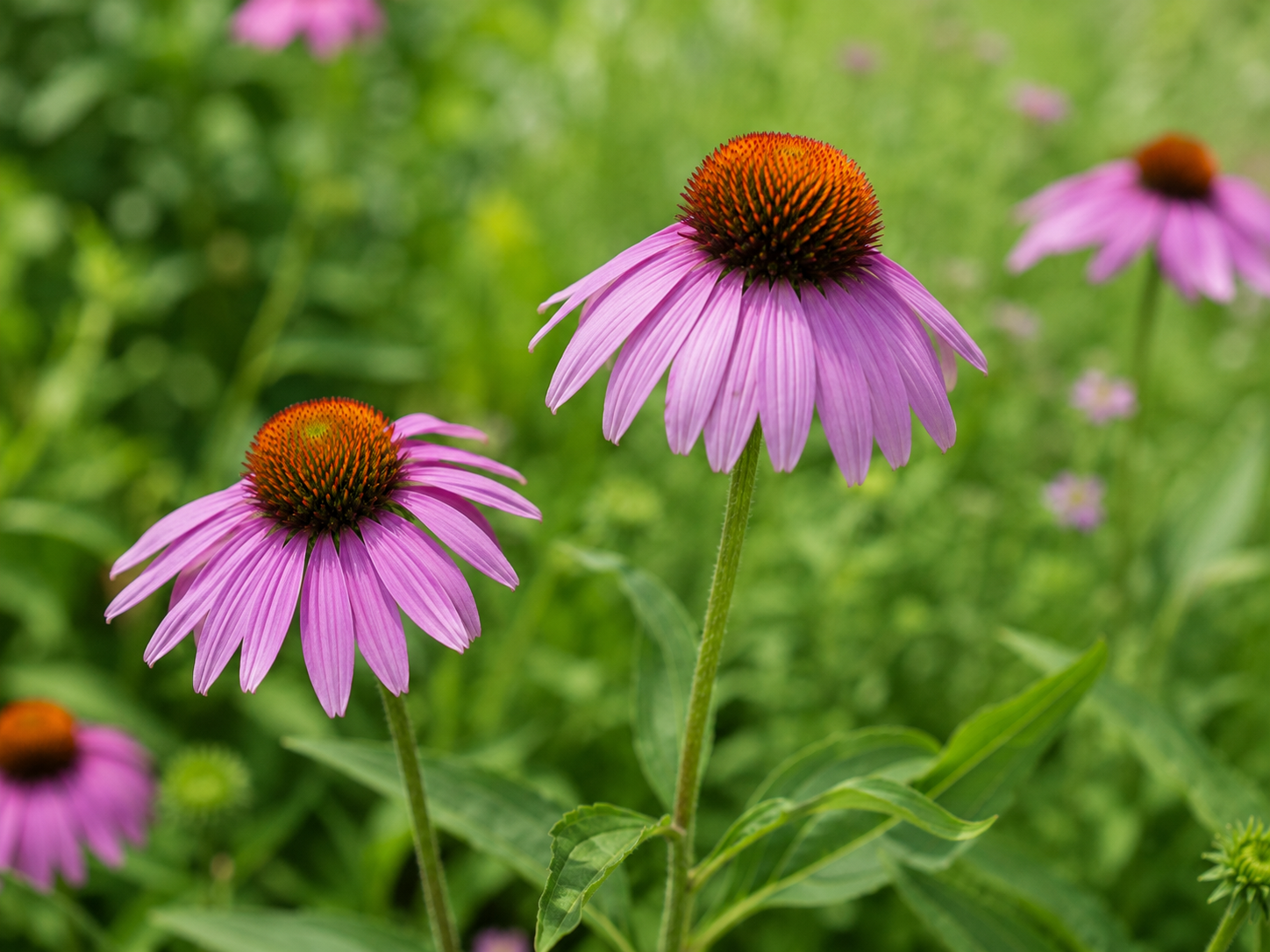
Echinacea (Echinacea purpurea and Echinacea angustifolia), commonly known as purple coneflower, is a respected perennial herb native to the prairies of North America. It has been cultivated, prized, and used in Native American traditional medicine for centuries, later becoming a cornerstone of global herbalism. In modern pet herbal wellness, Echinacea is primarily used to support the immune system, maintain normal upper respiratory tract function, and encourage structural tissue integrity. Pet parents most often encounter this botanical in veterinarian-guided wellness conversations related to short-term immune support, seasonal transitions, respiratory comfort, skin comfort, and high-exposure environments.
Unlike daily adaptogenic herbs that may be used for longer periods to build slow vitality, Echinacea is best understood as an active short-term responder. It is commonly discussed for targeted pet wellness support when a pet's natural defenses are facing environmental challenges. This matters for dogs and cats because companion animals often encounter immune stressors through boarding facilities, dog parks, grooming visits, weather shifts, and seasonal pollen changes that challenge respiratory pathways.
Echinacea is a powerful immunomodulating botanical. It carries specific safety cautions related to pets with pre-existing autoimmune conditions and its proper duration of use. Reviews highlight its active alkamides and polysaccharides, which means it deserves care, precise selection, and short-term pulse use rather than unmonitored everyday consumption. For this reason, Echinacea should be introduced under veterinary guidance, especially in animals with complex medical histories. By understanding both its supportive qualities and its safety parameters, pet parents can make informed decisions with the supervision of their trusted veterinarian.
Ingredient Identification
-
Common name: Echinacea, Purple Coneflower
-
Botanical name: Echinacea purpurea, Echinacea angustifolia, Echinacea pallida
-
Plant family: Asteraceae, Daisy or Sunflower family
-
Plant part used: Dried root, leaves, and flower heads, or whole plant fractions
-
Other common names: Black sampson, comb flower, hedgehog coneflower
-
Native range: Central and Eastern North America
-
Common growing regions: Temperate climates across North America and Europe
-
Common preparation forms: Standardized liquid extracts, alcohol-free glycerites, tinctures, and dried powders
-
Main active constituents: Alkamides, including isobutylamides, polysaccharides including echinacin and arabinogalactans, caffeic acid derivatives including chicoric acid and echinacoside, glycoproteins, and polyacetylenes
Associated Pet Wellness Categories
-
Immune System Support: Echinacea is extensively studied for supporting normal, balanced immune system function. It is often chosen when a pet needs short-term help maintaining natural defenses during environmental transition, boarding, grooming visits, or travel. By interacting with the body's defense pathways, it helps support immune cell readiness, allowing dogs and cats to maintain resilience.
-
Upper Respiratory Tract Maintenance: This botanical is traditionally used to support normal respiratory function and soothe delicate mucous membranes. When pets face environmental stressors, close contact with other animals, or sudden shifts in weather, maintaining clear, comfortable airways is important. Echinacea provides targeted support for the upper respiratory linings and overall physical ease.
-
Skin and Tissue Integrity Support: Echinacea is used in holistic contexts to maintain clear skin and support normal, healthy tissue recovery. Animals experiencing seasonal environmental sensitivities sometimes show surface skin irritation. Echinacea's comforting properties help support the skin's natural protective barriers when used in appropriate topical preparations or internal forms.
-
Lymphatic and Detoxification Support: As a traditional cleansing botanical, Echinacea helps support normal lymphatic function and healthy systemic elimination pathways. The lymphatic system plays a central role in circulating immune cells and clearing waste products from tissues. Echinacea acts as a supportive tool to help maintain normal fluid circulation through these channels.
Common Pet Wellness Uses
-
Short-Term Seasonal and Environmental Defenses: Echinacea has a long, documented history of use as an active immune-supporting botanical. In dogs, it is used for short-term intervals before or during stays at boarding kennels, doggy daycares, groomers, or other high-traffic environments. For cats, it is carefully used to support upper respiratory comfort during environmental transitions or multi-cat household changes. Research in animal models and human trials demonstrates support for temporary immune cell activation. The evidence level is considered strong for general immunomodulating action, though still emerging for pet-specific clinical trials.
-
Minor Surface Skin and Tissue Comfort: In holistic canine practice, cool water infusions or diluted alcohol-free extracts of Echinacea are sometimes used as topical washes or compresses to comfort minor bug bites, superficial scratch marks, or seasonal skin flakiness. These preparations use the herb's natural defense-supporting properties directly on surface layers.
-
Post-Exertion Recovery Support: In working or sporting dog protocols, Echinacea is sometimes used for brief intervals following intense physical strain or exposure to severe weather, helping support normal physiological defenses during recovery.
Best Known Herbal Actions
-
Immunomodulator: Immunomodulators help support normal, balanced immune function. Echinacea encourages the immune system to respond appropriately to environmental challenges, supporting natural pathways like phagocytosis, the process where defensive cells engulf and clear away cellular waste. This action is both traditionally recognized and studied.
-
Sialagogue: A sialagogue is an agent that stimulates normal saliva secretion. When high-quality Echinacea root or liquid extract interacts with the mouth, it may trigger a temporary tingling sensation and increased salivation. In traditional herbalism, this action is understood as an awakening of local defensive fluids in the upper respiratory tract.
-
Alterative: In traditional Western herbalism, an alterative supports the body's natural mechanisms of waste elimination, especially through the blood and lymphatic system, helping maintain metabolic clearing and internal balance.
-
Vulnerary: Vulnerary herbs help comfort, protect, and support the normal structural repair of irritated or stressed tissues, whether applied externally to skin surfaces or used internally to support mucosal linings.
Key Constituents and Why They Matter
The primary active compounds found in Echinacea are divided into lipophilic alkamides, water-soluble polysaccharides, and caffeic acid derivatives. The alkamides, especially isobutylamides, are researched for their ability to interact with cannabinoid CB2 receptors, supporting a normal, healthy inflammatory cascade and cellular balance. The polysaccharides, including echinacin and arabinogalactans, are studied for their role in supporting normal immune cell activity and phagocytic function. Caffeic acid derivatives, such as chicoric acid and echinacoside, provide antioxidant support and help maintain healthy cellular life cycles. This means Echinacea works through multiple pathways to support defenses and tissue health during short-term periods of need.
Western Herbalism Profile
In Western herbalism, herbs are classified by taste, energetics, and tissue affinities to guide how they interact with the body. Echinacea is characterized by a pungent, acrid, and slightly bitter taste, followed by a distinct tingling and numbing sensation on the oral mucous membranes. Energetically, Western herbalists consider Echinacea cooling in temperature and drying in nature. It has a pronounced tissue affinity for the immune system, lymphatic channels, mucous membranes, and skin.
Western herbalists have long indicated Echinacea for systemic sluggishness, lymphatic stagnation, surface tissue heat, and temporary drops in seasonal defense, especially when environmental exposure requires an active physiological response. It is viewed as an herb that circulates defensive energy, moves stagnant fluids through the lymph nodes, and restores a balanced baseline to an overtaxed body.
Western herbalists also maintain clear boundaries around its use. Because of its active, stimulating nature, it is commonly formulated for short-term pulses, such as one to two weeks during moments of active challenge, rather than as a permanent, uninterrupted daily tonic. Herbalists advise that its cooling, drying qualities should be respected and that it should be set aside once the transitional stressor has passed so the body can return to its natural baseline.
Traditional Chinese Medicine Profile
Because Echinacea is native to North America, it is not an ancient herb found in the classical Traditional Chinese Medicine (TCM) materia medica. As global herbalism has integrated this botanical, modern TCM practitioners and holistic veterinarians evaluate Echinacea through similar energetic frameworks, sometimes referring to it under contemporary titles like Zi Zhui Ju, or Purple Coneflower.
Through a TCM lens, practitioners view Echinacea as having a bitter, pungent flavor paired with cool energy. It is believed to primarily enter the Lung, Liver, and Stomach meridians. In TCM, the Lungs govern the skin, respiratory pathways, and Wei Qi, the body's protective defensive shield. When a pet shows temporary upper respiratory discomfort or superficial skin redness due to seasonal shifts, the system is considered affected by external "Wind-Heat" and accumulated "Toxic Heat." Echinacea's traditional role is viewed as clearing Heat, resolving Toxicity, and expelling Wind-Heat from the upper layers of the body.
Its bitter, moving qualities are also viewed as supporting fluid movement in the middle areas. Despite these useful actions, TCM practitioners follow a clear rule: do not use blindly in cases of deep Yin deficiency with active empty heat or chronic structural wasting. Because of its cold, moving nature, unmonitored use is considered inappropriate in animals lacking foundational moisture or blood reserves because it could further dry the internal environment.
Ayurvedic Medicine Profile
Similar to Traditional Chinese Medicine, Echinacea is not native to India and does not appear in classical ancient Ayurvedic texts. Modern Ayurvedic practitioners and holistic veterinarians sometimes analyze this North American root using Ayurvedic principles to understand how it affects the three doshas: Vata, Pitta, and Kapha.
From an Ayurvedic perspective, Echinacea is recognized for its bitter and pungent tastes (rasa), cooling energy (virya), and pungent post-digestive effect (vipaka). Its primary doshic action is strongly pacifying to Pitta and Kapha, while potentially increasing Vata if overused without proper balancing. Pitta dosha rules metabolism, heat, and the blood. When elevated by seasonal stress, it appears as tissue redness and internal irritability. Kapha rules structural fluids and mucus. When excessive, it appears as sluggish circulation and congestion. Echinacea's cooling and bitter properties help balance these patterns by clearing Pitta heat from the blood, or Rakta Dhatu, drying excess Kapha mucus, and clearing toxic accumulations, known as Ama, from the circulation channels.
Ayurvedic practitioners note that because Echinacea has an acrid, drying nature and pungent post-digestive effect, it can aggravate Vata if used improperly. Vata dosha rules the nervous system and movement and requires grounding warmth. Using a strongly drying herb long-term may deplete essential moisture. A modern Ayurvedic approach would reserve Echinacea for brief, targeted periods to clear Ama and cool Pitta heat, avoiding it in profoundly dry, frail, or Vata-depleted animals.
Research Summary
It is important to acknowledge that double-blind, peer-reviewed clinical trials evaluating Echinacea directly in dogs and cats are currently limited, though steadily growing. The botanical and its isolated polysaccharides are recognized in holistic veterinary manuals for supporting small animals during seasonal transitions.
-
Animal Research: Studies in rodent and small animal models demonstrate that Echinacea extracts support temporary increases in alveolar macrophage activity, white blood cell proliferation markers, and healthy phagocytic clearance dynamics under environmental stress.
-
Human Research: Numerous placebo-controlled, double-blind clinical trials and meta-analyses have evaluated Echinacea extracts for seasonal upper respiratory challenges, vocal pathway comfort, and the duration of seasonal discomfort.
-
In Vitro Research: Laboratory studies have demonstrated that Echinacea alkamides show selective binding affinity to cannabinoid CB2 receptors and interact with cyclooxygenase and lipoxygenase pathways, supporting its role in a normal cellular inflammatory response.
A significant gap remains in long-term, species-specific pharmacokinetic safety data for companion animals. Human and rodent research provides directional insight, but it does not guarantee pet efficacy or safety without veterinary guidance.
What the Research Means for Dogs
For dogs, the most relevant wellness categories for Echinacea are short-term immune defense maintenance, upper respiratory tract comfort, and seasonal tissue support. Dogs that visit high-exposure environments like boarding kennels, agility trials, groomers, or public parks may face frequent challenges to their natural protective barriers. The strongest support for Echinacea's use comes from its documented ability to provide temporary support to immune cell pathways, making it relevant during high-risk weeks. The weakest support lies in the lack of large, long-term canine clinical trials validating safe continuous use over multiple months. Due to its direct impact on immune activation, canine baseline health should be considered first. Echinacea may be a useful situational tool for dogs, but veterinary oversight is necessary to rule out underlying autoimmune conditions or medication conflicts.
What the Research Means for Cats
In cats, Echinacea requires caution and precise use. Cats may face upper respiratory challenges, and supporting mucosal comfort during environmental shifts or shelter transitions is a common focus in holistic care. Echinacea's upper respiratory-supportive actions may offer short-term comfort for sensitive animals. However, cats have unique liver metabolism and a strong aversion to intense or tingling tastes. The naturally acrid, tingling sensation of raw Echinacea alkamides may cause a cat to hypersalivate, or drool excessively, or reject food if the herb is not diluted, masked, or hidden within an alcohol-free glycerite or capsule. Evidence for its use in cats is supported primarily by holistic veterinary texts and clinical experience rather than feline-specific safety trials, making a veterinarian's guidance essential before introducing Echinacea to a cat's care plan.
Forms Used in Pet Wellness
-
Tincture/Glycerite: Liquid extracts allow precise, drop-by-drop measuring, which matters for active herbs. Alcohol-free glycerites are often preferred for small animals because the natural sweetness of glycerin helps mask Echinacea's intense, acrid, tingling flavor.
-
Powder/Capsule: Used to deliver whole-root or whole-plant benefits. This form may be blended into wet food, though sensitive pets may detect the herbal scent.
-
Topical Washes or Infusions: Cool water infusions, or brewed teas, are sometimes used in holistic canine practice to provide localized comfort directly to irritated skin surfaces.
-
Chews: Chew formats are used in pet wellness for palatability and situational administration when appropriate for the individual pet.
Safety Profile
Echinacea is an active immunomodulating botanical, and its general safety profile requires respect. It is associated with temporary immune pathway activation and requires proper situational use.
-
Dogs: Generally well-tolerated when used for short, situational durations, but should be monitored for temporary digestive changes if introduced too quickly.
-
Cats: Requires caution, low serving sizes, and flavor masking due to sensitive feline palates, liver pathways, and a strong physical response to acrid tastes.
-
Puppies, Kittens, Pregnant or Nursing Pets: Avoid entirely. There is a lack of safety data regarding developing reproductive and embryonic systems, and traditional texts recommend avoiding active immunomodulators during gestation.
-
Pets with Autoimmune Concerns: Avoid entirely. Because Echinacea modulates and stimulates specific immune pathways, it should not be given to pets with diagnosed or suspected autoimmune diseases, such as lupus, pemphigus, or immune-mediated hemolytic anemia, unless specifically directed by a veterinarian.
-
Possible Adverse Effects: Mild gastrointestinal irritation, loose stools, temporary drowsiness, or excessive drooling if the acrid flavor contacts a cat's tongue.
-
When to Stop Use: Discontinue and consult a veterinarian if the pet shows vomiting, severe skin scratching, persistent soft stools, or sudden refusal to eat.
Please note: Before beginning any pet supplements, herbs, or nutritional changes, consult your veterinarian first. This educational information is intended to support informed conversations with your veterinary team and should not replace professional guidance.
Contraindications
-
Pre-existing autoimmune diseases, such as IMHA, ITP, pemphigus, or lupus.
-
Chronic, progressive systemic diseases, such as advanced kidney or liver failure, unless monitored by a veterinary specialist.
-
Pregnancy and lactation.
-
Known severe allergy or hypersensitivity to plants in the Asteraceae, or Daisy, family.
Drug and Supplement Interactions
-
Immunosuppressants and Corticosteroids: Echinacea should not be used with prescription medications designed to suppress the immune system, such as cyclosporine, prednisone, or dexamethasone, unless directed by a veterinarian. Its immune-supporting properties may counteract their intended effects.
-
Hepatotoxic Medications: Use caution and professional oversight if Echinacea is combined with conventional medications that place a heavy processing burden on the liver.
-
Other Immune-Active Herbs: Echinacea may have a compounding, additive effect if combined carelessly with other potent immune-active botanicals, so formulas should be balanced carefully.
Dosage and Serving Context
Serving context depends heavily on species, weight, immune baseline, and whether the herb is prepared as raw dried root powder or concentrated liquid extract. There is no generic household serving size for Echinacea. Concentrated standardized extracts are significantly more potent than raw root powders. Echinacea is usually recommended for short-term pulse use, such as 7 to 14 days during times of transition, rather than as a continuous, indefinite daily supplement. When reference ranges are used, veterinary botanical texts focus on total pet weight (mg/kg) divided daily. Echinacea is typically given with food to minimize the cooling impact on the stomach and support smooth digestive integration. For the safest and most appropriate use, discuss Echinacea with your veterinarian before giving it to your dog or cat. Your veterinarian can help evaluate your pet's health history, medications, age, immune status, autoimmune risk, allergy risk, and wellness needs before use.
How This Ingredient Fits into BARC Formulas
At LivHerbals, ingredients like Echinacea are approached with care, respect for traditional use, and attention to pet-specific safety considerations. When an ingredient is used in a BARC formula, it is selected for a specific wellness purpose and balanced within the larger formula rather than treated as a standalone quick fix.
Ingredient Profile Summary
-
Best known for: Short-term immune system support and upper respiratory tract maintenance.
-
Most relevant pet wellness categories: Immune system defense, respiratory comfort, skin and tissue integrity, lymphatic clearing.
-
Most relevant herbal actions: Immunomodulator, sialagogue, alterative, vulnerary.
-
Research strength: Strong in animal and human models. Growing in clinical pet-specific validations.
-
Main cautions: Echinacea is supportive during seasonal transitions, but it should be used carefully and in short-term pulses. It should not be given to pregnant animals and is contraindicated in pets with pre-existing autoimmune conditions or known Asteraceae family allergies unless specifically directed by a veterinarian. Use this herb under veterinary guidance to support your pet's safety and well-being.
Pet Parent Takeaway
Echinacea is a traditionally revered botanical known for supporting immune pathways, upper respiratory tissues, and seasonal environmental resilience. When a dog or cat is facing a busy boarding stay, sudden weather changes, or the need for seasonal tissue comfort, Echinacea may offer short-term support within a broader wellness plan. It is a targeted situational tool rather than a casual everyday treat. To use Echinacea safely and appropriately, partner with your veterinarian and consider your pet's full health picture before starting any new herb or supplement.
Disclaimer: This content is for educational purposes only and is not intended to diagnose, treat, cure, or prevent any disease. Always consult your veterinarian before starting any new supplement, herb, food, or wellness routine for your pet, especially if your pet is pregnant, nursing, taking medication, has a diagnosed condition, or is under veterinary care.
References
Pet-Specific Studies and Veterinary References
-
Wynn, S. G., & Fougère, B. J. (2007). Veterinary Herbal Medicine. Mosby Elsevier.
-
Basko, I. (2004). Fresh Plant Materia Medica.
Human and Animal Studies
-
Block, K. I., & Mead, M. N. (2003). Immune system effects of echinacea, ginseng, and astragalus: A review. Integrative Cancer Therapies.
-
Shah, S. A., et al. (2007). Evaluation of echinacea for the prevention and treatment of the common cold: A meta-analysis. The Lancet Infectious Diseases.
-
Gertsch, J., et al. (2004). Echinacea alkylamides modulate TNF-alpha gene expression via cannabinoid receptor CB2 structures. FEBS Letters.
Safety and Toxicology References
-
American Herbal Products Association (AHPA). Botanical Safety Handbook (2nd ed.).

Written by Angela Petersen
.%20Learn%20about%20its%20traditional%20immune-supporting%20uses,...)