

Oregon Grape Root for Dogs and Cats: Grounded Microbiome Balance and Skin Support
Oregon Grape Root for Dogs and Cats: Ingredient Profile, Uses, and Safety
Explore this LivHerbals ingredient profile for Oregon Grape Root (Mahonia aquifolium). Learn about its traditional berberine-rich uses, pet safety facts, and research.
Understanding Oregon Grape Root in Pet Wellness
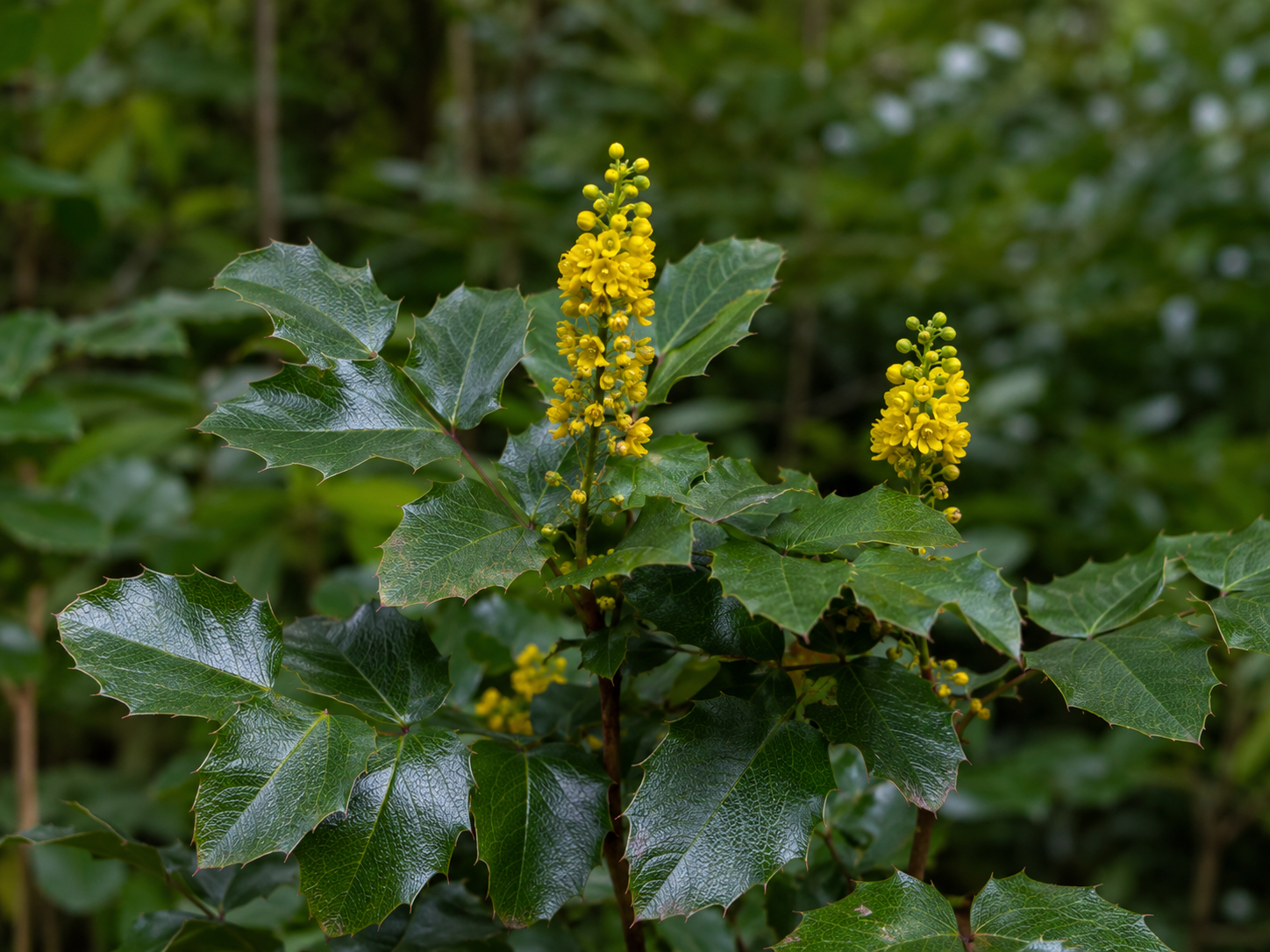
Oregon Grape Root (Mahonia aquifolium or Berberis aquifolium) is a resilient botanical native to the mountainous forest understories of Western North America. Despite its common name, Oregon Grape Root is not related to household grapes (Vitis species). It does not contain the compounds associated with true grape toxicity in dogs and cats. Instead, Oregon Grape Root belongs to the barberry family, and its golden-yellow root is valued for its naturally occurring bitter alkaloids.
In modern pet herbal wellness, Oregon Grape Root is primarily discussed for supporting microbial balance, digestive comfort, mucosal barriers, liver and bile flow, and clear skin. Pet parents most often encounter this botanical in veterinarian-guided wellness conversations related to gut balance, seasonal skin challenges, paw licking, ear comfort, digestive changes, and topical skin support.
Oregon Grape Root is an active botanical because it contains berberine, a potent plant alkaloid. Berberine carries important safety cautions related to duration of use, pregnancy, nursing, young animals, liver and kidney concerns, and potential interactions with medications. For this reason, Oregon Grape Root should be used as a targeted, short-to-medium-term botanical rather than an indefinite daily supplement. By understanding both its barrier-supporting qualities and its safety parameters, pet parents can make informed decisions with the supervision of their trusted veterinarian.
Ingredient Identification
-
Common name: Oregon Grape, Oregon Grape Root
-
Botanical name: Mahonia aquifolium, synonym Berberis aquifolium
-
Plant family: Berberidaceae, Barberry family
-
Plant part used: Dried root and rhizome
-
Other common names: Holly-leaved barberry, mountain grape, Oregon grape holly
-
Native range: Western North America, from British Columbia through the Pacific Northwest to California
-
Common growing regions: Shaded coniferous forests, rocky hillsides, and regulated organic agricultural farms
-
Common preparation forms: Standardized dried powders, liquid extracts, alcohol-free glycerites, tinctures, and topical creams or salves
-
Main active constituents: Isoquinoline alkaloids, especially berberine, along with berbamine, oxyacanthine, jatrorrhizine, and palmatine
Associated Pet Wellness Categories
-
Microbial and Digestive Balance Support: Oregon Grape Root is studied for supporting a healthy intestinal environment and normal microbial balance along the mucosal surfaces of the gastrointestinal tract. It is often discussed when a pet needs targeted support after digestive disruption, occasional gas, or soft stools. Through its berberine-rich profile, it helps support a balanced gut environment and normal digestive comfort.
-
Skin and Epithelial Barrier Conditioning: Oregon Grape Root is traditionally used to support clear, comfortable skin and localized surface comfort. When pets experience seasonal environmental changes or food-related sensitivities, they may show discomfort through face rubbing, paw licking, ear irritation, or scratching. Oregon Grape Root may support skin comfort internally and is also used topically in properly prepared and diluted forms for localized skin support.
-
Liver Function and Bile Stimulation: As a classic bitter tonic, Oregon Grape Root supports healthy liver and gallbladder function. Bitter compounds interact with digestive receptors to support bile flow and normal fat digestion. This digestive and hepatic support may indirectly help skin comfort by supporting the body's natural waste-processing pathways.
-
Immune System Readiness: Oregon Grape Root is used in holistic contexts to support normal, balanced immune behavior. It helps support the body's natural first line of defense while maintaining a calm, appropriate response during seasonal or environmental transitions.
Common Pet Wellness Uses
-
Microbial Balance and Yeast Defense: Oregon Grape Root has a long history of use as a sustainable alternative to goldenseal for supporting healthy mucosal environments. In dogs and cats, it is sometimes discussed for pets navigating temporary yeast-related challenges in the ears or paws, or for pets experiencing periodic digestive imbalance. The evidence level is considered strong for general antimicrobial mechanisms of action, though still emerging for pet-specific clinical trials.
-
Seasonal and Dermal Sensitivities: Oregon Grape Root is frequently used in holistic veterinary practice for pets needing systemic support for red, irritated skin, paw licking, and face rubbing associated with environmental sensitivities. The evidence is supported by human clinical validation for certain skin conditions, animal models evaluating tissue comfort, and holistic veterinary clinical experience.
-
Gut Dysbiosis and Bowel Stabilization: In holistic small animal practice, full-spectrum Oregon Grape Root glycerite or encapsulated powder is sometimes used to support pets experiencing loose stools or microbial disruption following dietary changes or environmental stress.
Best Known Herbal Actions
-
Antimicrobial and Antibacterial: This action refers to the herb's researched ability to support the body's natural boundaries against unhelpful bacterial, fungal, and protozoal overgrowth while helping maintain microbial balance.
-
Bitter Hepatic and Cholagogue: Bitter herbs trigger digestive reflexes. Oregon Grape Root supports liver tone, healthy bile release from the gallbladder, and normal digestive secretions for nutrient processing.
-
Alterative: In traditional Western herbalism, alteratives support the body's natural cleansing processes through the liver, gallbladder, bowel, and skin. Oregon Grape Root is traditionally used to support the clearing of stagnation, heat, and internal waste patterns.
-
Immune Modulator: An immune modulator supports a normal, balanced cellular defense baseline without pushing the immune system into unnecessary overactivity.
Key Constituents and Why They Matter
The primary active compounds found in Oregon Grape Root are isoquinoline alkaloids, with berberine being the most recognized and heavily studied. These alkaloids are responsible for the root's bright yellow color and bitter taste. Research indicates that berberine can influence microbial adhesion, protein synthesis, and inflammatory signaling pathways. Other companion alkaloids, such as berbamine, may work alongside berberine to support normal inflammatory response and cellular resilience.
Because berberine is biologically active, Oregon Grape Root should be treated as a targeted botanical rather than a casual food-like herb. Its strength is also why proper serving size, duration, medication review, and veterinary guidance matter.
Western Herbalism Profile
In Western herbalism, herbs are classified by taste, energetics, and tissue affinities to guide how they interact with the body. Oregon Grape Root is characterized by an intensely bitter, sharp, and earthy taste. Energetically, Western herbalists consider Oregon Grape Root cooling and drying in nature. It has a pronounced tissue affinity for the gastrointestinal tract, liver, gallbladder, skin, and mucous membranes.
Western herbalists have long indicated Oregon Grape Root for patterns involving internal heat, damp stagnation, microbial imbalance, and skin reactivity, especially when sluggish liver or digestive function appears alongside scaling, itching, or irritation at the skin surface. It is viewed as a cooling, clearing herb that helps move stagnation and support more balanced skin and digestive function.
Western herbalists also maintain clear boundaries around its use. Because of its bitter taste, cold energy, drying quality, and berberine content, Oregon Grape Root is generally used in targeted cycles rather than as a permanent everyday additive. It should be used carefully in pets that are frail, cold in constitution, dehydrated, or prone to loose watery stools.
Traditional Chinese Medicine Profile
Oregon Grape Root is native to North America and is not a classical Chinese herb, but its berberine-rich profile gives it similarities to certain traditional Chinese bitter roots, such as Huang Lian. Modern TCM practitioners and holistic veterinarians may evaluate Oregon Grape Root through traditional energetic frameworks.
Through a TCM lens, Oregon Grape Root is viewed as intensely bitter and cold. It is believed to primarily enter the Liver, Gallbladder, Large Intestine, and Stomach meridians. In TCM, the Liver supports the smooth flow of Qi, stores the Blood, and is associated with the skin and eyes, while the Large Intestine governs waste consolidation and clearance.
When a pet shows red, hot skin eruptions, paw chewing, foul-smelling loose stools, or skin discomfort related to seasonal challenges, the pattern may be viewed as "Damp-Heat" in the Liver channel or Lower Jiao. Oregon Grape Root's traditional role is viewed as clearing Heat, drying Dampness, purging Fire, and resolving toxicity.
Despite these useful actions, TCM practitioners caution against use in severe Spleen and Stomach Deficiency Cold or Yin deficiency with deep fluid depletion. If a pet shows chronic coldness, a pale tongue, or watery stools due to weak digestive fire, the cold, descending nature of Oregon Grape Root may be inappropriate.
Ayurvedic Medicine Profile
While Oregon Grape Root is native to the Pacific Northwest and does not appear in the classical Ayurvedic pharmacopeia of tropical India, modern Ayurvedic practitioners and holistic veterinarians sometimes analyze this berberine-rich root using Ayurvedic principles.
From an Ayurvedic perspective, Oregon Grape Root is recognized for its intensely bitter (Tikta) and mildly astringent (Kashaya) tastes, cooling energy (virya), and pungent post-digestive effect (vipaka). Its primary doshic action is strongly pacifying to Pitta and Kapha, while potentially increasing Vata if used excessively or for too long without balancing support.
Pitta dosha rules heat, metabolism, the blood, and liver function. When elevated, it may appear as skin redness, tissue irritation, liver burden, and inflammatory heat. Kapha rules structure and fluid stability. When stagnant, it may appear as mucus, heaviness, and slow metabolic movement. Oregon Grape Root's cooling, drying, light, and sharp qualities help balance these Pitta and Kapha patterns by cooling heat and helping clear Ama, or toxic accumulation.
Because Oregon Grape Root is cold and drying, it may aggravate Vata in frail, dry, or depleted animals. A modern Ayurvedic approach would reserve Oregon Grape Root for targeted use and pair it with moistening or grounding support when appropriate.
Research Summary
It is important to acknowledge that double-blind, peer-reviewed clinical trials evaluating Oregon Grape Root directly in dogs and cats are currently limited. However, Oregon Grape Root and its primary alkaloid, berberine, are recognized in pharmacological research for microbial, digestive, dermal, and hepatic support pathways.
-
Animal Research: Studies in rodent and laboratory models have evaluated Oregon Grape Root extracts and isolated berberine for normal inflammatory response, liver tissue protection from oxidative stress, and gastrointestinal smooth muscle regulation.
-
Human Research: Clinical studies have evaluated topical and oral Oregon Grape Root preparations for skin comfort, skin texture, and chronic dermal challenges.
-
In Vitro Research: Laboratory studies show Oregon Grape extracts have broad-spectrum antimicrobial activity against certain bacteria, fungi, and protozoa, supporting its traditional use for microbial balance.
A significant gap remains in large-scale companion animal clinical trials validating exact oral pharmacokinetic parameters across breeds and species. Human, rodent, and laboratory research provides directional insight, but it does not guarantee pet efficacy or safety without veterinary guidance.
What the Research Means for Dogs
For dogs, the most relevant wellness categories for Oregon Grape Root are seasonal skin support, intestinal microbiome balance, and topical ear and skin comfort. Dogs may experience yeast-related paw discomfort, localized skin redness, ear discomfort, or soft stools after dietary changes. The strongest support for Oregon Grape Root's use comes from its documented role in supporting microbial balance along mucosal and skin surfaces. The weakest support lies in expecting it to function as an open-ended, lifelong daily supplement. Due to berberine's biological activity, canine digestive tolerance, medication use, and liver or kidney status should be considered. Veterinary oversight is important, especially to rule out deep infection, severe allergies, or conditions requiring medical care.
What the Research Means for Cats
In cats, Oregon Grape Root requires caution, low serving sizes, and professional guidance. Cats have sensitive liver metabolism and unique processing pathways, so introducing an alkaloid-rich botanical requires careful scaling and monitoring. Cats may also reject Oregon Grape Root because of its intense bitter taste, which can trigger drooling or food refusal if not masked or encapsulated. Evidence for safe feline use is based primarily on veterinary-formulated holistic texts and clinical experience rather than large feline-specific trials. A veterinarian's guidance is essential before using Oregon Grape Root for a cat.
Forms Used in Pet Wellness
-
Tincture/Glycerite: Liquid extracts allow precise, weight-based measuring, which matters for active herbs. Alcohol-free glycerites are often preferred for small animals because the natural sweetness of glycerin helps balance the root's intense bitter taste.
-
Topical Creams or Salves: Diluted extracts or infused oils are sometimes used in holistic practice as local skin balms or ear-support preparations. Topical use should be properly diluted and should not replace veterinary care for infection, wounds, or severe irritation.
-
Powder/Capsule: Used to deliver whole-root benefits and full-spectrum alkaloid fractions. Capsules may be helpful for cats and picky dogs because they bypass bitter taste receptors.
-
Chews: Chew formats may be used in dog wellness for palatability and targeted seasonal support when appropriate for the individual pet.
Safety Profile
Oregon Grape Root is a potent antimicrobial and metabolic botanical, and its general safety profile requires respect. It is associated with active alkaloid clearance and should be used for appropriate situational support.
-
Dogs: Generally well-tolerated when introduced gradually at appropriate, pet-scaled serving sizes. Dogs should be monitored for temporary digestive changes if given in excess.
-
Cats: Requires caution, low serving sizes, and professional monitoring due to sensitive feline liver pathways and strong aversion to bitter compounds.
-
Puppies, Kittens, Pregnant or Nursing Pets: Avoid entirely. Oregon Grape Root contains berberine, which traditional and modern reviews note may stimulate uterine contractions, pose embryotoxic concerns, and transfer through milk.
-
Duration Limits: Oregon Grape Root is typically used for short-to-medium-term support, such as targeted cycles, rather than permanent daily feeding. This helps avoid unnecessary pressure on the microbiome and metabolic pathways.
-
Possible Adverse Effects: Mild gastrointestinal irritation, temporary nausea, loose stools, or excessive drooling if the bitter taste contacts the tongue.
-
When to Stop Use: Discontinue and consult a veterinarian if the pet shows vomiting, persistent soft stools, profound lethargy, unexpected skin rash, or sudden refusal to eat.
Please note: Before beginning any pet supplements, herbs, or nutritional changes, consult your veterinarian first. This educational information is intended to support informed conversations with your veterinary team and should not replace professional guidance.
Contraindications
-
Pregnancy, lactation, and breeding animals due to uterine-stimulating concerns.
-
Newborn, infant, or prepubertal puppies and kittens due to theoretical alkaloid risks.
-
Severe, uncompensated liver or kidney disease unless specifically monitored by a veterinarian.
-
Severe Spleen and Stomach Deficiency Cold patterns with watery diarrhea.
-
Unmonitored long-term daily use.
Drug and Supplement Interactions
-
Cytochrome P450 Metabolized Medications: Berberine may affect liver enzymes responsible for clearing medications from the bloodstream. Oregon Grape Root may therefore alter medication clearance and should be used only with veterinary supervision when pets take prescription drugs.
-
Conventional Antibiotics and Antifungals: Oregon Grape Root may have additive effects when combined with prescription antimicrobials. This combination should be managed by a veterinarian.
-
Macrolide Antibiotics: Avoid combining Oregon Grape Root with certain medications, such as erythromycin, unless specifically directed by a veterinarian, due to theoretical concerns observed in laboratory models.
-
Diabetes Medications: Berberine may influence blood glucose regulation. Pets taking insulin or other diabetes medications should be monitored by a veterinarian if Oregon Grape Root is considered.
Dosage and Serving Context
Serving context depends heavily on species, weight, metabolic baseline, digestive tolerance, medication use, and whether the product is prepared as dried root powder or concentrated liquid extract. There is no safe generic household serving size for Oregon Grape Root. Concentrated standardized extracts deliver much higher biological activity per volume than raw ground root powders. Oregon Grape Root is generally recommended for targeted short-to-medium-term cycles during seasonal, skin, microbial, or digestive support periods rather than open-ended daily use. It is typically given with or after food to reduce the cooling impact on the stomach and support digestive tolerance. For the safest and most appropriate use, discuss Oregon Grape Root with your veterinarian before giving it to your dog or cat. Your veterinarian can help evaluate your pet's health history, medications, age, pregnancy risk, liver status, kidney status, digestive patterns, and wellness goals before use.
How This Ingredient Fits into BARC Formulas
At LivHerbals, ingredients like Oregon Grape Root are approached with care, respect for traditional use, and attention to pet-specific safety considerations. When an ingredient is used in a BARC formula, it is selected for a specific wellness purpose and balanced within the larger formula rather than treated as a standalone quick fix.
Ingredient Profile Summary
-
Best known for: Supporting normal microbial balance along mucosal surfaces and promoting clear skin texture.
-
Most relevant pet wellness categories: Microbial balance, seasonal skin support, skin conditioning, liver function, gut comfort.
-
Most relevant herbal actions: Antimicrobial, bitter hepatic/cholagogue, alterative, immune modulator.
-
Research strength: Strong in animal, laboratory, and human clinical models. Growing in pet-specific validation.
-
Main cautions: Oregon Grape Root contains berberine and should be used carefully in targeted cycles rather than indefinitely. It may affect medication clearance, is not recommended for pregnant or nursing pets, should be avoided in very young animals, and requires precise scaling under veterinary guidance. Use this herb under veterinary guidance to support your pet's safety and well-being.
Pet Parent Takeaway
Oregon Grape Root is a traditionally respected botanical known for supporting microbial balance, barrier tissues, skin comfort, liver function, and digestive wellness. When a dog or cat is navigating seasonal face rubbing, paw licking, occasional digestive imbalance, or the need for a cleaner gut environment, Oregon Grape Root may offer targeted support within a broader wellness plan. It is not a casual daily treat. It works best when used in appropriate forms, for appropriate durations, and with veterinary guidance. To use Oregon Grape Root safely and appropriately, partner with your veterinarian and consider your pet's full health picture before starting any new herb or supplement.
Disclaimer: This content is for educational purposes only and is not intended to diagnose, treat, cure, or prevent any disease. Always consult your veterinarian before starting any new supplement, herb, food, or wellness routine for your pet, especially if your pet is pregnant, nursing, taking medication, has a diagnosed condition, or is under veterinary care.
References
Pet-Specific Studies and Veterinary References
-
Wynn, S. G., & Fougère, B. J. (2007). Veterinary Herbal Medicine. Mosby Elsevier.
-
Basko, I. (2004). Fresh Plant Materia Medica.
-
Silver, R. J. (2014). Veterinary Clinical Uses of Berberine-Rich Botanicals and Sustainable Sourcing Alternatives. Professional Veterinary Reference Series.
-
Animal Essentials. (2024). Oregon Grape Root Tonic and Microbial Balance Guidelines for Companion Animals. Animal Essentials Technical Monograph.
Human and Animal Studies
-
Birdsall, T. C., & Kelly, G. S. (1997). Berberine: Therapeutic potential of an isoquinoline alkaloid in gastrointestinal and dermal conditions. Alternative Medicine Review.
-
Slotkin, T. A., et al. (2006). Berberine and related alkaloids from Mahonia aquifolium protect liver and brain cells from oxidative injury in animal models. Journal of Pharmacology and Experimental Therapeutics.
-
Janbaz, K. H., & Gilani, A. H. (2000). Studies on preventive and curative effects of berberine on chemical-induced hepatotoxicity in laboratory rodents. Fitoterapia.
Safety and Toxicology References
-
American Herbal Products Association (AHPA). Botanical Safety Handbook (2nd ed.).
-
ASPCA Animal Poison Control Center. (2024). Non-Toxic Plant Databases: Mahonia aquifolium. ASPCA Veterinary Reference.

Written by Angela Petersen
.%20Learn%20about%20its%20traditional%20berberi...)