
Schisandra Berries for Dogs and Cats: Ingredient Profile, Uses, and Safety
Schisandra Berries for Dogs and Cats: Ingredient Profile, Uses, and Safety
Explore the LivHerbals ingredient profile for Schisandra Berries (Schisandra chinensis). Learn about their traditional adaptogenic uses, liver support role, pet wellness context, and vital safety facts.
Understanding Schisandra Berries in Pet Wellness
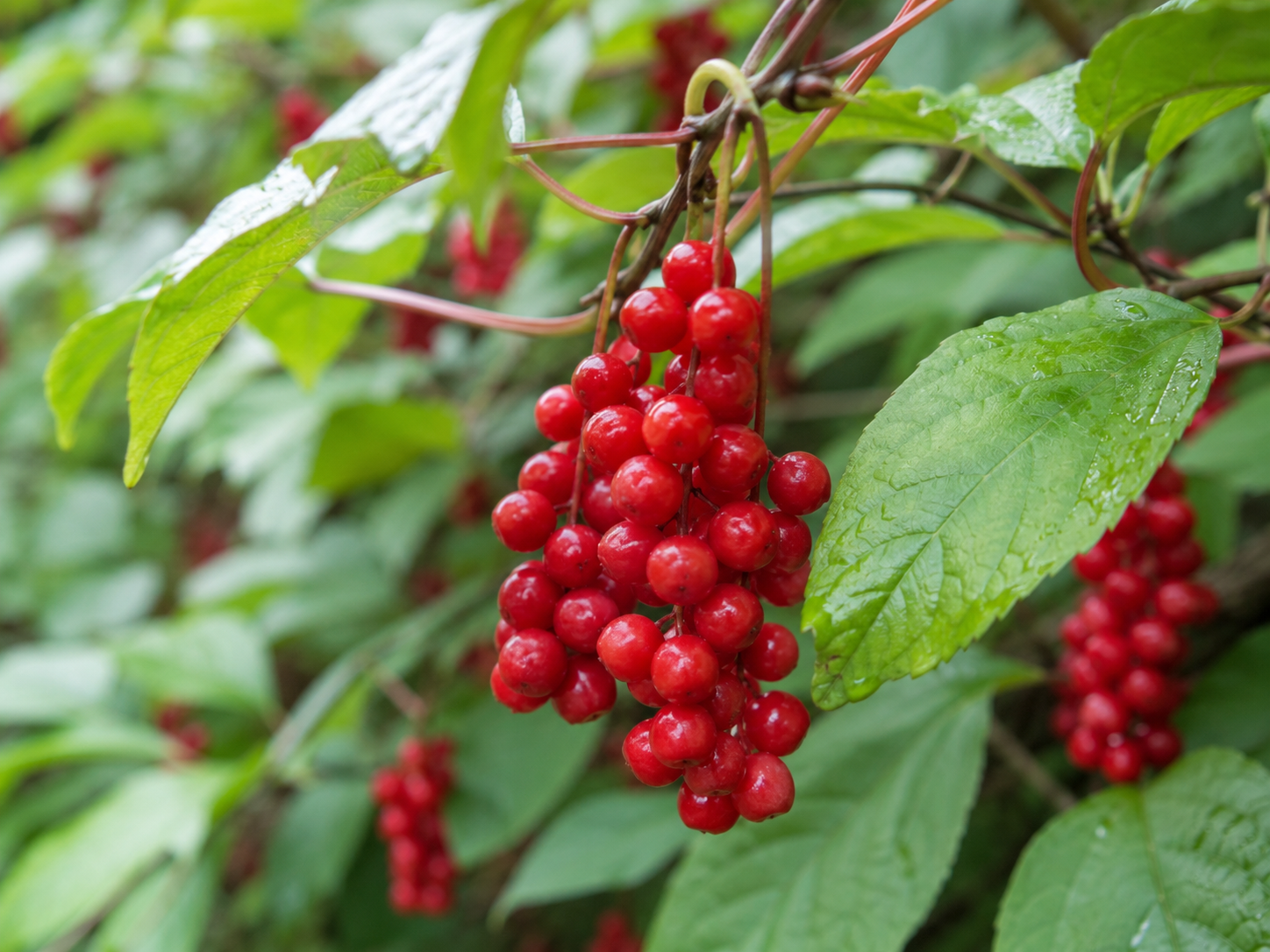
Schisandra Berries (Schisandra chinensis) are deeply respected traditional berries native to Northern China, Russia, Korea, and parts of East Asia, where they have been used in Traditional Chinese Medicine for thousands of years. In Chinese herbalism, Schisandra is known as Wu Wei Zi, which means “five-flavor fruit.” This name reflects the berry’s unusual combination of sour, sweet, salty, bitter, and pungent tastes.
In modern pet herbal wellness, Schisandra Berries are primarily used to support liver function, stress resilience, antioxidant balance, normal immune function, and overall vitality. They are often discussed as an adaptogenic and hepatoprotective botanical, meaning they are traditionally used to help the body handle stress while also supporting the liver’s normal protective and processing roles.
Schisandra is not a casual herb. It is a potent botanical with a long traditional history, active lignan compounds, and important safety considerations. Because Schisandra may influence liver enzyme activity and drug metabolism, it should be used with veterinary guidance, especially for pets taking medication, pets with diagnosed liver disease, pregnant or nursing animals, or pets with complex health histories.
By understanding both its traditional value and its safety boundaries, pet parents can make informed decisions about whether Schisandra belongs in their pet’s wellness plan.
Ingredient Identification
-
Common name: Schisandra, Schisandra Berries
-
Botanical name: Schisandra chinensis
-
Plant family: Schisandraceae
-
Plant part used: Dried fruit or berries
-
Other common names: Wu Wei Zi, Five-Flavor Fruit, Magnolia Vine Fruit, Omija, Gomishi
-
Native range: Northern China, Russia, Korea, and parts of East Asia
-
Common growing regions: Cool forested areas, woodland edges, and temperate regions of Asia
-
Common preparation forms: Dried berries, powders, tinctures, glycerites, extracts, and decoctions
-
Main active constituents: Lignans, including schisandrin, schisandrin B, schisandrol, gomisins, deoxyschisandrin, and related dibenzocyclooctadiene lignans
Associated Pet Wellness Categories
-
Liver and Detoxification Support: Schisandra is traditionally valued for supporting liver function and helping the body maintain normal detoxification pathways. In pet wellness, this makes it most relevant for formulas focused on liver resilience, antioxidant balance, and normal waste-processing support. It should not be described as a cure or treatment for liver disease, but it has a strong traditional role in supporting the body’s natural liver-protective systems.
-
Stress Resilience and Vitality Support: Schisandra is often described as an adaptogen. Adaptogens help support the body’s ability to maintain balance during physical, environmental, or emotional stress. In dogs and cats, this makes Schisandra relevant when the wellness goal is broader resilience, stamina, and recovery rather than a fast, short-term effect.
-
Antioxidant and Cellular Protection: Schisandra lignans have been studied for antioxidant activity and cellular protection, especially in liver, heart, brain, and immune-related pathways. This supports its use in formulas where the goal is to help protect cells from everyday oxidative stress.
-
Immune and Prevention Support: Schisandra has a traditional place in immune-supportive herbal systems. It is not used to force or overstimulate the immune system. Rather, it is traditionally used to support resilience, recovery, and the body’s ability to maintain a steadier response over time.
-
Respiratory and Fluid Balance Support: In Traditional Chinese Medicine, Schisandra is also traditionally used for patterns connected to the lungs, fluids, and leakage of vital energy. In pet wellness writing, this should be framed carefully as traditional respiratory and fluid-balance support, not as a treatment for cough, asthma, infection, or diagnosed respiratory disease.
Common Pet Wellness Uses
-
Liver Resilience Support: Schisandra is commonly used in holistic herbal traditions to support normal liver function and antioxidant protection. In pet wellness, this is its most important category. It may be considered when the goal is to support the liver’s normal role in processing nutrients, metabolic waste, and environmental stress.
-
Stress and Recovery Support: Because Schisandra is considered an adaptogenic herb, it may be used in holistic contexts to support pets under ongoing stress, high activity, aging-related depletion, or recovery from demanding seasons. Its role is gradual and foundational rather than immediate.
-
Antioxidant Support: Schisandra’s lignans are widely studied for antioxidant activity. For pets, this research is best interpreted as supportive background, not direct proof of clinical outcomes in dogs or cats.
-
General Vitality Support: In traditional herbal systems, Schisandra is used as a tonic for vitality, endurance, and overall resilience. In pet wellness, this makes it relevant to formulas that support the body’s long-term strength and ability to recover.
Best Known Herbal Actions
-
Adaptogen: An adaptogen is an herb that helps the body adapt to stress and maintain normal balance. Schisandra is traditionally used to support stamina, resilience, and the body’s ability to handle ongoing stress without becoming depleted.
-
Hepatoprotective Support: Hepatoprotective herbs support the liver’s normal structure and function. Schisandra is one of the best-known traditional herbs in this category. Its lignans have been studied for liver-protective and antioxidant pathways.
-
Antioxidant: Antioxidants help protect the body’s cells from free radical damage caused by everyday metabolism, environmental exposure, and stress. Schisandra supports this category through its lignans and related plant compounds.
-
Astringent: In herbalism, astringent herbs help tone and tighten tissues. Schisandra’s sour taste reflects this traditional action. In Traditional Chinese Medicine, this astringent quality is connected to preserving fluids and supporting the body’s ability to hold energy.
-
Tonic: A tonic herb is traditionally used over time to support strength, balance, and resilience. Schisandra is generally considered a tonic rather than a quick-fix herb.
Key Constituents and Why They Matter
The best-known active compounds in Schisandra Berries are lignans. These include schisandrin, schisandrin B, schisandrol, gomisins, and related dibenzocyclooctadiene lignans.
These constituents matter because they are the compounds most often studied for Schisandra’s liver-supportive, antioxidant, adaptogenic, and cellular-protective properties. Research has explored how Schisandra lignans may influence oxidative stress pathways, liver enzyme activity, glutathione-related antioxidant systems, and cellular resilience.
For pet parents, the important point is balance. These constituents help explain why Schisandra has earned a respected place in traditional herbalism, but they also explain why Schisandra should be used thoughtfully. A plant that can influence liver pathways and drug metabolism deserves veterinary guidance, especially for pets taking medication.
Western Herbalism Profile
In Western herbalism, Schisandra is usually described as an adaptogenic, hepatoprotective, antioxidant, and astringent tonic. Its taste is famously complex because it contains all five traditional flavors: sour, sweet, salty, bitter, and pungent. The sour taste is especially important in Western herbal thinking because sour herbs are often associated with toning tissues and supporting fluid balance.
Energetically, Western herbalists often describe Schisandra as warming to neutral, drying to mildly moistening depending on preparation, and deeply tonifying. It has a strong tissue affinity for the liver, nervous system, immune system, and respiratory tract.
Western herbalists often use Schisandra when the body appears depleted by chronic stress, poor recovery, environmental load, or low vitality. It is not usually framed as a single-symptom herb. It is better understood as a whole-body resilience herb that supports several systems at once.
However, Western herbalists also recognize that Schisandra is not appropriate for every pet. Its influence on liver metabolism and its traditional astringent action mean it should be used carefully in pets taking medication, pets with liver disease, pets with constipation tendencies, pregnant or nursing pets, or medically complex animals.
Traditional Chinese Medicine Profile
Schisandra is a classical herb in Traditional Chinese Medicine, where it is known as Wu Wei Zi. This means “five-flavor fruit.” In TCM, the five flavors are meaningful because each flavor is believed to influence the body differently. Schisandra’s combination of sour, sweet, salty, bitter, and pungent tastes is one reason it is considered such a complex and valuable herb.
Through a TCM lens, Schisandra is generally considered warm in energy and sour in its dominant action. It is traditionally associated with the Lung, Heart, and Kidney meridians. It is used to astringe leakage, preserve fluids, support essence, calm the spirit, and help the body maintain resilience.
In TCM, Schisandra is often used when the body needs help holding onto what it is losing. This may include traditional patterns involving sweating, fluid loss, cough, weakness, or depletion. It is also used to support Shen, or spirit, when stress, restlessness, or depletion affects calmness and sleep.
For pets, this traditional context should be translated carefully. Schisandra should not be described as a treatment for cough, anxiety, insomnia, kidney disease, or liver disease. Instead, it can be described as a traditional tonic used to support resilience, fluid balance, liver wellness, and calm steadiness when chosen appropriately by a veterinarian or trained herbal professional.
TCM practitioners also use caution with Schisandra. Because it is astringent, it may not be appropriate when the body needs to release an active pathogen or when acute illness is present. In traditional language, astringent herbs can potentially “hold in” what the body is trying to expel. This is one reason Schisandra is better suited to carefully selected long-term support rather than casual use during sudden illness.
Ayurvedic Medicine Profile
Schisandra is not a classical Ayurvedic herb native to India, and it does not hold the same ancient role in Ayurveda that it does in Traditional Chinese Medicine. However, modern Ayurvedic practitioners and holistic herbalists may interpret Schisandra through Ayurvedic energetic principles.
From an Ayurvedic perspective, Schisandra’s sour, bitter, sweet, salty, and pungent qualities give it a complex energetic profile. Its sour and salty aspects may be grounding and building, while its bitter and pungent aspects may support digestion, movement, and clearing. Its adaptogenic nature connects it to the broader Ayurvedic concept of herbs that support ojas, vitality, and resilience.
For pets, an Ayurvedic-style interpretation would place Schisandra in the category of resilience and restoration. It may be viewed as supportive where stress, depletion, or poor recovery has worn down the body’s reserves.
However, because Schisandra can be warming and astringent, it should be used cautiously in pets with heat signs, constipation, acute infection, active inflammation, or complex medical conditions. As with all energetic systems, the key is matching the herb to the animal, not assuming one herb fits every pet.
Research Summary
Pet-specific clinical research on Schisandra in dogs and cats is limited. Most of the current evidence comes from traditional use, laboratory studies, rodent studies, human research, and general veterinary herbal context.
-
Animal Research: Animal studies have explored Schisandra extracts and lignans for liver-protective effects, antioxidant support, metabolic effects, endurance, cognitive pathways, and cellular protection. These studies help explain traditional use, but they do not automatically prove the same outcomes in dogs or cats.
-
Human Research: Human studies are limited and often small. Some research has explored Schisandra in liver-related settings, fatigue, stress resilience, and menopausal symptoms. More rigorous research is needed before strong conclusions can be made.
-
In Vitro Research: Laboratory studies have explored Schisandra lignans for antioxidant activity, liver enzyme effects, anti-inflammatory pathways, and cellular protection. These findings are useful for understanding possible mechanisms, but they are not the same as clinical proof in pets.
-
Veterinary Context: Schisandra appears in veterinary herbal discussions as an herb used in traditional systems for immune, liver, and tonic support. However, formal dog and cat clinical trials remain limited.
What the Research Means for Dogs
For dogs, Schisandra is most relevant to liver support, stress resilience, antioxidant balance, and vitality. The strongest support comes from traditional use and preclinical research on Schisandra lignans. The weakest support is the limited number of dog-specific clinical trials.
This means Schisandra can be a thoughtful ingredient in a well-designed formula, but it should not be described as a proven treatment for liver disease, anxiety, fatigue, heart disease, cough, or any diagnosed condition.
Because Schisandra may influence liver enzymes and drug metabolism, dogs taking medications need veterinary guidance before using Schisandra or products containing it. This is especially important for dogs taking liver-metabolized drugs, seizure medications, sedatives, heart medications, blood thinners, immune-related drugs, or multiple medications at once.
What the Research Means for Cats
For cats, Schisandra requires extra caution. Cats metabolize many herbs, medications, and plant compounds differently than dogs. There is limited feline-specific research on Schisandra safety, dosing, and long-term use.
Schisandra’s potential influence on liver enzyme pathways is especially important in cats because feline metabolism can be sensitive and less predictable. Cats with liver disease, kidney disease, appetite changes, medication use, pregnancy, nursing, or chronic health issues should not receive Schisandra without direct veterinary guidance.
In an Ingredient Library context, Schisandra may be described as traditionally used for resilience and liver support, but feline use should remain cautious and veterinarian-guided.
Forms Used in Pet Products
-
Tincture or Glycerite: Liquid extracts allow flexible serving and may be used in drop formulas. Glycerites are often preferred in pet products because they avoid alcohol-heavy delivery.
-
Powder: Dried Schisandra berry powder may be blended into food or formulas, though the taste can be strong.
-
Capsule: Capsules may be used when standardized serving and controlled administration are preferred.
-
Decoction: In traditional herbalism, Schisandra may be prepared as a simmered tea or decoction, often as part of a larger formula.
-
Standardized Extract: Extracts may be standardized for lignan content. These require extra care because concentration affects strength and safety.
Safety Profile
Schisandra is a potent traditional berry with a generally respected safety history in herbalism, but pet-specific safety data is limited. Its biggest safety considerations involve medication interactions, liver metabolism, pregnancy, nursing, and proper use during illness.
-
Dogs: Use with veterinary guidance, especially if the dog takes medication or has liver, kidney, heart, seizure, endocrine, immune, or digestive concerns.
-
Cats: Use extra caution. Cats have unique metabolic sensitivities, and feline-specific Schisandra safety data is limited.
-
Puppies, Kittens, Pregnant or Nursing Pets: Avoid unless specifically directed by a veterinarian.
-
Pets Taking Medication: Use only with veterinary guidance because Schisandra may influence liver enzymes and drug transport pathways.
-
Pets with Liver Disease: Do not assume Schisandra is automatically appropriate just because it is traditionally used for liver support. Diagnosed liver disease requires veterinary management.
-
Possible Adverse Effects: Digestive upset, appetite changes, loose stool, restlessness, sedation, allergic response, or unexpected behavior changes may occur in sensitive pets.
-
When to Stop Use: Stop use and contact your veterinarian if your pet develops vomiting, diarrhea, lethargy, agitation, appetite loss, yellowing of the eyes or gums, unusual bruising, breathing changes, or any sudden change in behavior or health.
Please note: Before beginning any pet supplements, herbs, or nutritional changes, consult with your veterinarian first. This educational information is provided to help pet parents ask better questions and make informed decisions, but your veterinarian is the best partner for evaluating your pet’s individual health history, medications, risks, and needs. Always seek professional guidance to help protect the safety and well-being of your animal.
Contraindications
-
Pregnancy and lactation.
-
Puppies and kittens unless specifically directed by a veterinarian.
-
Known allergy or sensitivity to Schisandra.
-
Active acute illness where an astringent tonic may not be appropriate.
-
Diagnosed liver disease unless supervised by a veterinarian.
-
Pets taking medications with narrow safety margins.
-
Pets taking immunosuppressive drugs or transplant-related medications.
-
Pets with seizure disorders, bleeding risk, serious heart disease, or complex chronic illness unless veterinary guidance is provided.
Drug and Supplement Interactions
-
Liver-Metabolized Medications: Schisandra may affect cytochrome P450 enzymes, including CYP pathways involved in drug metabolism. This may change how certain medications are processed.
-
P-Glycoprotein Substrates: Schisandra may affect P-glycoprotein, a transporter involved in moving drugs in and out of cells. This may alter medication exposure.
-
Immunosuppressive Medications: Schisandra has been studied in relation to tacrolimus levels in humans. Pets taking immune-related drugs need veterinary oversight.
-
Sedatives and CNS-Active Medications: Use caution with calming drugs, seizure medications, behavior medications, or other nervous-system-active substances.
-
Blood Thinners and Bleeding-Risk Medications: Use caution with anticoagulants, antiplatelet drugs, NSAIDs, or supplements that may affect bleeding risk.
-
Diabetes Medications: Schisandra may influence glucose-related pathways in research models, so pets on blood sugar medication need veterinary monitoring.
-
Liver Support Supplements: Do not stack multiple liver-active herbs or supplements without veterinary guidance.
Dosage and Serving Context
Serving context depends heavily on the species, weight, health status, medication use, preparation type, and whether the product uses whole dried berries, a tincture, a glycerite, or a standardized extract. Schisandra is not a one-size-fits-all herb.
Veterinary botanical texts may provide weight-based ranges for certain preparations, but these should not be guessed at home. For the safest experience, use Schisandra or any products containing Schisandra under the direct guidance of your veterinarian. Partnering with your vet helps remove guesswork, protects your pet’s unique health needs, and supports proper administration.
How This Ingredient Fits into BARC Formulas
At LivHerbals, ingredients like Schisandra Berries are approached with care, respect for traditional use, and attention to pet-specific safety considerations. When an ingredient is used in a BARC formula, it is selected for a specific wellness purpose and balanced within the larger formula rather than treated as a standalone quick fix.
Ingredient Profile Summary
-
Best known for: Liver support, adaptogenic resilience, antioxidant activity, and vitality support.
-
Most relevant pet wellness categories: Liver support, stress resilience, immune readiness, antioxidant support, and vitality support.
-
Most relevant herbal actions: Adaptogen, hepatoprotective support, antioxidant, astringent, and tonic.
-
Research strength: Strong traditional use and substantial preclinical research; limited dog- and cat-specific clinical research.
-
Main cautions: Schisandra may influence liver enzyme activity and drug metabolism. Use under veterinary guidance, especially for pets taking medication or pets with liver, kidney, heart, seizure, immune, bleeding, pregnancy, nursing, or chronic health concerns.
Pet Parent Takeaway
Schisandra Berries are a traditional five-flavor botanical with a long history of use for resilience, liver support, and whole-body vitality. For dogs and cats, Schisandra is best understood as a thoughtful, potent ingredient that may support the body’s normal stress response, antioxidant balance, and liver wellness when used appropriately.
Schisandra is not an everyday herb for every pet. Because it may influence liver metabolism and medication handling, it should be used with veterinary guidance, especially in cats, pets taking medication, pregnant or nursing animals, and pets with diagnosed health conditions. When chosen carefully and used as part of a well-designed formula, Schisandra can be a meaningful part of a broader food-first wellness approach.
Disclaimer: This content is for educational purposes only and is not intended to diagnose, treat, cure, or prevent any disease. Always consult your veterinarian before starting any new supplement, herb, food, or wellness routine for your pet, especially if your pet is pregnant, nursing, taking medication, has a diagnosed condition, or is under veterinary care.
References
Pet-Specific Studies and Veterinary References
-
Wynn, S. G. Veterinary Herbal Medicine: A Systems-Based Approach.
-
Wynn, S. G., & Fougère, B. J. Veterinary Herbal Medicine. Mosby Elsevier.
-
European Food Safety Authority. Safety and efficacy of a feed additive consisting of a tincture derived from the dried fruit of Schisandra chinensis.
Human, Animal, and Laboratory Studies
-
Panossian, A., & Wikman, G. Pharmacology of Schisandra chinensis Bail.: An overview of Russian research and uses in medicine. Journal of Ethnopharmacology. 2008.
-
Nowak, A., et al. Potential of Schisandra chinensis in Human Health and Nutrition. Nutrients. 2019.
-
Ehambarampillai, D., et al. A Comprehensive Review of Schisandra chinensis Lignans. 2025.
-
He, J. L., et al. Schisandra chinensis regulates drug metabolizing enzymes and transporters. 2014.
Safety and Interaction References
-
Memorial Sloan Kettering Cancer Center. Schisandra.
-
Drugs.com. Schisandra.
-
American Herbal Products Association (AHPA). Botanical Safety Handbook.

Written by Angela Petersen
.%20Learn%20about%20their%20traditional%20ad...)