

Astragalus for Dogs and Cats: Building Long-Term Immune and Senior Vitality
Astragalus for Dogs and Cats: Ingredient Profile, Uses, and Safety
Explore this LivHerbals ingredient profile for Astragalus (Astragalus membranaceus). Learn about its traditional immune uses, pet-specific research, and key safety facts.
Understanding Astragalus in Pet Wellness
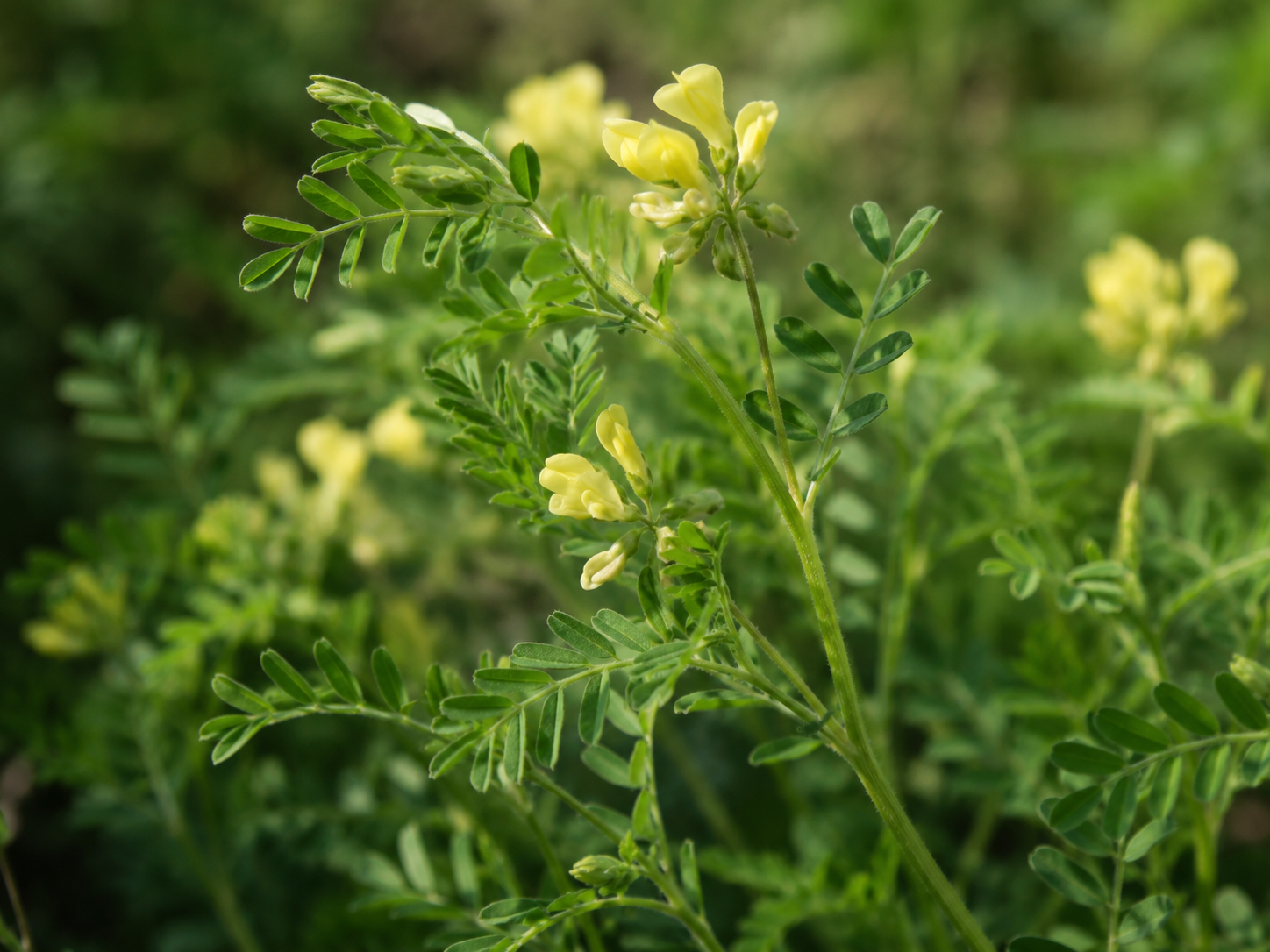
Astragalus (Astragalus membranaceus) is a respected traditional root native to Northern China and Mongolia, where it has been cultivated, prized, and used in Traditional Chinese Medicine (TCM) for thousands of years. In modern pet herbal wellness, Astragalus is primarily used to support the immune system, encourage physical vitality, and maintain normal organ function, especially for the kidneys and liver. Pet parents most often encounter this botanical in veterinarian-guided wellness conversations related to immune resilience, senior vitality, and long-term foundational support.
Astragalus is a builder, not a quick fix. It carries specific safety cautions regarding use during acute, sudden illnesses and in pets taking immunosuppressive medications. Traditional and modern reviews highlight its potential to modulate the immune system, which means it deserves care, context, and situational awareness. For this reason, Astragalus is best understood as a long-term botanical tool rather than an herb for sudden symptoms. It should be used under veterinary guidance. By understanding both its supportive qualities and its safety parameters, pet parents can make informed decisions with the supervision of their trusted veterinarian.
Ingredient Identification
-
Common name: Astragalus, Milkvetch
-
Botanical name: Astragalus membranaceus (also known as Astragalus propinquus)
-
Plant family: Fabaceae (Pea family)
-
Plant part used: Dried root
-
Other common names: Huang Qi, yellow leader
-
Native range: Northern China, Mongolia, and Siberia
-
Common growing regions: Temperate regions of Asia
-
Common preparation forms: Standardized extracts, tinctures, water decoctions (broths), and dried powders
-
Main active constituents: Polysaccharides, saponins (astragalosides), and flavonoids
Associated Pet Wellness Categories
-
Immune System Support: Astragalus is extensively studied for supporting normal, balanced immune system function. It is often chosen when a pet needs long-term help maintaining natural defenses without the harsh, over-stimulating effects associated with some acute immune herbs. By interacting gently with the body's immune pathways, it helps support resilience during seasonal changes or environmental stress.
-
Senior Vitality Support: This herb is traditionally used for age-related physical slowing and overall depletion. Whether a senior dog has a decrease in daily stamina or an older cat needs foundational support, Astragalus acts gradually to nourish the body's vital reserves. It helps aging pets maintain normal vitality by supporting cellular energy and resilience.
-
Organ Function Support: Astragalus is widely used in holistic contexts to support normal kidney and liver function. Aging and environmental stress can affect the renal and hepatic systems, and Astragalus is often discussed for its traditional role in supporting normal waste filtration and the health of these vital organs.
-
Stress Response Support: As an adaptogen, Astragalus helps the body adapt to physical and environmental stressors. It supports the body's natural recovery processes after exertion or prolonged stress and encourages physical vitality and endurance.
Common Pet Wellness Uses
-
Long-Term Immune Resilience: Astragalus has a long, documented history of use as a deep immune tonic. In dogs and cats, it is used for chronic, low-grade environmental stress or during seasonal transitions. It is an everyday builder designed to support the body's natural defenses over time. The evidence level is considered strong for general immunomodulating action, though still emerging for pet-specific clinical trials.
-
Senior Renal and Hepatic Support: Astragalus is frequently used in holistic veterinary practice for senior pets experiencing normal age-related changes in kidney or liver function. The evidence is heavily supported by traditional use and animal-based models evaluating renal health, which are often cited in veterinary botanical texts.
-
Physical Recovery and Stamina: In holistic canine practice, Astragalus powder or extract is sometimes used to support working dogs, agility dogs, or pets recovering from periods of physical exhaustion, helping maintain normal energy levels and return stamina to baseline.
Best Known Herbal Actions
-
Immunomodulator: Immunomodulators help support normal, balanced immune function. Astragalus encourages the immune system to respond appropriately to challenges, helping it engage when necessary and remain calm when appropriate. This balancing action makes it valuable for long-term, daily support.
-
Adaptogen: An adaptogen is an herb that helps the body adapt to stress and supports normal homeostatic balance. As an adaptogen, Astragalus encourages physical resilience and endurance, helping the body manage daily wear, stress, and aging.
-
Deep Immune Tonic: A tonic is traditionally used to restore, tone, and invigorate systems within the body. Astragalus is considered a deep immune tonic, meaning it is traditionally believed to nourish the bone marrow and foundational roots of the immune system over time, rather than stimulating surface-level defenses.
-
Hepatoprotective and Renoprotective Support: These actions refer to the herb's traditional and researched ability to help protect the liver (hepato-) and kidneys (reno-) from oxidative stress, supporting normal, healthy function.
Key Constituents and Why They Matter
The primary active compounds found in Astragalus root include polysaccharides, saponins, and flavonoids. The most significant saponin is Astragaloside IV. These constituents are associated with the plant's immune-supporting, tissue-protecting, and vitality-supporting properties. Research indicates that Astragalus polysaccharides interact with the immune system to promote a balanced response, while Astragaloside IV is studied for its role in supporting normal cardiovascular and organ health. This means Astragalus works systemically to support cellular health and long-term physical resilience.
Western Herbalism Profile
In Western herbalism, herbs are classified by taste, energetics, and tissue affinities to guide how they interact with the body. Astragalus is characterized by a mildly sweet, pleasant, earthy taste. Energetically, Western herbalists consider Astragalus warming in temperature and slightly moistening in nature. It has a pronounced tissue affinity for the immune system, kidneys, heart, and liver.
While not native to Europe or the Americas, Western herbalists have adopted Astragalus for immune depletion, chronic fatigue, poor stamina, and senior debility. It is viewed as an herb that rebuilds depleted energy and helps restore the body's natural shield against environmental challenges. It acts as a deep nourisher, bringing strength back to an exhausted system.
Western herbalists also maintain clear boundaries around its use, heavily influenced by its Chinese origins. Because it is a building, fortifying herb, it is usually formulated as a foundational daily tonic for long-term use rather than a fast-acting intervention. Herbalists advise against using Astragalus during the acute, early stages of a sudden illness, such as a sudden fever. Instead, it is traditionally reserved for prevention and recovery.
Traditional Chinese Medicine Profile
Astragalus is a foundational, classical herb found in the ancient Traditional Chinese Medicine (TCM) materia medica. Known as Huang Qi, which translates to "Yellow Leader," it references both its yellow interior and its premier status. It has been categorized and revered by Chinese herbalism practitioners for millennia. Modern TCM practitioners and holistic veterinarians rely on it to support foundational energy.
Through a TCM lens, practitioners view Astragalus as having a sweet flavor and slightly warm energy. It is believed to primarily enter the Spleen and Lung meridians. In TCM, the Spleen is responsible for extracting energy from food, and the Lungs govern the Wei Qi. Wei Qi is the body's "Defensive Qi," functioning like an energetic immune shield that circulates beneath the skin to protect against external pathogens. Astragalus's ability to support immunity is viewed in TCM as tonifying the Lungs and consolidating this Wei Qi.
Astragalus is also known for "raising Spleen Yang," meaning it lifts energy upward and addresses the sinking, heavy fatigue associated with aging or chronic depletion. Despite these beneficial actions, TCM practitioners follow a strict rule: "Do not trap the thief." Because Astragalus fortifies the body's exterior shield, it should not be given during an acute, sudden illness, such as a new fever. In this tradition, it is used to help prevent the thief from entering, or to rebuild the house after the thief has left, but not while the thief is actively breaking in.
Ayurvedic Medicine Profile
Astragalus is not a native plant to India and is not part of the classical Ayurvedic pharmacopeia. It does not appear in ancient Ayurvedic texts. Still, modern Ayurvedic practitioners and holistic veterinarians sometimes analyze global herbs using Ayurvedic principles to understand how they affect the three doshas: Vata, Pitta, and Kapha.
From an Ayurvedic perspective, Astragalus is recognized for its sweet taste (rasa), warming energy (virya), and sweet post-digestive effect (vipaka). Its primary doshic action is strongly pacifying to Vata and stabilizing for Pitta. Vata dosha is governed by the elements of air and space. When aggravated by age or stress, it appears as depletion, weakness, and tissue wasting. Astragalus's grounding, sweet, and strengthening properties make it a useful herb for calming excess Vata energy and drawing nourishment into the tissues.
Ayurvedic practitioners view Astragalus as functioning much like a Rasayana, a rejuvenative tonic that builds Ojas, the essential essence of vitality and immunity. Because it is mildly warming and nourishing, an Ayurvedic approach would use Astragalus for Vata depletion, senior support, and deep immune building, offering a balanced way to support long-term vitality without overly aggravating Pitta.
Research Summary
It is important to acknowledge that double-blind, peer-reviewed clinical trials evaluating Astragalus directly in dogs and cats are currently limited. The botanical is recognized in holistic veterinary manuals for supporting pets with immune challenges and age-related organ changes.
-
Animal Research: Studies in rodent models demonstrate that Astragalus extracts and isolated polysaccharides influence immune marker activity, stress tolerance, and physical endurance, alongside protective effects on renal (kidney) and hepatic (liver) tissues.
-
Human Research: Multiple clinical trials and meta-analyses have evaluated Astragalus extract for immune support, cardiovascular maintenance, and recovery from chronic physical fatigue.
-
In Vitro Research: Laboratory studies have demonstrated that astragalosides exhibit antioxidant activity and have been studied for their potential to activate telomerase, an enzyme associated with cellular aging research.
A significant gap remains in extensive species-specific pharmacokinetic data for pets. Human and rodent research provides directional insight, but it does not guarantee pet efficacy or safety without veterinary guidance.
What the Research Means for Dogs
For dogs, the most relevant wellness categories for Astragalus are senior support, kidney health, and immune resilience. The strongest support for its use comes from generalized immunomodulating and organ-protective effects observed in human and rodent models, along with extensive traditional use. The weakest support lies in the lack of large-scale canine clinical trials validating exact, long-term dosages. Due to its potential to support normal kidney function, Astragalus is often discussed as a helpful tool for senior canine vitality and long-term immune support. Veterinary oversight remains necessary to confirm whether it is appropriate for the individual dog, especially when medications are involved.
What the Research Means for Cats
In cats, Astragalus's most relevant wellness categories are renal (kidney) support and immune system maintenance. Because cats are prone to age-related kidney challenges, the renoprotective properties of Astragalus observed in traditional use and animal models make it relevant to feline wellness. Astragalus is generally considered well-tolerated by cats and lacks the strong volatile oils or harsh compounds that often irritate feline metabolisms. Evidence for its use is supported largely by holistic veterinary texts and clinical experience rather than feline-specific safety trials, making a veterinarian's guidance essential when integrating it into a cat's senior care plan.
Forms Used in Pet Wellness
-
Tincture/Glycerite: Liquid extracts allow precise, drop-by-drop measuring. Glycerites are alcohol-free extracts with a naturally sweet taste.
-
Powder/Capsule: Used to deliver whole-root benefits or standardized percentages of polysaccharides. These forms are often mixed into wet food or used in traditional broths.
-
Decoction (Broth): In holistic practice, dried Astragalus root slices are often simmered in broth for hours to extract water-soluble immune polysaccharides, creating a nourishing liquid for pets.
-
Chews: Chew formats are used in pet wellness for palatability and daily administration when appropriate for the individual pet.
Safety Profile
Astragalus is a powerful, fortifying adaptogen, and its general safety profile is considered high for long-term use. Its specific actions on the immune system still require respect.
-
Dogs: Generally well-tolerated for long-term use when used appropriately.
-
Cats: Generally well-tolerated and frequently used by holistic veterinarians for senior feline support.
-
Puppies, Kittens, Pregnant or Nursing Pets: Avoid or use only under strict veterinary direction. Growing or pregnant animals generally do not require deep adaptogenic immune modulation unless specifically indicated by a veterinarian.
-
Pets with Autoimmune Concerns: Caution is required. Because Astragalus modulates the immune system, it should only be used in pets with autoimmune conditions under direct veterinary supervision.
-
Possible Adverse Effects: Mild gastrointestinal upset is possible when introducing any new botanical.
-
When to Stop Use: Discontinue use during acute, sudden fevers or infections, as described in TCM principles, and consult a veterinarian if the pet shows unexpected digestive upset or behavior changes.
Please note: Before beginning any pet supplements, herbs, or nutritional changes, consult your veterinarian first. This educational information is intended to support informed conversations with your veterinary team and should not replace professional guidance.
Contraindications
-
Acute infections, sudden fevers, or the early onset of respiratory illnesses until the acute phase has passed.
-
Pets undergoing active immunosuppressive therapy.
-
Late-stage tick-borne challenges, which are often debated in holistic circles. Consult a veterinarian.
Drug and Supplement Interactions
-
Immunosuppressants: Astragalus should not be used concurrently with corticosteroids, cyclosporine, or other immunosuppressive medications unless directed by a veterinarian, as its immune-supporting nature may interfere with their intended effects.
-
Diuretics: Astragalus may have a mild compounding effect when used alongside conventional diuretic medications due to its traditional support of normal fluid balance and kidney function.
-
Blood Pressure Medications: Astragalus may mildly lower blood pressure, creating a theoretical interaction that requires monitoring if used with hypotensive drugs.
Dosage and Serving Context
Serving context depends heavily on species, weight, individual immune health, and whether the herb is prepared as a raw dried herb, simmered broth, or standardized polysaccharide extract. Veterinary botanical texts often provide dosing by weight (mg/kg) divided daily when reference ranges are used. For the safest and most appropriate use, discuss Astragalus with your veterinarian before giving it to your dog or cat. Your veterinarian can help evaluate your pet's health history, medications, age, and wellness needs before use.
How This Ingredient Fits into BARC Formulas
At LivHerbals, ingredients like Astragalus are approached with care, respect for traditional use, and attention to pet-specific safety considerations. When an ingredient is used in a BARC formula, it is selected for a specific wellness purpose and balanced within the larger formula rather than treated as a standalone quick fix.
Ingredient Profile Summary
-
Best known for: Deep immune support, senior vitality, and kidney support.
-
Most relevant pet wellness categories: Immune system support, organ function, senior health.
-
Most relevant herbal actions: Immunomodulator, adaptogen, deep immune tonic.
-
Research strength: Strong in animal and human models. Limited in clinical pet trials.
-
Main cautions: Astragalus is supportive for long-term vitality, but it should be paused during acute fevers and should not be mixed with immunosuppressive drugs unless directed by a veterinarian. Use this herb under veterinary guidance to support your pet's safety and well-being.
Pet Parent Takeaway
Astragalus is a traditionally revered botanical known for supporting resilience, vital organs, and the physical demands of aging. When a dog or cat is navigating the senior years, environmental stressors, or the need for foundational immune support, Astragalus may offer steady support within a broader wellness plan. It is an everyday builder, not a quick-acting option for sudden sickness. To use Astragalus safely and appropriately, partner with your veterinarian and consider your pet's full health picture before starting any new herb or supplement.
Disclaimer: This content is for educational purposes only and is not intended to diagnose, treat, cure, or prevent any disease. Always consult your veterinarian before starting any new supplement, herb, food, or wellness routine for your pet, especially if your pet is pregnant, nursing, taking medication, has a diagnosed condition, or is under veterinary care.
References
Pet-Specific Studies and Veterinary References
-
Wynn, S. G., & Fougère, B. J. (2007). Veterinary Herbal Medicine. Mosby Elsevier.
-
Basko, I. (2004). Fresh Plant Materia Medica.
Human and Animal Studies
-
Block, K. I., & Mead, M. N. (2003). Immune system effects of echinacea, ginseng, and astragalus: A review. Integrative Cancer Therapies.
-
McCulloch, M., et al. (2006). Astragalus-based Chinese herbs and platinum-based chemotherapy for advanced non-small-cell lung cancer: Meta-analysis of randomized trials. Journal of Clinical Oncology.
Safety and Toxicology References
-
American Herbal Products Association (AHPA). Botanical Safety Handbook (2nd ed.).

Written by Angela Petersen
.%20Learn%20about%20its%20traditional%20immune%20uses,%20pet...)