
Burdock Root for Dogs and Cats: Grounded Skin, Coat, and Detoxification Support
Burdock Root for Dogs and Cats: Ingredient Profile, Uses, and Safety
Explore this LivHerbals ingredient profile for Burdock Root (Arctium lappa). Learn about its traditional alterative uses, pet-specific research, and key safety facts.
Understanding Burdock Root in Pet Wellness
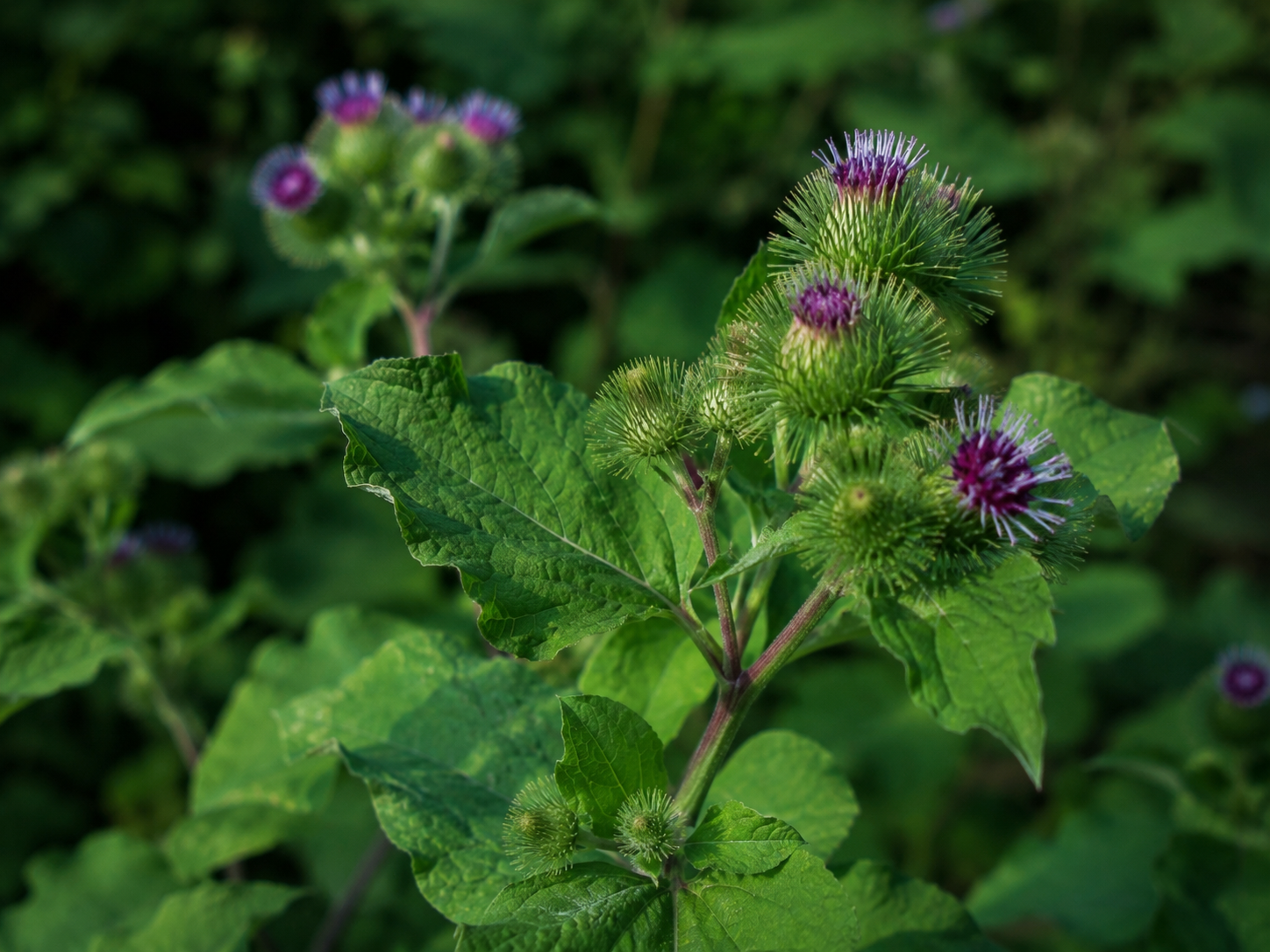
Burdock Root (Arctium lappa) is a respected traditional herb native to Europe and Northern Asia, where it has been cultivated, prized, and used in global herbal systems for thousands of years. In modern pet herbal wellness, Burdock Root is primarily known as an alterative, a traditional term for botanicals that support the body's natural elimination pathways and encourage systemic balance. Pet parents most often encounter this grounding root in veterinarian-guided wellness conversations related to skin and coat health, liver support, digestive balance, kidney support, and long-term vitality.
Burdock Root works from the inside out. It carries specific safety cautions related to its natural diuretic properties and its membership in the Asteraceae plant family, which may trigger sensitivities in some pets. For this reason, Burdock Root should be introduced gradually, at appropriate serving sizes, and under veterinary guidance, especially in animals with fluid balance concerns or known plant allergies. It is not a superficial masking agent. It is a foundational botanical tool that builds support over time. By understanding both its supportive qualities and its safety parameters, pet parents can make informed decisions with the supervision of their trusted veterinarian.
Ingredient Identification
-
Common name: Burdock, Burdock Root, Great Burdock
-
Botanical name: Arctium lappa
-
Plant family: Asteraceae, Daisy or Sunflower family
-
Plant part used: Dried root, typically harvested in the first year of growth
-
Other common names: Bardana, beggar's buttons, Niu Bang Gen, Gobo
-
Native range: Temperate regions of Europe, Asia, and naturalized widely across North America
-
Common growing regions: Fertile, wild soils and organic agricultural farms globally
-
Common preparation forms: Standardized extracts, liquid glycerites, water decoctions, and dried powders
-
Main active constituents: Inulin, a prebiotic polysaccharide, lignans including arctiin and arctigenin, polyacetylenes, caffeoylquinic acids, and trace minerals
Associated Pet Wellness Categories
-
Skin and Coat Health Support: Burdock Root is extensively studied and traditionally revered for supporting clear skin and a glossy, resilient coat. It is often chosen when a pet needs help maintaining normal skin moisture and barrier integrity during seasonal changes. By supporting underlying elimination systems, it helps address metabolic byproducts that may appear as outer skin irritation, allowing dogs and cats to feel more comfortable and settled. This makes it a relevant herbal ally for pets prone to occasional dry, flaky, or sensitive skin.
-
Liver and Detoxification Support: This root is traditionally used to support normal hepatic function and healthy waste filtration pathways. The liver continuously filters environmental impurities and processes everyday metabolic waste. Burdock Root acts as a gentle botanical tool to support normal bile flow and liver tissue health, helping the body process and eliminate impurities efficiently.
-
Digestive and Prebiotic Support: Burdock Root is used in holistic contexts to support a healthy, balanced gut microbiome. It contains high amounts of inulin, a naturally occurring prebiotic fiber that nourishes beneficial gut bacteria. Herbalists believe this supports nutrient absorption, healthy digestion, and a strong intestinal lining, offering digestive resilience alongside outer physical vitality.
-
Kidney and Fluid Balance Support: As a mild, natural diuretic, Burdock Root helps support normal kidney function and healthy fluid elimination. By promoting gentle urinary tract flushing, it assists the body in clearing metabolic waste through the urine. This action supports the cardiovascular and renal systems in maintaining healthy fluid balance.
Common Pet Wellness Uses
-
Long-Term Skin and Coat Conditioning: Burdock Root has a long, documented history of use as a foundational botanical for chronic, low-grade skin dullness or flakes. In dogs, it is used to support deep coat vitality and clear, calm skin layers. For cats, it is sometimes carefully used to maintain skin suppleness and a sleek coat. The evidence level is considered strong for traditional alterative action, though still emerging for pet-specific clinical trials.
-
Hepatic Elimination and Vitality Support: Burdock Root is frequently used in holistic veterinary practice for senior pets requiring extra support for normal liver filtration and metabolic efficiency. The evidence is supported by traditional use and animal-based models evaluating liver cell health, which are widely cited in veterinary botanical texts and clinical experience.
-
Microbiome and Bowel Balancing: In holistic small animal practice, Burdock Root powder or extract is sometimes used to support pets with irregular digestive habits. Its prebiotic inulin content helps support a stable gut ecosystem and normal, well-formed stools.
Best Known Herbal Actions
-
Alterative: In traditional Western herbalism, an alterative supports the body's natural pathways of waste elimination, especially through the liver, kidneys, lymph, and skin, helping restore metabolic balance.
-
Hepatoprotective: A hepatoprotective herb supports, tones, and helps protect liver cells from oxidative stress and environmental toxins, encouraging normal cellular longevity and organ performance.
-
Prebiotic Demulcent: This action combines the high inulin content that feeds beneficial flora with a mild, soothing mucilaginous quality that helps coat and protect the delicate mucous membranes of the gastrointestinal tract.
-
Mild Diuretic: Diuretics encourage normal urine production and release, assisting the kidneys in flushing waste products and maintaining healthy fluid dynamics throughout the body.
Key Constituents and Why They Matter
The primary active compounds found in Burdock Root include inulin, lignans, and polyacetylenes. Inulin may comprise a large percentage of the root's mass in autumn, making it a meaningful prebiotic fiber that supports gut health and normal glucose metabolism. The lignans, most notably arctiin and arctigenin, are researched for their role in supporting a normal, healthy inflammatory response and antioxidant protection at the cellular level. Polyacetylenes, found in the volatile oil fractions, are studied for their natural protective qualities within tissues. This means Burdock Root works systemically to nourish the gut, support the liver, and promote healthy skin.
Western Herbalism Profile
In Western herbalism, herbs are classified by taste, energetics, and tissue affinities to guide how they interact with the body. Burdock Root is characterized by a sweet, mildly bitter, earthy taste, sometimes with a slippery or mucilaginous sensation. Energetically, Western herbalists consider Burdock Root cooling to neutral in temperature and initially moistening due to its inulin content, though drying over time due to its natural diuretic actions. It has a pronounced tissue affinity for the skin, liver, kidneys, and lymphatic system.
Western herbalists have long indicated Burdock Root for systemic stagnation, metabolic heat, dry skin scaling, and sluggish elimination pathways, especially when chronic internal waste buildup appears on the skin surface. It is viewed as an herb that works deep in the tissues to support movement of waste toward the primary organs of elimination. It helps bring physical balance and vitality back to an overloaded body.
Western herbalists also maintain clear boundaries around its use. Because it is a deep-acting alterative, it is formulated to work gradually over weeks and months rather than as a rapid intervention. Herbalists advise that its cooling, moving nature should be balanced properly in animals with naturally cold or fragile metabolisms. They also emphasize that fresh water should always be available to support the herb's natural flushing mechanisms.
Traditional Chinese Medicine Profile
Burdock Root is a respected herb analyzed within the frameworks of Traditional Chinese Medicine (TCM). Known traditionally as Niu Bang Gen, to distinguish it from Niu Bang Zi, the burdock fruit or seed, it has been categorized and used by modern TCM practitioners and holistic veterinarians to address patterns of internal stagnation and heat accumulation.
Through a TCM lens, practitioners view Burdock Root as having a sweet, mildly bitter flavor paired with cool energy. It is believed to primarily enter the Lung and Stomach meridians. In TCM, the Lungs govern the skin and hair, while the Stomach rules digestion and descending energy. When a pet shows red, hot, or flaky skin irritation, the system is often considered affected by "Toxic Heat" and "Wind-Heat" lingering in the superficial layers of the body. Burdock Root's traditional role is viewed as clearing Heat, expelling Fire Toxins, and venting rashes, helping release trapped superficial heat through internal elimination pathways.
Its sweet, nourishing quality helps it clear heat without strongly depleting the body's fluids. Despite these beneficial actions, TCM practitioners follow a clear rule: do not use in cases of severe Spleen and Stomach Deficiency Cold. If a pet shows signs of chronic coldness, pale mucous membranes, or loose, watery stools due to lack of digestive fire, the cooling, descending nature of Niu Bang Gen is considered inappropriate because it could further slow metabolic fire.
Ayurvedic Medicine Profile
While Burdock Root is native to Europe and Northern Asia and is not a classical plant found in the ancient Ayurvedic pharmacopeia, modern Ayurvedic practitioners and holistic veterinarians often analyze it using Ayurvedic principles to understand how it interacts with the three doshas: Vata, Pitta, and Kapha.
From an Ayurvedic perspective, Burdock Root is recognized for its bitter and sweet tastes (rasa), cooling energy (virya), and sweet post-digestive effect (vipaka). Its primary doshic action is strongly pacifying to Pitta and Kapha, while potentially aggravating to Vata if overused for extended periods without proper balance. Pitta dosha rules heat, blood quality, and metabolism. When aggravated, it appears as skin redness, cellular heat, and systemic irritability. Kapha rules structure and fluid stability. When excessive, it appears as sluggishness, damp accumulation, and waste retention. Burdock Root's cooling, bitter, and metabolic-moving qualities directly counteract these imbalances, helping clear toxic accumulations, known as Ama, from the blood, or Rakta, while cooling Pitta heat and clearing Kapha damp stagnation.
Ayurvedic practitioners note that Burdock Root has a dual nature. It is initially sweet and moistening, but it is also diuretic and drying over time. For this reason, it should be used with awareness in animals with high Vata imbalances marked by severe dryness, physical wasting, or brittle tissues. It remains a valued modern botanical tool for clearing systemic toxic heat and maintaining internal balance without over-stimulating the nervous system.
Research Summary
It is important to acknowledge that double-blind, peer-reviewed clinical trials evaluating Burdock Root directly in dogs and cats are currently limited, though steadily growing. The botanical and its primary active polysaccharides are recognized in holistic veterinary manuals for supporting small animals during metabolic and skin challenges.
-
Animal Research: Studies in rodent models demonstrate that Burdock Root extracts and isolated lignans support a normal inflammatory response, protect liver tissue from chemical-induced oxidative stress, and assist in maintaining healthy blood glucose balance.
-
Human Research: Multiple clinical trials have evaluated Burdock Root for antioxidant status, clear skin layers, circulation, and vascular cell protection.
-
In Vitro Research: Laboratory studies have demonstrated that burdock inulin functions as a prebiotic, stimulating the growth of beneficial bifidobacteria and supporting gastrointestinal microbial ecology.
A significant gap remains in large-scale canine and feline clinical trials validating exact standardized extract parameters. Human and rodent research provides directional insight, but it does not guarantee pet efficacy or safety without veterinary guidance.
What the Research Means for Dogs
For dogs, the most relevant wellness categories for Burdock Root are long-term skin comfort, coat renewal, and liver health support. Dogs frequently encounter environmental impurities or processed diet components that may stress elimination organs, contributing to dull, flaky coats or localized skin irritation. The strongest support for Burdock Root's use comes from its documented alterative and hepatoprotective actions, making it relevant for dogs requiring ongoing metabolic support. The weakest support lies in the lack of large-scale canine clinical trials validating exact therapeutic dosages for specific skin protocols. Due to its potential to support normal liver filtration, canine systemic health should be considered as part of the bigger picture. Burdock Root may be helpful for dogs with seasonal skin flakiness, but veterinary oversight is necessary to evaluate fluid intake and rule out acute thyroid, endocrine, or other underlying concerns first.
What the Research Means for Cats
In cats, Burdock Root's most relevant wellness categories are gut microbiome maintenance and gentle hepatic support. Senior cats or cats requiring support for stable digestive transit may benefit from the prebiotic inulin content found in this root. Because cats have sensitive liver metabolism and may be prone to dehydration, introducing a botanical with mild diuretic properties requires careful use and consistent access to fresh drinking water. Burdock Root lacks the harsh volatile terpene structures that often irritate feline pathways, making it generally well-tolerated when given at appropriate, low serving sizes. Evidence for its use in cats is supported primarily by holistic veterinary texts and clinical experience rather than feline-specific safety trials, making a veterinarian's guidance essential before introducing Burdock Root to a cat's daily routine.
Forms Used in Pet Wellness
-
Tincture/Glycerite: Liquid extracts allow precise, drop-by-drop measuring. Alcohol-free glycerites are often preferred for small animals because the natural sweetness of glycerin complements the root's sweet, earthy flavor.
-
Powder/Capsule: Used to deliver whole-root benefits and full-spectrum prebiotic fiber. This form is often mixed into wet food for long-term administration when appropriate.
-
Topical Salves or Washes: Cool decoctions, or brewed teas, and infused oils are sometimes used in holistic canine practice to provide localized comfort directly to irritated or dry skin surfaces.
-
Decoction: Simmering the tough, dried root slices in hot water extracts water-soluble inulin and polysaccharides, creating a nourishing liquid broth used in traditional veterinary herbalism.
Safety Profile
Burdock Root is a gentle, deep-acting alterative botanical, and its general safety profile is considered high. Its systemic moving and diuretic actions still require respect.
-
Dogs: Generally well-tolerated for long-term use, but should be monitored for increased urination due to natural diuretic effects.
-
Cats: Generally well-tolerated when properly scaled to small body weights, provided they have constant access to fresh water.
-
Puppies, Kittens, Pregnant or Nursing Pets: Avoid entirely. Traditional texts note potential uterine-stimulating qualities in selected fractions, and there is a lack of safety data regarding developing reproductive and embryonic systems.
-
Pets with Autoimmune or Endocrine Concerns: Use with awareness. Because Burdock Root supports metabolic clearance and contains high levels of prebiotic fibers, it should be monitored by a veterinarian if used alongside complex conventional therapies.
-
Asteraceae Family Allergies: Use with caution in pets with known sensitivities to ragweed, daisies, or chamomile, as cross-reactivity may occur.
-
Possible Adverse Effects: Increased urination, mild stool changes during initial introduction due to inulin adjustment, or temporary digestive cramping if given in excess.
-
When to Stop Use: Discontinue and consult a veterinarian if the pet shows persistent loose stools, signs of dehydration, vomiting, or sudden refusal to eat.
Please note: Before beginning any pet supplements, herbs, or nutritional changes, consult your veterinarian first. This educational information is intended to support informed conversations with your veterinary team and should not replace professional guidance.
Contraindications
-
Active dehydration, severe fluid depletion, or shock.
-
Acute, undiagnosed diarrhea or severe gastrointestinal hypermotility.
-
Pregnancy and lactation.
-
Known severe allergy to plants in the Asteraceae family.
Drug and Supplement Interactions
-
Diuretic Medications: Burdock Root may have a compounding effect when used alongside conventional diuretic medications, potentially altering fluid balance and requiring veterinary monitoring.
-
Insulin and Diabetes Medications: Because the inulin and active compounds in Burdock Root support normal blood glucose regulation, it may theoretically enhance the effects of hypoglycemic agents, requiring monitoring.
-
Blood Thinners: Burdock Root may exhibit mild theoretical antiplatelet activity when used in concentrated extract forms, meaning it should be monitored if combined with strong conventional anticoagulants.
Dosage and Serving Context
Serving context depends heavily on species, weight, individual metabolic baseline, and whether the herb is prepared as a raw dried root powder, brewed water decoction, or concentrated liquid extract. There is no generic household serving for Burdock Root. Raw powders contain large fiber fractions, while standardized extracts deliver concentrated lignan levels. When reference ranges are used, veterinary botanical texts often provide dosing by weight (mg/kg) divided daily. Burdock Root is typically recommended with food to support smooth digestive integration. For the safest and most appropriate use, discuss Burdock Root with your veterinarian before giving it to your dog or cat. Your veterinarian can help evaluate your pet's health history, medications, age, fluid balance, digestive tolerance, skin concerns, and wellness needs before use.
How This Ingredient Fits into BARC Formulas
At LivHerbals, ingredients like Burdock Root are approached with care, respect for traditional use, and attention to pet-specific safety considerations. When an ingredient is used in a BARC formula, it is selected for a specific wellness purpose and balanced within the larger formula rather than treated as a standalone quick fix.
Ingredient Profile Summary
-
Best known for: Supporting clear skin, a vibrant coat, and natural liver detoxification.
-
Most relevant pet wellness categories: Skin and coat health, liver support, digestive prebiotic care.
-
Most relevant herbal actions: Alterative, hepatoprotective, prebiotic demulcent, mild diuretic.
-
Research strength: Strong in animal and human models. Limited in clinical pet trials.
-
Main cautions: Burdock Root is generally well-tolerated, but it should be used thoughtfully. It may increase urination frequency and should be introduced gradually to monitor for rare Asteraceae family allergies. Use this herb under veterinary guidance to support your pet's safety and well-being.
Pet Parent Takeaway
Burdock Root is a traditionally revered botanical known for supporting elimination pathways, vital organs, and skin and coat vitality. When a dog or cat is navigating seasonal coat changes, dry skin flakiness, or the need for foundational liver support, Burdock Root may offer steady support within a broader wellness plan. It is an everyday builder that works gradually over time. To use Burdock Root safely and appropriately, partner with your veterinarian and consider your pet's full health picture before starting any new herb or supplement.
Disclaimer: This content is for educational purposes only and is not intended to diagnose, treat, cure, or prevent any disease. Always consult your veterinarian before starting any new supplement, herb, food, or wellness routine for your pet, especially if your pet is pregnant, nursing, taking medication, has a diagnosed condition, or is under veterinary care.
References
Pet-Specific Studies and Veterinary References
-
Wynn, S. G., & Fougère, B. J. (2007). Veterinary Herbal Medicine. Mosby Elsevier.
-
Basko, I. (2004). Fresh Plant Materia Medica.
Human and Animal Studies
-
Chan, Y. S., et al. (2011). A review of the pharmacological effects of Arctium lappa (burdock). Inflammopharmacology.
-
Knott, A., et al. (2008). Natural Arctium lappa fruit extract significantly improves the clinical signs of aged skin. Journal of Cosmetic Dermatology.
Safety and Toxicology References
-
American Herbal Products Association (AHPA). Botanical Safety Handbook (2nd ed.).

Written by Angela Petersen
.%20Learn%20about%20its%20traditional%20alterative%20uses,%20pet-s...)