
California Poppy for Dogs and Cats: Grounded Non-Addictive Calming Support
California Poppy for Dogs and Cats: Ingredient Profile, Uses, and Safety
Explore this LivHerbals ingredient profile for California Poppy (Eschscholzia californica). Learn about its traditional calming uses, safety facts, and research.
California Poppy in Pet Wellness
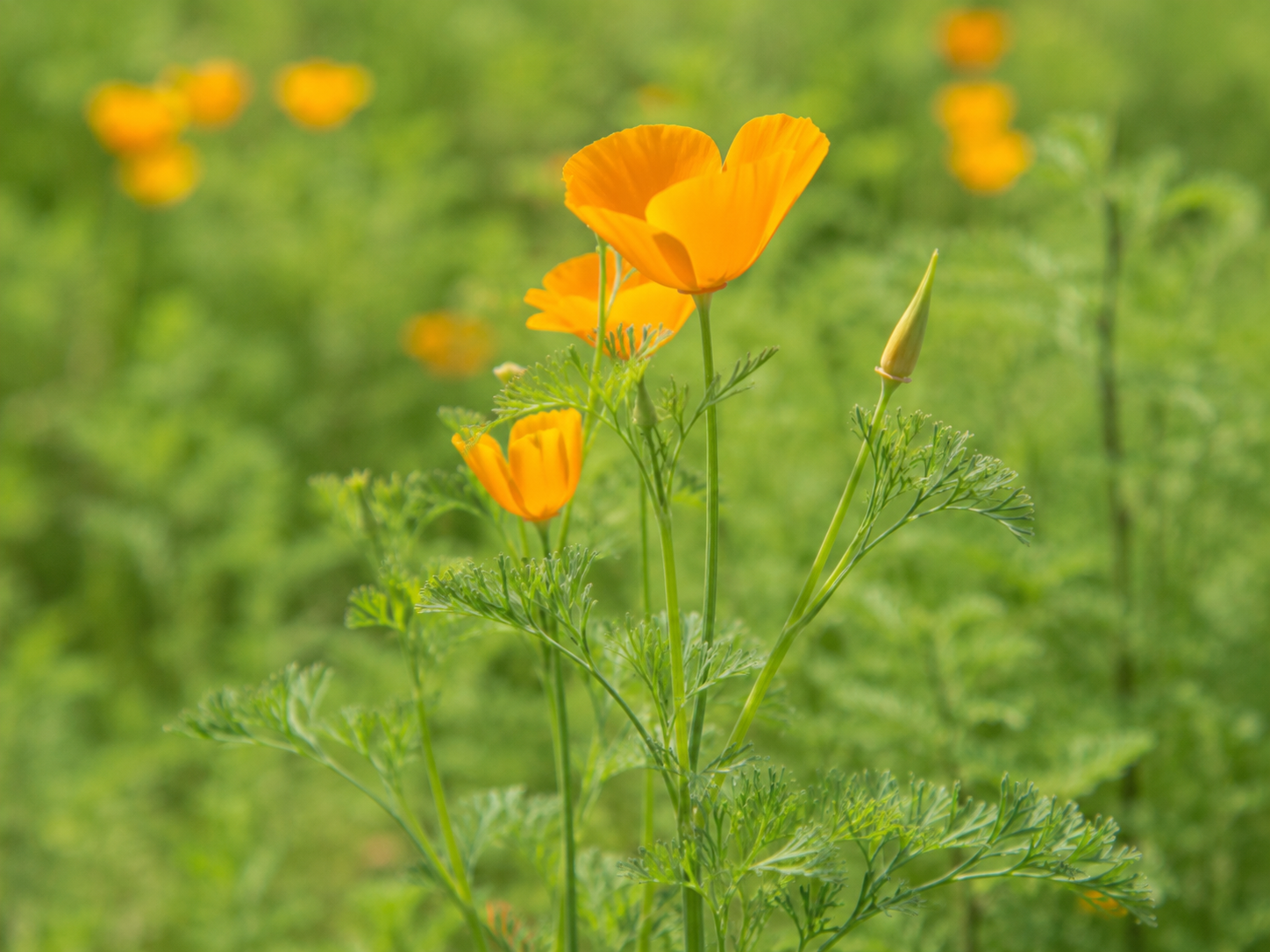
California Poppy (Eschscholzia californica) is a respected traditional herb native to the western coast of North America, where it has been celebrated, prized, and used by Indigenous communities and Western herbalists for centuries. It is important to make one clear distinction for pet parents. California Poppy is entirely different from the opium poppy (Papaver somniferum). It does not contain heavy, addictive narcotic opiates like morphine or codeine. In modern pet herbal wellness, California Poppy is primarily used as a gentle, non-addictive botanical to support the nervous system, encourage relaxation, and maintain a calm, settled demeanor during times of temporary stress or physical tension.
California Poppy is an active botanical. It carries specific safety cautions related to use before surgical procedures and its potential to interact with conventional sedatives. Reviews highlight its unique isoquinoline alkaloids, which means it deserves care, proper scaling, and careful situational use. For this reason, California Poppy should be introduced under veterinary guidance, especially in pets with chronic health issues or those taking prescription behavior-modifying medications. It is a focused botanical tool designed to help stabilize an overstimulated nervous system. By understanding both its calming qualities and its safety parameters, pet parents can make informed decisions with the supervision of their trusted veterinarian.
Ingredient Identification
-
Common name: California Poppy, Golden Poppy
-
Botanical name: Eschscholzia californica
-
Plant family: Papaveraceae, Poppy family
-
Plant part used: Dried aerial parts, including leaves, stems, and orange flowers
-
Other common names: Copa de oro, flame flower, ballast poppy
-
Native range: Western North America, stretching from Washington state down to Baja California
-
Common growing regions: Sunny, arid, and well-drained temperate climates globally
-
Common preparation forms: Standardized extracts, alcohol-free liquid glycerites, tinctures, and dried powders
-
Main active constituents: Isoquinoline alkaloids, most notably californidine, escholtzine, protopine, and allocryptopine
Associated Pet Wellness Categories
-
Calm and Mood Support: California Poppy is studied for supporting normal nervous system function and emotional relaxation. It is often chosen when a pet needs help maintaining a calm disposition without the profound, disorienting sedating effects of pharmaceutical tranquilizers. By interacting gently with the body's natural GABA pathways, it helps soothe nervous tension, allowing dogs and cats to feel more grounded and at ease in their environment. This makes it a relevant herbal ally for pets that pace, become hyper-vigilant, or struggle to rest in busy households.
-
Stress Response Support: This herb is traditionally used for acute situational behavioral stress rather than as a broad daily tonic. Whether a dog is facing the noise of a summer thunderstorm or a cat is stressed about an upcoming car ride, California Poppy provides targeted support for the acute stress response. It acts gradually but efficiently to soften the sharp edge of situational worry, helping the pet process environmental triggers more calmly and return to baseline behavior.
-
Comfort and Relaxation Support: California Poppy is used traditionally for normal muscle relaxation and physical comfort during rest. Animals holding emotional worry often show physical stiffness, muscle twitching, or body tension. California Poppy's chemical profile helps release held muscular and nervous tension, supporting recovery from physical strain and promoting physical ease alongside mental relaxation.
-
Restful Sleep Support: Because sleep supports immune function and cognitive health, California Poppy is used in holistic contexts to encourage healthy, undisturbed rest cycles. Pets that struggle to settle at night due to age, environmental shifts, or sensory decline may benefit from its gentle sleep-supportive actions, which encourage a natural transition into rest without disrupting normal morning alertness.
Common Pet Wellness Uses
-
Situational Calming and Noise Sensitivities: California Poppy has a long, documented history of use as a relaxing and grounding botanical. In dogs, it is used for temporary situational triggers such as fireworks, vet visits, and separation distress. For cats, it is carefully used for travel stress and environmental changes. Research in animal models and human trials demonstrates support for behavioral relaxation. The evidence level is considered moderate for general relaxing action, though still emerging for pet-specific clinical trials.
-
Musculoskeletal Tension Support: California Poppy is sometimes used in holistic veterinary practice for pets showing physical restlessness or full-body tension secondary to structural stress. The evidence is supported primarily by traditional use, clinical experience, and veterinary texts evaluating its relaxing qualities.
-
Nighttime Restlessness in Senior Pets: In holistic small animal practice, California Poppy liquid glycerites are sometimes used to support senior dogs and cats that experience disrupted sleep schedules or nighttime pacing, helping maintain a peaceful state when evening arrives.
Best Known Herbal Actions
-
Relaxing Nervine: A nervine is an herb that supports, nourishes, or relaxes the nervous system. As a relaxing nervine, California Poppy encourages a calm, rested state without causing deep, unnatural stupor. It helps down-regulate an overactive nervous system, making it useful for pets caught in cycles of alertness or restlessness.
-
Anxiolytic Support: This action refers to the herb's traditional and studied capacity to help ease the physiological markers of worry and tension, supporting smoother emotional transitions during moments of environmental stress.
-
Antispasmodic: Antispasmodics help support normal muscle relaxation and ease physical tension. When pets are anxious, they often hold rigid tension in their skeletal muscles, which can lead to trembling or physical discomfort. California Poppy helps release involuntary muscle contractions, allowing the body to soften and relax along with the mind.
Key Constituents and Why They Matter
The primary active compounds found in California Poppy are a distinct group of isoquinoline alkaloids, which are separate from the narcotic morphinan alkaloids of the opium poppy. The most significant include californidine, escholtzine, protopine, and allocryptopine. These constituents are associated with the plant's gold-orange color and nervous-system-relaxing properties. Research indicates that these alkaloids interact gently with GABA receptors in the central nervous system to support relaxation and protect tissues from over-excitation. This calming pathway supports natural ease without dependency. This means California Poppy works differently than common chemical sedatives, offering a non-addictive herbal pathway to tranquility.
Western Herbalism Profile
In Western herbalism, herbs are classified by taste, energetics, and tissue affinities to guide how they interact with the body. California Poppy is characterized by a distinctly bitter, slightly acrid, and earthy taste. Energetically, Western herbalists consider California Poppy cooling in temperature and drying in nature. It has a pronounced tissue affinity for the central nervous system, brain, and musculoskeletal system.
Western herbalists have long indicated California Poppy for acute nervous tension, physical spasms, stubborn sleeplessness, and behavioral overstimulation, especially when an overactive mind creates physical restlessness. It is viewed as an herb that cools hot, frantic energy and encourages physical relaxation when the nervous system is overstimulated. It helps bring the body's energy back to a calmer state when situational panic causes it to rise.
Western herbalists also maintain clear boundaries around its use. Because of its cooling, drying nature and concentrated alkaloid profile, it is usually formulated as a specialized tool for acute or cyclic situational stress rather than a permanent everyday supplement. It is often combined with nutritive or warming herbs to balance the pet's overall constitution during short-term use.
Traditional Chinese Medicine Profile
Because California Poppy is native to Western North America, it is not a classical herb found in the ancient Traditional Chinese Medicine (TCM) materia medica. It was not historically categorized by early Chinese herbalism practitioners. As global herbalism has expanded, modern TCM practitioners and holistic veterinarians who use TCM frameworks have evaluated California Poppy to understand how it behaves according to Chinese energetic principles.
Through a modern TCM lens, practitioners generally view California Poppy as having a bitter, slightly acrid flavor and a cool, drying energy. It is believed to primarily enter the Heart and Liver meridians. In TCM, the Heart meridian houses the "Shen," or the spirit and mind. When a pet is anxious, pacing, or terrified of a thunderstorm, the Shen is considered disturbed, ungrounded, or floating upward due to excess Heat. California Poppy's traditional role is viewed as clearing Heart Heat, calming the Shen, and anchoring scattered energy.
Its antispasmodic effects are also viewed as smoothing stagnant Liver Qi. In TCM, the Liver controls the smooth flow of Qi and emotions, as well as the sinews and tendons. When Liver Qi stagnates or overheats due to stress, it can appear as physical tension, trembling, and hyper-reactivity. By cooling and moving this Qi, California Poppy helps relax the muscles and soothe behavioral frustration. Despite these useful actions, modern TCM practitioners advise against long-term unmonitored use, recognizing that its cool, dry nature could eventually deplete Yin or Blood if overused in a fragile animal.
Ayurvedic Medicine Profile
California Poppy is not native to India and is not part of the classical Ayurvedic pharmacopeia. It does not appear in ancient Ayurvedic texts. Still, modern Ayurvedic practitioners and holistic veterinarians sometimes analyze Western herbs using Ayurvedic principles to understand how they affect the three doshas: Vata, Pitta, and Kapha.
From an Ayurvedic perspective, California Poppy is recognized for its bitter and acrid tastes (rasa), cooling energy (virya), and pungent post-digestive effect (vipaka). Its primary doshic action is strongly pacifying to Pitta and Kapha, while having a dual, sensitive relationship with Vata. Pitta dosha is governed by fire and rules metabolism and mental intensity. When elevated, it appears as irritability, overheating, and frustration. California Poppy's cooling and bitter traits help clear this Pitta fire from the mind.
Vata dosha is governed by air and rules the nervous system. When Vata becomes aggravated by sudden changes, loud noises, or travel, it appears as fear, panic, restlessness, and muscle tremors. While California Poppy's grounding and nerve-relaxing properties make it a useful herb for acute Vata panic, its cooling and drying nature means it should be used carefully with Vata pets. If given continuously without warming, grounding support, it could over-dry a Vata animal's system. An Ayurvedic approach would reserve California Poppy for acute Vata imbalance and Pitta behavioral intensity, with careful monitoring.
Research Summary
It is important to acknowledge that double-blind, peer-reviewed clinical trials evaluating California Poppy directly in dogs and cats are currently limited. The botanical is recognized in holistic veterinary manuals for supporting small animals during behavioral stress and nervous overstimulation.
-
Animal Research: Studies in mice and rats demonstrate that California Poppy extracts support dose-dependent anxiolytic-like behavioral relaxation, prolong sleep duration, and decrease spontaneous locomotor activity without causing muscle relaxation or coordination loss.
-
Human Research: Multiple clinical trials and observational studies have evaluated California Poppy extract, often combined with complementary minerals like magnesium, for mild-to-moderate sleep disturbances and occasional situational anxiety.
-
In Vitro Research: Laboratory studies have demonstrated that isolated alkaloids of California Poppy bind to GABA-A and benzodiazepine receptors and interact with 5-HT1A serotonin receptors, supporting its traditional calming mechanisms.
A significant gap remains in extensive species-specific pharmacokinetic data for pets. Human and rodent research provides directional insight, but it does not guarantee pet efficacy or safety without veterinary guidance.
What the Research Means for Dogs
For dogs, the most relevant wellness category for California Poppy is calm and mood support during acute situational triggers. The strongest support for its use comes from generalized relaxing and GABA-interactive effects observed in human and rodent models, along with centuries of traditional Western herbalism. The weakest support lies in the lack of large-scale canine clinical trials validating exact, long-term therapeutic dosages across different breeds. Due to its potential to increase central nervous system relaxation, canine sedation baselines should be considered. California Poppy may be helpful for dogs dealing with thunderstorm phobias or holiday firework stress, but veterinary oversight is necessary, especially if the dog already takes prescription behavioral medications.
What the Research Means for Cats
In cats, California Poppy's most relevant wellness categories are temporary situational stress response and rest cycle support. Cats experiencing acute stress from travel, hospital visits, or territorial changes may benefit from the cooling and nerve-soothing actions of this herb. Cats can be sensitive to plants containing concentrated alkaloid profiles, and their liver processing pathways require smaller, carefully controlled serving sizes. California Poppy also has a naturally bitter taste that may trigger hypersalivation, or drooling, if not masked or diluted in a palatable delivery system like a sweet glycerite. Evidence for its use in cats is supported mostly by holistic veterinary texts and clinical experience rather than feline-specific safety trials, making a veterinarian's guidance essential before introducing California Poppy to a cat.
Forms Used in Pet Wellness
-
Tincture/Glycerite: Liquid extracts allow precise, drop-by-drop measuring, which is important for active herbs. Alcohol-free glycerites are often preferred for small animals because the natural sweetness of glycerin helps mask California Poppy's bitter flavor.
-
Powder/Capsule: Used to deliver whole-plant aerial benefits or standardized percentages of alkaloids. This form can be mixed into wet food, though picky eaters may detect the bitter taste.
-
Topical: California Poppy is not commonly used topically in pet applications.
-
Chews: Chew formats are used in pet wellness for palatability and situational administration when appropriate for the individual pet.
Safety Profile
California Poppy is a relaxing botanical, and its general safety profile requires respect. It is associated with interacting with GABA pathways and may compound central nervous system relaxation.
-
Dogs: Generally well-tolerated when used for short-term, situational support, but should be monitored for excessive lethargy or temporary drowsiness.
-
Cats: Requires high caution and low serving sizes due to sensitive feline palates, alkaloid sensitivity, and unique liver metabolism pathways.
-
Puppies, Kittens, Pregnant or Nursing Pets: Avoid entirely. There is a lack of safety data regarding developing reproductive and embryonic systems, and selected alkaloids may have mild uterine-stimulating qualities.
-
Pets Scheduled for Surgery: Strong caution is required. California Poppy should be discontinued before scheduled surgical procedures requiring anesthesia due to compounding sedative risks. Discuss discontinuation timing with your veterinarian.
-
Possible Adverse Effects: Mild digestive upset, temporary drowsiness, lethargy, or mild salivation if the bitter taste contacts the tongue.
-
When to Stop Use: Discontinue and consult a veterinarian if the pet shows vomiting, severe uncoordinated movement, profound lethargy, or sudden refusal to eat.
Please note: Before beginning any pet supplements, herbs, or nutritional changes, consult your veterinarian first. This educational information is intended to support informed conversations with your veterinary team and should not replace professional guidance.
Contraindications
-
Upcoming surgical procedures or general anesthesia. Discuss discontinuation timing with your veterinarian.
-
Concurrent use with heavy prescription behavior-modifying sedatives or tranquilizers unless approved by a veterinarian.
-
Severe depressive behavioral states.
-
Pregnancy and lactation.
Drug and Supplement Interactions
-
Sedatives and CNS Depressants: California Poppy may increase the effects of barbiturates, benzodiazepines, and other prescription psychopharmacologic agents, increasing the risk of profound lethargy or respiratory slowing.
-
MAO Inhibitors: California Poppy may theoretically interact with monoamine oxidase inhibitors, requiring monitoring and professional evaluation.
-
Other Calming Herbs: California Poppy may have a compounding, additive effect when combined with other strong relaxing nervines like Kava or Valerian Root, so formulas should be balanced carefully.
Dosage and Serving Context
Serving context depends heavily on species, weight, individual behavioral baseline, and whether the herb is prepared as a raw dried herb powder or concentrated liquid extract. There is no generic household measurement for California Poppy. Standardized glycerites are concentrated compared to raw ground aerial powders. When reference ranges are used, veterinary botanical texts often provide dosing by weight (mg/kg) divided daily. California Poppy is often given shortly before a known situational stressor when recommended by a veterinarian. For the safest and most appropriate use, discuss California Poppy with your veterinarian before giving it to your dog or cat. Your veterinarian can help evaluate your pet's health history, medications, age, stress response, sedation risk, and wellness needs before use.
How This Ingredient Fits into BARC Formulas
At LivHerbals, ingredients like California Poppy are approached with care, respect for traditional use, and attention to pet-specific safety considerations. When an ingredient is used in a BARC formula, it is selected for a specific wellness purpose and balanced within the larger formula rather than treated as a standalone quick fix.
Ingredient Profile Summary
-
Best known for: Situational calming, muscle relaxation, and noise sensitivity support.
-
Most relevant pet wellness categories: Calm support, stress response, comfort and relaxation.
-
Most relevant herbal actions: Relaxing nervine, anxiolytic support, antispasmodic.
-
Research strength: Strong in animal and human models. Limited in large-scale clinical pet trials.
-
Main cautions: California Poppy is supportive for acute environmental stress, but it should be used carefully. It should be paused before surgery unless directed by a veterinarian and should not be mixed casually with prescription sedatives. Use this herb under veterinary guidance to support your pet's safety and well-being.
Pet Parent Takeaway
California Poppy is a traditionally revered botanical known for supporting relaxation, muscle tension release, and an overstimulated nervous system. When a dog or cat is overwhelmed by acute stressors like loud noises, thunderstorms, or travel, California Poppy may offer short-term support within a broader wellness plan. It is a targeted tool rather than an everyday treat. To use California Poppy safely and appropriately, partner with your veterinarian and consider your pet's full health picture before starting any new herb or supplement.
Disclaimer: This content is for educational purposes only and is not intended to diagnose, treat, cure, or prevent any disease. Always consult your veterinarian before starting any new supplement, herb, food, or wellness routine for your pet, especially if your pet is pregnant, nursing, taking medication, has a diagnosed condition, or is under veterinary care.
References
Pet-Specific Studies and Veterinary References
-
Wynn, S. G., & Fougère, B. J. (2007). Veterinary Herbal Medicine. Mosby Elsevier.
-
Basko, I. (2004). Fresh Plant Materia Medica.
Human and Animal Studies
-
Rolland, A., et al. (2001). Behavioral effects of the American traditional plant Eschscholzia californica: Sedative and anxiolytic properties. Phytotherapy Research.
-
Hanus, M., et al. (2004). Double-blind, randomized, placebo-controlled study to evaluate the efficacy and safety of a fixed combination containing Eschscholzia californica for mild-to-moderate anxiety disorders. Current Medical Research and Opinion.
Safety and Toxicology References
-
American Herbal Products Association (AHPA). Botanical Safety Handbook (2nd ed.).

Written by Angela Petersen
.%20Learn%20about%20its%20traditional%20cal...)