

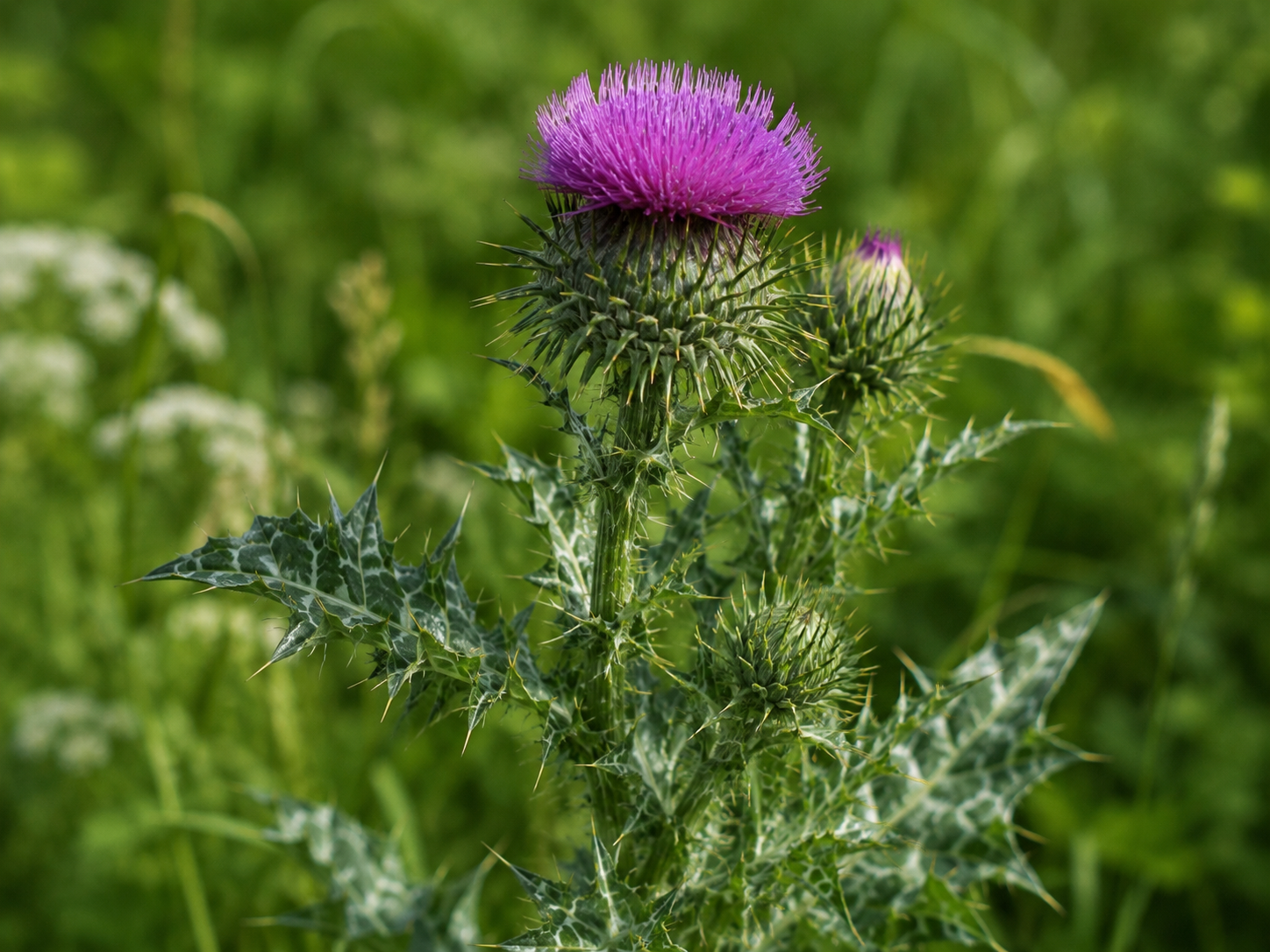
Milk Thistle for Dogs and Cats: Grounded Hepatic Protection and Cell Regeneration
Milk Thistle for Dogs and Cats: Ingredient Profile, Uses, and Safety
Explore this LivHerbals ingredient profile for Milk Thistle (Silybum marianum). Learn about its traditional liver-supporting uses, pet safety facts, and research.
Understanding Milk Thistle in Pet Wellness
Milk Thistle (Silybum marianum) is one of the most researched and widely recognized botanicals in the field of liver support. Native to the Mediterranean basin and now naturalized worldwide, this striking, prickly plant has been used in traditional European herbalism for more than 2,000 years. In modern pet herbal wellness, the hard, dark seeds of the Milk Thistle plant are primarily used to support normal liver function, cellular resilience, bile flow, and metabolic processing. Pet parents most often encounter this botanical in veterinarian-guided wellness conversations related to liver support, detoxification pathways, medication processing, senior metabolic health, and antioxidant protection.
Unlike herbs that simply stimulate an organ to work harder, Milk Thistle is known for supporting liver cell membranes and helping protect normal liver tissue from oxidative stress. It matters for dogs and cats because companion animals may encounter environmental pollutants, medications, dietary stressors, and long-term wellness challenges that place processing demands on the liver. Milk Thistle offers a traditional and research-supported way to help maintain the liver's natural resilience and daily function.
Milk Thistle is an active metabolic botanical rich in a flavonolignan complex known as silymarin. Because it influences liver pathways, it carries safety cautions related to possible interactions with cytochrome P450 enzyme pathways, which help the body clear certain medications. It also belongs to the Asteraceae family, which may rarely trigger sensitivities in pets allergic to related plants such as daisies, ragweed, sunflowers, or chamomile. For this reason, Milk Thistle should be used under veterinary guidance, especially in animals taking long-term prescription medications such as seizure medications, sedatives, or other liver-metabolized drugs. By understanding both its liver-supporting qualities and its safety parameters, pet parents can make informed decisions with the supervision of their trusted veterinarian.
Ingredient Identification
-
Common name: Milk Thistle, Mary Thistle
-
Botanical name: Silybum marianum, formerly Carduus marianus
-
Plant family: Asteraceae, Daisy or Sunflower family
-
Plant part used: Dried seeds, technically the fruit or achenes
-
Other common names: Holy thistle, Marian thistle, St. Mary's thistle, Shui Fei Ji
-
Native range: Mediterranean basin, Southern Europe, North Africa, and the Middle East
-
Common growing regions: Dry, rocky soils and regulated organic agricultural farms across temperate zones
-
Common preparation forms: Standardized extracts calibrated to 70 to 80% silymarin content, liposomal or phosphatidylcholine-bound extracts known as phytosomes, alcohol-free liquid glycerites, and dried seed powders
-
Main active constituents: Silymarin, a flavonolignan complex composed primarily of silybin A and B, silychristin, and silydianin, along with flavonoids such as taxifolin and quercetin, linoleic acid, and proteins
Associated Pet Wellness Categories
-
Liver, or Hepatic, Health and Regeneration: Milk Thistle is extensively studied for supporting normal liver function and liver cell resilience. It is often discussed when a pet needs help maintaining healthy liver enzyme baselines or recovering from metabolic stress. By interacting with liver cell membranes and supporting protein synthesis pathways, it helps safeguard existing hepatocytes and supports the body's natural process of maintaining healthy liver tissue.
-
Detoxification and Cellular Cleansing: This botanical is traditionally used to support the body's natural waste clearance pathways. The liver continuously processes environmental impurities, dietary byproducts, and medication metabolites. Milk Thistle acts as a supportive botanical tool for liver filtration and glutathione maintenance, helping the body manage everyday metabolic workloads.
-
Kidney, or Renal, Protection: Milk Thistle is used in holistic contexts to support normal kidney function and protect delicate renal tissues from oxidative stress. Because the kidneys work closely with the liver to excrete metabolic waste, the antioxidant properties of silymarin may support overall urinary and metabolic wellness.
-
Antioxidant and Inflammatory Response Support: As a bioactive flavonolignan complex, silymarin helps the body maintain normal antioxidant status at a cellular level. It supports the body's natural defenses against systemic oxidative stress, helping protect internal organs and cellular membranes from premature wear.
Common Pet Wellness Uses
-
Pharmaceutical Processing and Liver Support: Milk Thistle has a long, documented history of use as a supportive botanical during the use of necessary conventional medications. In dogs, it is often discussed as companion support for pets taking long-term non-steroidal anti-inflammatory drugs, phenobarbital for seizures, or certain antiparasitic treatments. The evidence level is considered strong for its hepatoprotective action across multiple species, though use alongside medications should be guided by a veterinarian.
-
Senior Metabolic and Enzyme Maintenance: Milk Thistle is frequently used in holistic veterinary practice for senior dogs and cats showing mild age-related changes in liver enzyme markers, such as ALT or ALP, on routine blood work. The evidence is supported by clinical use, animal-based models evaluating liver recovery, and small animal clinical experience cited in veterinary botanical texts.
-
Toxin Exposure Recovery: In veterinary contexts, concentrated Milk Thistle extracts are sometimes used as supportive care following certain toxin exposures, including toxic mushroom exposure. These situations require urgent veterinary care and should never be managed at home with supplements alone.
Best Known Herbal Actions
-
Hepatoprotective: A hepatoprotective herb supports the liver's natural defenses against toxins, chemicals, and free radicals. Milk Thistle is best known for helping support liver cell membrane integrity and normal cellular resilience.
-
Hepatic Trophorestorative: A trophorestorative provides targeted support to restore, tone, and maintain an organ over time. Milk Thistle is traditionally recognized for supporting liver tissue resilience and the body's natural repair processes.
-
Antioxidant: Antioxidants help neutralize free radicals that can damage cells. Silymarin helps support glutathione levels in the liver and provides antioxidant support for internal organs.
-
Mild Cholagogue: A cholagogue promotes healthy bile flow from the gallbladder into the intestines. Milk Thistle gently supports normal bile production and secretion, which assists fat digestion and the clearance of fat-soluble waste.
Key Constituents and Why They Matter
The primary active compounds found in Milk Thistle seed are a concentrated group of flavonolignans collectively known as silymarin. The most biologically active fraction within silymarin is silybin, also called silibinin. These constituents are associated with Milk Thistle's liver-protecting and liver-supporting properties. Research indicates that silybin interacts with hepatocyte, or liver cell, membranes and supports cellular defense against certain toxins. It also supports protein synthesis pathways involved in normal tissue maintenance.
Silymarin is poorly soluble in water, which means raw seed powders and weak water infusions may not deliver meaningful amounts of active compounds. This is why standardized extracts and phosphatidylcholine-bound extracts, also called phytosomes, are often preferred when targeted liver support is needed. These forms improve bioavailability and help the active compounds reach the liver more efficiently.
Western Herbalism Profile
In Western herbalism, herbs are classified by taste, energetics, and tissue affinities to guide how they interact with the body. Milk Thistle is characterized by a slightly sweet, oily, bitter, and earthy taste. Energetically, Western herbalists consider Milk Thistle neutral to slightly cooling in temperature and mildly moistening in nature due to its seed oil content. It has a pronounced tissue affinity for the liver, gallbladder, kidneys, and portal circulation.
Western herbalists have long indicated Milk Thistle for metabolic burden, sluggish digestion, liver stress, and reduced systemic clearance, especially when environmental exposure, diet, or medication use places added demand on the body. It is viewed as an herb that protects vulnerable metabolic tissues, cools an overworked liver pattern, and supports a steadier baseline in a burdened system.
Western herbalists also maintain clear boundaries around its use. Because of its targeted metabolic actions and tough seed coat, Milk Thistle is formulated carefully. Practitioners generally avoid relying on whole, uncrushed seeds or weak teas because silymarin is not well extracted by water alone. Standardized, bioavailable forms are preferred when meaningful liver support is desired.
Traditional Chinese Medicine Profile
Milk Thistle is evaluated within modern Traditional Chinese Medicine (TCM) frameworks. Known in contemporary holistic practice as Shui Fei Ji, it has been integrated by modern TCM practitioners and holistic veterinarians to understand patterns involving liver burden, heat accumulation, and metabolic stagnation.
Through a TCM lens, practitioners view Shui Fei Ji as having a bitter flavor paired with cool energy. It is believed to primarily enter the Liver and Gallbladder meridians. In TCM, the Liver supports the smooth flow of Qi, stores the Blood, and governs natural detoxification pathways. When a pet shows elevated liver enzymes, jaundice, irritability, or dark urine related to metabolic stress, the system may be viewed as affected by "Damp-Heat in the Liver and Gallbladder" or "Liver Qi Stagnation." Milk Thistle's traditional role is viewed as clearing Heat, resolving Toxicity, soothing the Liver, and promoting smoother Liver Qi and bile flow.
Because Milk Thistle is cooling and bitter, it should be monitored in cases of severe Spleen Deficiency with deep internal cold, especially if given in large amounts. In those patterns, overly cooling or bitter support could be inappropriate without balancing guidance from a qualified practitioner.
Ayurvedic Medicine Profile
While Milk Thistle is native to the Mediterranean basin and does not appear in the classical Ayurvedic pharmacopeia of tropical India, modern Ayurvedic practitioners and holistic veterinarians often analyze this botanical using Ayurvedic principles to understand how it interacts with the three doshas: Vata, Pitta, and Kapha.
From an Ayurvedic perspective, Milk Thistle is recognized for its bitter and mildly astringent tastes (rasa), cooling energy (virya), and pungent post-digestive effect (vipaka). Its primary doshic action is strongly pacifying to Pitta and Kapha, while requiring situational monitoring for Vata if used in excess. Pitta dosha rules metabolism, heat, digestion, the liver, or Yakrit, and the blood, or Rakta Dhatu. When elevated, it may appear as vascular heat, tissue irritation, liver burden, and toxic accumulation. Kapha rules structure and fluid stability. When stagnant, it may appear as sluggish circulation and metabolic heaviness.
Milk Thistle's cooling and bitter properties help balance these patterns by cooling Pitta intensity, helping clear Ama, or toxic accumulation, from metabolic channels, and moving stagnant Kapha patterns. Ayurvedic practitioners view Milk Thistle as a modern Yakrit Rasayana, or liver rejuvenative tonic, that helps protect metabolic fire without overheating the body.
Research Summary
Milk Thistle is supported by a significant body of research compared with many traditional botanicals. It has been evaluated in human, animal, and laboratory studies, particularly for liver-related support.
-
Animal Research: Studies in canine, feline, and rodent models have evaluated standardized silymarin extracts for chemical-induced hepatotoxicity models, liver enzyme markers such as ALT, AST, and ALP, and supportive care contexts involving toxin exposure.
-
Human Research: Clinical trials, meta-analyses, and observational studies have evaluated Milk Thistle extract for liver-related challenges, liver cell integrity, antioxidant support, and glutathione status in the presence of environmental and metabolic stressors.
-
In Vitro Research: Laboratory studies have demonstrated that silybin can support nucleolar polymerase A activity, ribosomal RNA synthesis, and free radical scavenging activity, helping protect cellular membranes from oxidative stress.
A gap remains in standardized agreement on exact milligram-per-kilogram dosing across all veterinary practices and all liver-support contexts. Human, canine, and feline data provide strong directional support, but individual use should still be guided by veterinary evaluation and blood work when appropriate.
What the Research Means for Dogs
For dogs, the most relevant wellness categories for Milk Thistle are medication-processing support, senior metabolic maintenance, and liver enzyme support. Dogs may be prescribed long-term medications such as phenobarbital for seizures or NSAIDs for mobility support, both of which can increase processing demands on the liver. The strongest support for Milk Thistle's use comes from its documented role in supporting liver cells during metabolic or pharmaceutical stress. The weakest support lies in expecting Milk Thistle to reverse end-stage liver failure where little viable tissue remains. Due to its potential to affect cytochrome P450 pathways, veterinary oversight is important when dogs take prescription medications. Milk Thistle may be highly useful for dogs, but blood work monitoring and medication review are important parts of safe use.
What the Research Means for Cats
In cats, Milk Thistle's most relevant wellness categories are liver protection, metabolic resilience, and support for sensitive liver pathways. Cats have unique and sensitive liver metabolism and may be vulnerable to rapid decline if they stop eating or experience significant metabolic stress. Milk Thistle's hepatoprotective and antioxidant actions make it one of the more commonly used botanicals in feline holistic care. However, formulation matters. Raw extract can be bitter and poorly soluble, which may trigger drooling or food refusal if not masked in a high-quality alcohol-free glycerite or encapsulated form. Evidence for its use in cats is supported by veterinary texts, animal research, and clinical experience, but veterinarian guidance remains essential to choose the correct form and monitor the cat's health status.
Forms Used in Pet Wellness
-
Standardized Extract Powders/Capsules: This is one of the most important preparation types. To be meaningful, Milk Thistle is often standardized to contain 70 to 80% silymarin. Raw, unstandardized seed powder may provide limited benefit due to poor bioavailability.
-
Phytosome Complexes, such as Siliphos: These are advanced extracts where silybin is bound to phosphatidylcholine, a lipid. This improves absorption and bioavailability in the digestive tract, making it a preferred form for targeted liver support.
-
Tincture/Glycerite: Liquid extracts allow precise measuring. Alcohol-free glycerites are often preferred for small animals, though they should be made from concentrated extracts to deliver meaningful levels of silymarin because the active compounds are not highly water-soluble.
-
Chews: Chew formats are used in pet wellness for palatability and daily metabolic maintenance, often combined with other antioxidant-supportive nutrients.
Safety Profile
Milk Thistle is generally considered one of the better-tolerated botanicals in herbal medicine. Its safety profile is strong, but its targeted action on liver pathways and its plant family still require respect.
-
Dogs: Generally well-tolerated for long-term use. The most common side effect is mild, temporary stool softening if introduced too quickly, likely related to its bile-supporting action.
-
Cats: Generally well-tolerated when properly formulated in bioavailable, taste-masked formats and used with professional guidance.
-
Puppies, Kittens, Pregnant or Nursing Pets: Use only under veterinary direction. Milk Thistle has traditional use related to lactation, but formal reproductive safety data in small animals remains limited.
-
Asteraceae Family Allergies: Use caution in pets with known severe sensitivities to plants in the Asteraceae family, including daisies, ragweed, sunflowers, or chamomile.
-
Possible Adverse Effects: Mild temporary loose stools, minor gas, or digestive adjustment during the first few days of administration.
-
When to Stop Use: Discontinue and consult a veterinarian if the pet shows severe diarrhea, unexpected vomiting, sudden refusal to eat, or signs of an allergic reaction such as hives or facial swelling.
Please note: Before beginning any pet supplements, herbs, or nutritional changes, consult your veterinarian first. This educational information is intended to support informed conversations with your veterinary team and should not replace professional guidance.
Contraindications
-
Known severe allergy or hypersensitivity to plants in the Asteraceae, or Daisy, family.
-
Complete bile duct obstruction, due to its gentle bile-stimulating properties.
-
Unmonitored use alongside long-term prescription medications that depend on liver metabolism.
Drug and Supplement Interactions
-
Cytochrome P450 Metabolized Drugs: Milk Thistle, especially silymarin, may affect certain liver enzymes, such as CYP3A4, that help clear medications from the bloodstream. This may potentially alter clearance rates of medications such as phenobarbital, certain antibiotics, or behavior medications. A veterinarian may need to monitor blood drug levels or adjust dosages.
-
Insulin and Diabetes Medications: Because Milk Thistle supports liver function and metabolic pathways, blood glucose baselines may need monitoring if used with prescription diabetes medications.
-
Other Liver Support Supplements: Milk Thistle is often combined with SAM-e, glutathione, B-vitamins, and other liver-supportive nutrients under professional guidance.
Dosage and Serving Context
Serving context depends heavily on species, weight, metabolic baseline, and the standardization of the extract. There is no safe or effective generic household serving size for raw Milk Thistle seed. Poor solubility means raw powder may be less effective than standardized extracts. Targeted use often relies on standardized extracts containing 70 to 80% silymarin or phytosome complexes. When reference ranges are used, veterinary botanical texts focus on total pet weight (mg/kg) divided into daily servings, because silymarin clears from the bloodstream relatively quickly. Milk Thistle is typically given with food to support absorption, since dietary fats aid uptake of lipophilic flavonolignans, and to minimize mild stool softening. For the safest and most appropriate use, discuss Milk Thistle with your veterinarian before giving it to your dog or cat. Your veterinarian can help evaluate your pet's health history, medications, age, liver values, bile flow status, blood glucose status, and wellness goals before use.
How This Ingredient Fits into BARC Formulas
At LivHerbals, ingredients like Milk Thistle are approached with care, respect for traditional use, and attention to pet-specific safety considerations. When an ingredient is used in a BARC formula, it is selected for a specific wellness purpose and balanced within the larger formula rather than treated as a standalone quick fix.
Ingredient Profile Summary
-
Best known for: Supporting liver cell resilience, liver regeneration pathways, and antioxidant protection.
-
Most relevant pet wellness categories: Liver, or hepatic, health, detoxification support, kidney protection, antioxidant defense.
-
Most relevant herbal actions: Hepatoprotective, hepatic trophorestorative, antioxidant, cholagogue.
-
Research strength: Strong across animal models, human clinical trials, and veterinary validation.
-
Main cautions: Milk Thistle is generally well-tolerated, but it should be used correctly in standardized, bioavailable forms when targeted support is desired. It may cause mild loose stools at first, may interact with the clearance of liver-metabolized medications such as phenobarbital, and should be used carefully in pets with severe Asteraceae allergies or complete bile duct obstruction. Use this herb under veterinary guidance to support your pet's safety and well-being.
Pet Parent Takeaway
Milk Thistle is a traditionally respected botanical known for supporting liver resilience, antioxidant protection, and metabolic processing. When a dog or cat is navigating the senior years, long-term medication use, environmental stressors, or the need for liver enzyme support, Milk Thistle may offer targeted support within a broader wellness plan. It works best when used in precise, bioavailable, standardized forms and paired with veterinary guidance, especially when a pet is taking prescription medications or has abnormal blood work. To use Milk Thistle safely and appropriately, partner with your veterinarian and consider your pet's full health picture before starting any new herb or supplement.
Disclaimer: This content is for educational purposes only and is not intended to diagnose, treat, cure, or prevent any disease. Always consult your veterinarian before starting any new supplement, herb, food, or wellness routine for your pet, especially if your pet is pregnant, nursing, taking medication, has a diagnosed condition, or is under veterinary care.
References
Pet-Specific Studies and Veterinary References
-
Wynn, S. G., & Fougère, B. J. (2007). Veterinary Herbal Medicine. Mosby Elsevier.
-
Basko, I. (2004). Fresh Plant Materia Medica.
-
Silver, R. J. (2014). Veterinary Clinical Uses of Hepatoprotective Botanicals. Professional Veterinary Reference Series.
-
Webb, C. B., et al. (2003). Silibinin (Milk Thistle extract) as a supportive therapy in canine hepatotoxicity. Journal of Veterinary Internal Medicine.
Human and Animal Studies
-
Flora, K., et al. (1998). Milk thistle (Silybum marianum) for the therapy of liver disease. American Journal of Gastroenterology.
-
Fraschini, F., et al. (2002). Pharmacology of silymarin. Clinical Drug Investigation.
-
Sonnenbichler, J., & Zetl, I. (1986). Biochemical effects of the flavonolignan silibinin on RNA, protein and DNA synthesis in rat livers. Progress in Clinical and Biological Research.
Safety and Toxicology References
-
American Herbal Products Association (AHPA). Botanical Safety Handbook (2nd ed.).
-
European Medicines Agency (EMA). (2018). Assessment report on Silybum marianum (L.) Gaertn., fructus. Committee on Herbal Medicinal Products (HMPC).

Written by Angela Petersen
.%20Learn%20about%20its%20traditional%20liver-supporting%20us...)