
Skullcap for Dogs and Cats: Grounded Nervous System Support and Behavioral Balance
Skullcap for Dogs and Cats: Ingredient Profile, Uses, and Safety
Explore this LivHerbals ingredient profile for Skullcap (Scutellaria lateriflora). Learn about its traditional relaxing nervine uses, pet safety facts, and research.
Understanding Skullcap in Pet Wellness
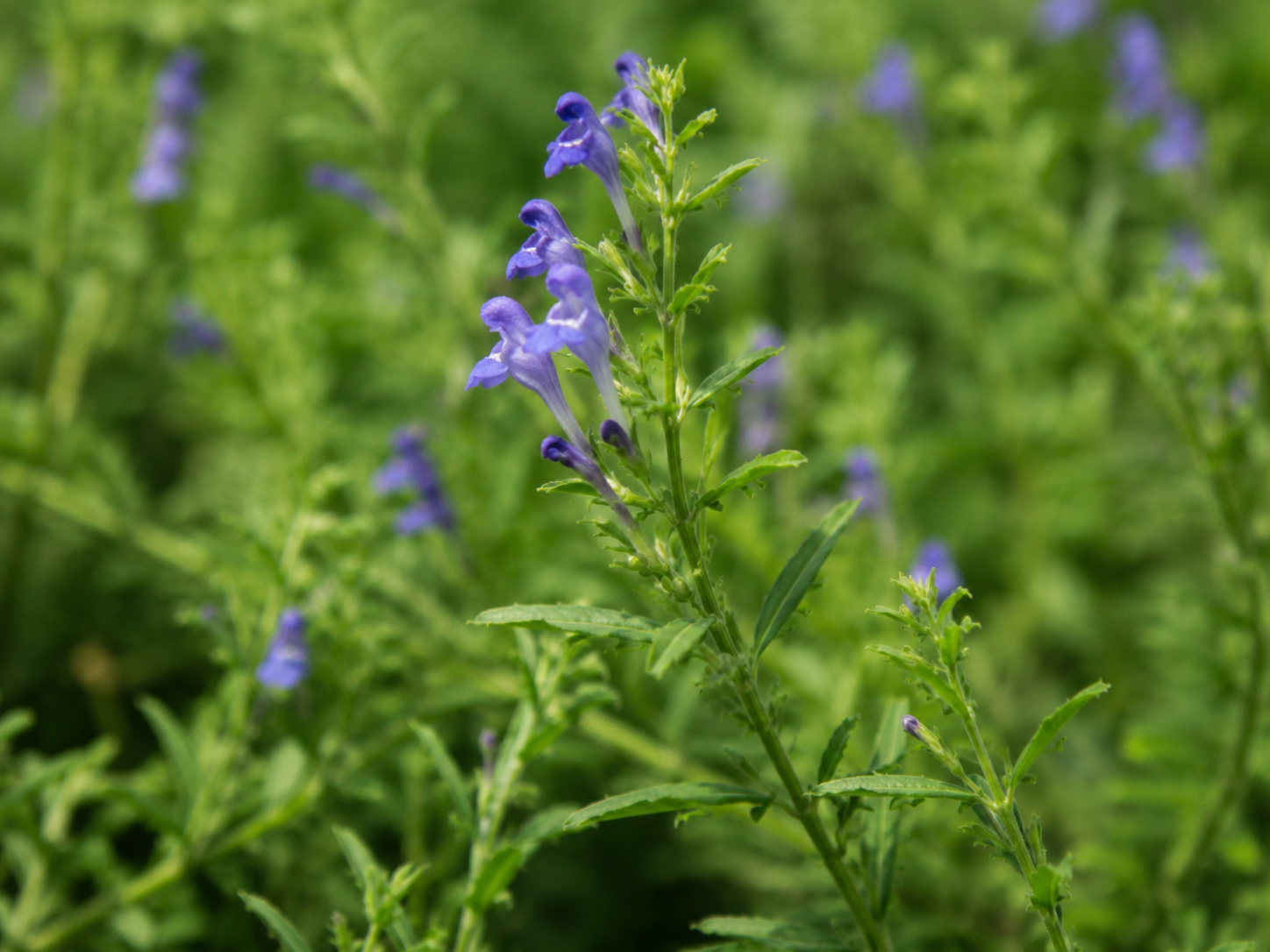
Skullcap (Scutellaria lateriflora), often called American Skullcap or Blue Skullcap, is a perennial herb in the mint family native to wetlands, meadows, stream banks, and moist woodlands of North America. The plant gets its common name from the small helmet-like shape of its blue flowers. It has a long history of use in Native American traditional medicine and early Western eclectic herbalism.
It is important to distinguish American Skullcap (Scutellaria lateriflora) from Chinese Skullcap (Scutellaria baicalensis), also known as Huang Qin. Although both share the Scutellaria genus, they are used differently in herbal traditions. Chinese Skullcap is commonly discussed for cooling, liver, microbial, and skin-related support, while American Skullcap is primarily known as a relaxing nervine used to support the central nervous system, emotional balance, and muscle relaxation.
In modern pet herbal wellness, Skullcap is primarily discussed for calm and behavioral support, nervous system maintenance, musculoskeletal relaxation, and restful sleep support. Pet parents most often encounter this botanical in veterinarian-guided wellness conversations related to situational stress, separation stress, noise sensitivity, travel, thunderstorms, fireworks, nighttime restlessness, muscle tension, and nervous system resilience.
Skullcap is generally considered gentle when properly sourced and appropriately scaled, but it is still an active neurological botanical. It may interact with sedatives, anti-seizure medications, behavior medications, anesthetics, and other central nervous system depressants. It is also not recommended during pregnancy, nursing, or breeding. Quality sourcing matters because historical adulteration with Germander (Teucrium species) has raised liver safety concerns. By understanding both its calming qualities and its safety parameters, pet parents can make informed decisions with the supervision of their trusted veterinarian.
Ingredient Identification
-
Common name: Skullcap, American Skullcap, Blue Skullcap
-
Botanical name: Scutellaria lateriflora
-
Plant family: Lamiaceae, Mint family
-
Plant part used: Dried aerial parts, including leaves, stems, and flowers
-
Other common names: Mad-dog weed, mad-dog skullcap, hood-wort, blue pimpernel, helmet flower, Quaker bonnet
-
Native range: North America, extending widely across Canada and the United States
-
Common growing regions: Moist woods, marshes, stream banks, and certified organic agricultural farms across temperate zones
-
Common preparation forms: Alcohol-free liquid glycerites, tinctures, fluid extracts, dried powders, and water infusions
-
Main active constituents: Flavonoids including baicalin, baicalein, wogonin, scutellarein, scutellarin, and lateriflorein, volatile essential oils, phenolic acids, and tannins
Associated Pet Wellness Categories
-
Calm and Behavioral Support: Skullcap is traditionally used to support normal nervous system function, emotional balance, and a peaceful demeanor. It is often discussed when a pet needs help maintaining steadiness without the heavy effects associated with strong sedatives. By supporting nervous system pathways, Skullcap may help dogs and cats feel more grounded and adaptable during stressful or unfamiliar situations.
-
Nervous System Maintenance and Neuroprotection: Skullcap is traditionally used to support long-term neurological wellness and protect delicate nerve tissues from oxidative stress. Its flavonoid and antioxidant profile supports healthy nerve signaling and normal communication across brain and nervous system pathways.
-
Musculoskeletal Relaxation and Spasm Support: Skullcap is used in holistic contexts to support normal muscle relaxation and ease physical tension. When pets experience stress, their muscles may tighten defensively, leading to trembling, twitching, or stiffness. Skullcap's antispasmodic properties may help support physical ease alongside emotional calm.
-
Senior Cognitive and Restful Sleep Support: Restful sleep supports cognitive function, tissue repair, immune health, and daily vitality. Senior dogs and cats may experience nighttime restlessness, confusion, or disrupted sleep patterns due to sensory changes or aging. Skullcap is sometimes discussed as a gentle nervine to help settle an overactive mind and support natural rest.
Common Pet Wellness Uses
-
Situational Stress and Noise Sensitivities: Skullcap has a long history of use as a calming nervine for environmental triggers. In dogs, it is often discussed for temporary stress related to fireworks, thunderstorms, car travel, or separation. For cats, it may be considered for travel, veterinary visits, or household transitions. Research in animal models and human trials supports its relaxing nervine actions, though pet-specific clinical trials remain limited.
-
Chronic Anxiety and Behavioral Rebalancing: Skullcap is frequently used in holistic veterinary practice for pets needing foundational support for a hyper-reactive or easily startled nervous system. It may be considered for rescue pets, sensitive pets, or animals working through environmental adjustment. Behavioral concerns should always be evaluated for pain, medical causes, and household stressors.
-
Tremors, Twitching, and Neural Support: In holistic canine practice, full-spectrum Skullcap glycerites or encapsulated powders are sometimes used to support pets experiencing muscle twitching, trembling, or tension-related discomfort related to stress or nervous system imbalance. Veterinary evaluation is important to rule out neurological disease, pain, toxin exposure, or medication side effects.
Best Known Herbal Actions
-
Relaxing Nervine: A nervine supports, nourishes, or restores the nervous system over time. As a relaxing nervine, Skullcap is traditionally used to calm nervous energy and support steadier emotional balance without causing deep, unnatural sedation.
-
Anxiolytic Support: An anxiolytic substance helps support the emotional and physical patterns associated with stress and worry. Skullcap is traditionally used to help the body maintain a more balanced mood baseline during loud, chaotic, or unfamiliar events.
-
Antispasmodic and Muscle Relaxant: Antispasmodic herbs support normal muscle relaxation and help ease physical constriction. Skullcap is traditionally used to support smooth and skeletal muscle relaxation during stress-related tension.
-
Thymoleptic and Neuroprotectant: Skullcap is sometimes described as mood-supportive and nerve-protective. Its flavonoids provide antioxidant support for delicate neural tissues and may help support emotional resilience in worn-down or overstimulated pets.
Key Constituents and Why They Matter
The primary active compounds in Skullcap are flavonoids, including baicalin, baicalein, wogonin, scutellarein, scutellarin, and lateriflorein. These compounds are associated with Skullcap's traditional role in emotional balance, nervous system support, and muscle relaxation.
Research suggests some Skullcap flavonoids may interact with gamma-aminobutyric acid, or GABA, pathways in the central nervous system. GABA is one of the body's primary calming neurotransmitters. By supporting GABA-related activity, Skullcap may help slow overactive neural signaling and support a calmer nervous system baseline. Its antioxidant compounds also help protect nerve tissues from oxidative stress.
Western Herbalism Profile
In Western herbalism, herbs are classified by taste, energetics, and tissue affinities to guide how they interact with the body. Skullcap is characterized by a mildly bitter, slightly pungent, aromatic taste with a dry, clean quality. Energetically, Western herbalists consider Skullcap cooling and drying. It has a strong tissue affinity for the central and peripheral nervous systems, brain, spinal cord, and skeletal muscles.
Western herbalists have long discussed Skullcap for nervous exhaustion, mental fatigue, sensory overstimulation, muscle tension, twitching, and stress-related restlessness. It is viewed as a grounding herb that helps support a tired, overextended nervous system.
Western herbalists also maintain clear boundaries around its use. Because Skullcap is cooling, drying, and neurologically active, it should be used carefully in frail, dry, or very depleted animals. It may be paired with grounding or moistening support when used longer term. It should also be sourced carefully to avoid adulteration with unrelated plants.
Traditional Chinese Medicine Profile
American Skullcap is native to North America and is distinct from Chinese Skullcap (Scutellaria baicalensis), or Huang Qin. However, modern Traditional Chinese Medicine (TCM) practitioners and holistic veterinarians may evaluate American Skullcap using traditional energetic principles.
Through a TCM lens, Skullcap is viewed as having a bitter flavor paired with cool energy. It is believed to primarily enter the Heart and Liver meridians. In TCM, the Liver supports the smooth flow of Qi and emotions, governs the sinews and tendons, and is associated with nervous system movement. The Heart houses the Shen, which refers to spirit, mind, and cognitive clarity.
When a pet shows hyper-reactivity, panic, nighttime pacing, muscle twitching, or stress-related restlessness, the pattern may be viewed as "Liver Qi Stagnation" or "Internal Wind arising from Deficiency" disturbing the Shen. Skullcap's traditional role is viewed as clearing Heat, soothing Liver Qi, calming the Shen, and settling internal Wind.
Despite these useful actions, TCM practitioners caution against use in severe Spleen and Stomach Deficiency Cold without balancing support. If a pet shows chronic coldness, pale mucous membranes, or watery stools due to weak digestive fire, the cool and descending nature of Skullcap may be inappropriate.
Ayurvedic Medicine Profile
While American Skullcap is native to North American wetlands and does not appear in the classical Ayurvedic pharmacopeia of India, modern Ayurvedic practitioners and holistic veterinarians sometimes analyze it through Ayurvedic principles.
From an Ayurvedic perspective, Skullcap is recognized for its bitter (Tikta) taste, cooling energy (shita virya), and pungent post-digestive effect (vipaka). Its qualities are considered light (laghu) and dry (ruksha). Its primary doshic action is viewed as pacifying to Pitta and Kapha, while requiring careful balancing for Vata if used continuously over time.
Pitta dosha rules heat, metabolism, and mental intensity. When elevated, it may appear as irritability, emotional heat, and inflammation. Kapha rules structure and stability. When stagnant, it may appear as heaviness, lethargy, and slow mental processing. Skullcap's cooling, bitter, and drying qualities may help balance these patterns.
Vata dosha rules the nervous system, movement, and communication. When aggravated by sudden changes or loud noises, it may appear as fear, trembling, separation stress, or nerve discomfort. Skullcap may help settle some Vata patterns, but because it is cooling and drying, a modern Ayurvedic approach would pair it with warming or moistening support when used for Vata-prone, frail, or aging pets.
Research Summary
It is important to acknowledge that large-scale, double-blind, peer-reviewed clinical trials evaluating Skullcap directly in dogs and cats are currently limited, though interest in integrative veterinary use is growing. Skullcap and its flavonoid fractions are recognized in pharmacological research for nervous system, behavioral, and neurological support pathways.
-
Animal Research: Studies in rodent and laboratory models have evaluated Skullcap extracts for GABA-A receptor activity, anxiolytic-like behavioral relaxation, anticonvulsant-like effects, and muscle-relaxing pathways without significant motor impairment in some models.
-
Human Research: Randomized, double-blind, placebo-controlled clinical trials have evaluated Skullcap preparations for anxiety-related support, emotional calm, and mood scores without heavy sedation.
-
In Vitro Research: Laboratory and cell-line studies suggest Skullcap flavonoids such as baicalin and baicalein may bind to GABA-A receptor sites and provide antioxidant protection for neural tissues.
A significant gap remains in large-scale companion animal clinical trials validating exact long-term oral pharmacokinetic parameters across breeds and species. Human, rodent, and laboratory research provides directional insight, but it does not guarantee pet efficacy or safety without veterinary guidance.
What the Research Means for Dogs
For dogs, the most relevant wellness categories for Skullcap are situational calm support, noise sensitivity support, and peripheral nervous system conditioning. Dogs may experience stress related to thunderstorms, fireworks, separation, grooming, veterinary visits, or car travel. This can appear as trembling, vocalization, pacing, hiding, destructive chewing, or loss of confidence. The strongest support for Skullcap's use comes from its traditional role as a relaxing nervine and its studied interaction with GABA-related pathways. The weakest support lies in expecting Skullcap to act like a rapid pharmaceutical tranquilizer after a dog is already highly panicked. Skullcap may work best when introduced before known triggers or used consistently during behavioral support periods. Veterinary oversight is important to rule out pain, cognitive changes, neurological disease, thyroid issues, medication effects, or other medical causes of behavior changes.
What the Research Means for Cats
In cats, Skullcap's most relevant wellness categories are environmental transition support, travel comfort, and stress-related behavioral maintenance. Cats may show stress through hiding, over-grooming, appetite changes, vocalization, litter box changes, or territorial behavior. Skullcap lacks the harsh essential oil profile that can stress feline pathways, but it still needs careful scaling and a palatable delivery form. Cats may reject raw herbal powders because of taste and texture. Alcohol-free glycerites, capsules, or professionally formulated products may help improve acceptance. Evidence for feline use is based mainly on holistic veterinary texts and clinical experience rather than large feline-specific trials, making veterinary guidance important for proper form, serving size, and monitoring.
Forms Used in Pet Wellness
-
Tincture/Glycerite: Liquid extracts allow precise, drop-by-drop measuring, which matters for active herbs. Alcohol-free glycerites are often preferred for small animals because glycerin can help offset Skullcap's earthy, slightly bitter taste.
-
Powder/Capsule: Used to deliver whole-herb benefits, flavonoids, and antioxidant compounds. This form may be mixed into wet food for dogs, while capsules may help picky animals bypass taste sensitivity.
-
Topical: Skullcap is not commonly used topically in small animal wellness, though some herbalists may use infused preparations in broader skin-support contexts.
-
Chews: Chew formats may be used in pet wellness for palatability and calm support when appropriate for the individual pet.
Safety Profile
Skullcap is generally well-tolerated when properly sourced, correctly identified, and appropriately scaled. Its central nervous system activity still requires respect.
-
Dogs: Generally well-tolerated for daily or situational use, but dogs should be monitored for drowsiness, reduced alertness, digestive upset, or uncoordinated movement if given in excess or combined with other sedating agents.
-
Cats: Generally well-tolerated when properly scaled to small body weights, with flavor managed and professional guidance maintained.
-
Puppies, Kittens, Pregnant or Nursing Pets: Avoid unless specifically directed by a veterinarian. Formal reproductive safety data is limited, and traditional texts generally avoid active nervine tonics during pregnancy and early development.
-
Sourcing and Adulteration Warning: Historically, some Skullcap products have been adulterated with Germander (Teucrium species), which is associated with liver toxicity. Use only properly identified Scutellaria lateriflora from reputable sources with quality testing.
-
Possible Adverse Effects: Mild gastrointestinal irritation, temporary drowsiness, stool changes, or excessive sedation if combined with sedating medications or herbs.
-
When to Stop Use: Discontinue and consult a veterinarian if the pet shows vomiting, severe uncoordinated movement, profound lethargy, persistent loose stools, sudden behavior changes, or sudden refusal to eat.
Please note: Before beginning any pet supplements, herbs, or nutritional changes, consult your veterinarian first. This educational information is intended to support informed conversations with your veterinary team and should not replace professional guidance.
Contraindications
-
Upcoming major surgical procedures or general anesthesia. Discuss discontinuation timing with your veterinarian.
-
Pregnancy, lactation, and breeding animals unless specifically directed by a veterinarian.
-
Severe, unmanaged central nervous system depression or advanced physiological lethargy.
-
Unmonitored use with sedatives, anti-seizure drugs, behavior medications, or other CNS depressants.
-
Products without verified species identity or quality testing.
Drug and Supplement Interactions
-
Sedatives and CNS Depressants: Skullcap may theoretically increase the effects of barbiturates, benzodiazepines, anti-seizure medications, calming medications, or behavior-modifying pharmaceuticals. This may raise the risk of drowsiness, excessive sedation, or impaired coordination.
-
Anesthetics: Skullcap may alter baseline response to pre-anesthetic medications and general anesthesia. Discuss discontinuation timing with your veterinarian before procedures.
-
Other Calming Herbs: Skullcap may have additive effects when combined with other relaxing nervines such as Valerian Root, Chamomile, Passionflower, or Kava. Formulas should be balanced carefully.
Dosage and Serving Context
Serving context depends heavily on species, weight, behavioral baseline, medication use, sedation sensitivity, age, and whether the product is prepared as dried aerial powder or concentrated liquid glycerite. There is no safe generic household serving size for Skullcap. Concentrated extracts deliver higher biological activity per volume than raw ground herb. Skullcap is often discussed for situational use before known triggers or for consistent support during behavioral rebalancing periods. It is typically given with food to support digestive tolerance. For the safest and most appropriate use, discuss Skullcap with your veterinarian before giving it to your dog or cat. Your veterinarian can help evaluate your pet's health history, medications, age, nervous system needs, sedation risk, behavior patterns, surgery plans, and wellness goals before use.
How This Ingredient Fits into BARC Formulas
At LivHerbals, ingredients like Skullcap are approached with care, respect for traditional use, and attention to pet-specific safety considerations. When an ingredient is used in a BARC formula, it is selected for a specific wellness purpose and balanced within the larger formula rather than treated as a standalone quick fix.
Ingredient Profile Summary
-
Best known for: Supporting situational calm, overactive behavioral energy, nervous system comfort, and muscle relaxation.
-
Most relevant pet wellness categories: Calm and behavioral support, nervous system maintenance, musculoskeletal relaxation, senior restful sleep.
-
Most relevant herbal actions: Relaxing nervine, anxiolytic support, antispasmodic/muscle relaxant, neuroprotectant.
-
Research strength: Strong in animal and human clinical models. Growing in companion animal validation.
-
Main cautions: Skullcap should be sourced from verified Scutellaria lateriflora and reputable suppliers because adulteration concerns have existed historically. It may increase the effects of prescription sedatives, anti-seizure medications, behavior medications, anesthetics, or other calming herbs. It should be used carefully around surgery planning and is not recommended for pregnant, nursing, or breeding animals unless specifically directed by a veterinarian. Use this herb under veterinary guidance to support your pet's safety and well-being.
Pet Parent Takeaway
Skullcap is a traditionally respected botanical known for supporting an overactive nervous system, emotional steadiness, muscle relaxation, and stress-related physical tension. When a dog or cat is overwhelmed by thunderstorms, fireworks, travel, separation, household changes, or nighttime restlessness, Skullcap may offer targeted support within a broader wellness plan. It works best when introduced gradually, used in properly sourced forms, and paired with veterinary guidance, especially for pets taking medications or preparing for anesthesia. To use Skullcap safely and appropriately, partner with your veterinarian and consider your pet's full health picture before starting any new herb or supplement.
Disclaimer: This content is for educational purposes only and is not intended to diagnose, treat, cure, or prevent any disease. Always consult your veterinarian before starting any new supplement, herb, food, or wellness routine for your pet, especially if your pet is pregnant, nursing, taking medication, has a diagnosed condition, or is under veterinary care.
References
Pet-Specific Studies and Veterinary References
-
Wynn, S. G., & Fougère, B. J. (2007). Veterinary Herbal Medicine. Mosby Elsevier.
-
Basko, I. (2004). Fresh Plant Materia Medica.
-
Silver, R. J. (2014). Veterinary Clinical Uses of Nervine and Mood-Modulating Botanicals. Professional Veterinary Reference Series.
-
Animal Essentials. (2026). Skullcap Herbal Tonic and Nervous System Baseline Guidelines for Companion Animals. Animal Essentials Technical Monograph.
Human and Animal Studies
-
Awad, R., et al. (2003). Phytochemical and behavioral analysis of anxiolytic activity of Scutellaria lateriflora (American skullcap) in animal models. Journal of Ethnopharmacology.
-
Wolfson, P., & Hoffmann, D. L. (2003). Anxiolytic effects of Scutellaria lateriflora: A randomized, double-blind, placebo-controlled crossover study in healthy human subjects. Phytotherapy Research.
-
Zhang, Z., et al. (2009). Characterization of flavonoids from Scutellaria lateriflora and their selective binding affinity to the benzodiazepine site of GABA-A receptors. Phytomedicine.
Safety and Toxicology References
-
American Herbal Products Association (AHPA). Botanical Safety Handbook (2nd ed.).
-
Lin, L. Z., et al. (2009). Liquid chromatography-electrospray ionization mass spectrometry study of the distinction and adulteration verification between Scutellaria lateriflora and Teucrium species. Journal of Pharmaceutical and Biomedical Analysis.

Written by Angela Petersen
.%20Learn%20about%20its%20traditional%20relaxing%20nervine%20use...)