
Lavender for Dogs and Cats: Grounded, Short-Term Calm and Noise Sensitivity Support
Lavender for Dogs and Cats: Ingredient Profile, Uses, and Safety
Explore this LivHerbals ingredient profile for Lavender (Lavandula angustifolia). Learn about its traditional calming uses, pet safety facts, and research.
Understanding Lavender in Pet Wellness
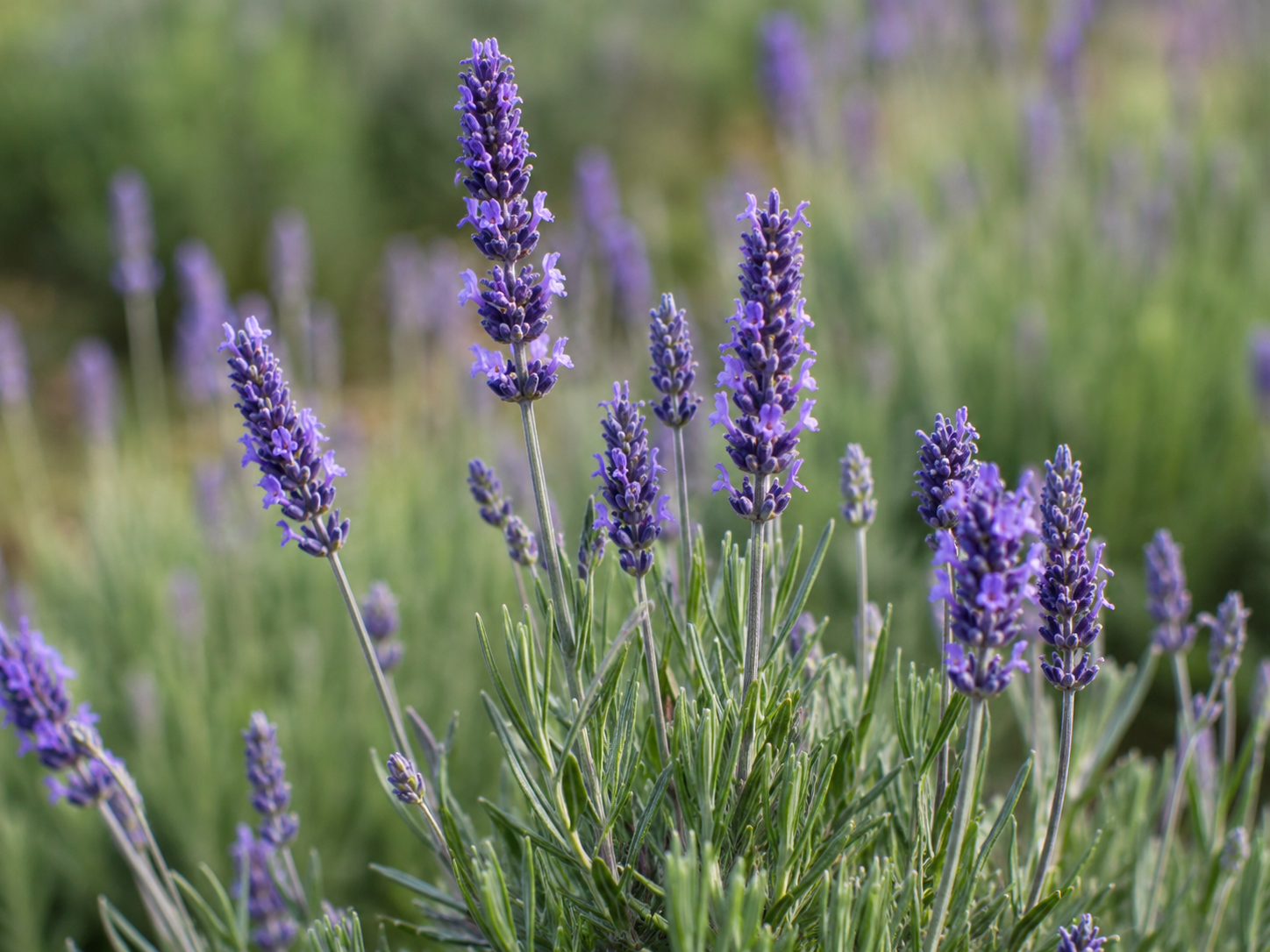
Lavender (Lavandula angustifolia) is one of the most recognizable and widely used botanicals in the world. Cultivated, valued, and used across Mediterranean, European, and Asian traditional medicine for generations, this fragrant perennial shrub has long been associated with household wellness, relaxation, and skin comfort. In modern pet herbal wellness, the delicate purple flowers of Lavender are primarily used to support the nervous system, encourage emotional relaxation, and maintain a calm, settled demeanor. Pet parents most often encounter this botanical in veterinarian-guided wellness conversations related to situational stress, loud environmental noises, travel, skin comfort, nighttime restlessness, and temporary physical tension.
Unlike structural herbs that focus on long-term tissue rebuilding, Lavender works primarily through aromatic volatile compounds that interact with sensory and regulatory pathways. It is commonly discussed for support of an overstimulated central nervous system. This matters for dogs and cats because companion animals navigate a world filled with intense sensory inputs, including thunderstorms, fireworks, vet visits, grooming visits, travel, and separation stress. Lavender offers a traditional way to help pets process temporary stressors while supporting relaxation and physical ease.
Lavender is an active botanical rich in volatile essential oil compounds. It carries important safety cautions related to preparation form, route of administration, and use around cats. For this reason, Lavender should be introduced only in pet-safe formats, at appropriate serving sizes, and under veterinary guidance, especially in households with cats or pets with complex health histories. It is a useful botanical tool, but it requires respect. By understanding both its calming qualities and its safety parameters, pet parents can make informed decisions with the supervision of their trusted veterinarian.
Ingredient Identification
-
Common name: Lavender, English Lavender, True Lavender
-
Botanical name: Lavandula angustifolia, formerly Lavandula officinalis or Lavandula vera
-
Plant family: Lamiaceae, Mint family
-
Plant part used: Dried flowers and flowering tops
-
Other common names: Garden lavender, narrow-leaved lavender, Xun Yi Cao
-
Native range: Mediterranean region, including Southern Europe and North Africa
-
Common growing regions: Temperate climates globally, widely cultivated in Europe, North America, and Australia
-
Common preparation forms: Alcohol-free liquid glycerites, dried flower powders, water infusions, hydrosols, and steam-distilled essential oils, which are highly restricted for pets
-
Main active constituents: Volatile essential oils, primarily linalool and linalyl acetate, monoterpenes including cineole and limonene, flavonoids, coumarins, and triterpenes
Associated Pet Wellness Categories
-
Calm and Mood Support: Lavender is studied for supporting normal nervous system function and a balanced, peaceful demeanor. It is often discussed when a pet needs help maintaining a stable disposition without heavy sedation. By interacting with central nervous system pathways, it helps support relaxation and emotional balance, allowing dogs and cats to feel more grounded in their environment.
-
Stress Response Support: Lavender is traditionally used for acute situational stress rather than as a heavy daily sedative. Whether a dog is facing a summer thunderstorm or a cat is stressed by travel, Lavender may offer targeted support for the temporary stress response. It can help support a quicker return to baseline behavior once the stressor has passed.
-
Skin and Coat Comfort: Lavender is used in holistic contexts to maintain clear skin and support normal tissue comfort. Animals experiencing seasonal environmental sensitivities may show localized skin redness, superficial irritation, or scratching. Lavender's soothing properties may support the outer skin layers when used topically in appropriate, diluted preparation forms.
-
Comfort and Sleep Support: Restful sleep supports cognitive function, immune health, and overall wellness. Lavender is sometimes discussed for pets that struggle to settle at night due to aging, environmental shifts, or sensory changes. Its gentle sleep-supportive actions may help encourage a natural transition into rest without disrupting normal morning alertness.
Common Pet Wellness Uses
-
Situational Stress and Noise Sensitivities: Lavender has a long, documented history of use as a relaxing and grounding botanical. In dogs, it is used for temporary situational triggers such as fireworks, travel stress, and separation distress. For cats, it may be carefully used through pet-safe environmental approaches or appropriate alcohol-free formats under professional guidance. Research in animal models and human trials demonstrates support for behavioral relaxation. The evidence level is considered strong for general calming action, though still emerging for pet-specific clinical trials.
-
Topical Skin Soothing and Washes: In holistic canine practice, cool lavender flower water infusions are sometimes used as topical rinses or compresses to comfort minor bug bites, hot spots, or seasonal skin flakiness. These preparations use the flower's comforting properties directly on the skin surface. Topical use should be diluted, pet-safe, and guided by a veterinarian or qualified professional.
-
Nighttime Restlessness in Senior Pets: In holistic small animal practice, Lavender liquid glycerites are sometimes used to support senior dogs and cats that experience disrupted sleep schedules or nighttime pacing, helping maintain a peaceful resting state when appropriate.
Best Known Herbal Actions
-
Relaxing Nervine: A nervine is an herb that supports, nourishes, or relaxes the nervous system. As a relaxing nervine, Lavender encourages a calm, rested state without causing deep, unnatural stupor. It helps support an overactive central nervous system, making it a traditional botanical for anxious, easily startled, or restless pets.
-
Carminative and Spasmodic Support: Carminative herbs are rich in volatile oils that support normal digestion, assist with occasional gas, and soothe minor intestinal twitching. Lavender may help encourage comfortable digestive transit, especially when stress affects the gut.
-
Vulnerary and Tissue Soother: Vulnerary herbs help comfort, protect, and support normal structural repair of irritated or stressed tissues, whether applied externally to skin surfaces or used internally to support mucosal linings.
Key Constituents and Why They Matter
The primary active compounds found in Lavender flowers are concentrated within the volatile oil fraction, especially linalool and linalyl acetate. These constituents are associated with Lavender's clean floral aroma and nervous-system-relaxing properties. Research indicates that linalool and linalyl acetate interact with central nervous system pathways, including calcium channels and glutamate receptors, to support relaxation and protect tissues from over-excitation. This calming pathway supports natural mechanisms of ease without creating dependency or chemical grogginess. Lavender may also support local tissue comfort, making it useful in both emotional and skin-focused wellness contexts when prepared safely.
Western Herbalism Profile
In Western herbalism, herbs are classified by taste, energetics, and tissue affinities to guide how they interact with the body. Lavender is characterized by a pungent, aromatic, and bitter taste with subtle astringency. Energetically, Western herbalists consider Lavender cooling to neutral in temperature and drying in nature. It has a pronounced tissue affinity for the central nervous system, brain, gastrointestinal tract, and skin.
Western herbalists have long indicated Lavender for acute nervous tension, digestive stagnation, heat-driven skin irritation, and behavioral overstimulation, especially when an irritable or frantic mind affects stomach comfort or muscle tension. It is viewed as an herb that cools hot, frantic energy, moves stagnant digestive gas, and supports a more balanced baseline in a sensitive body.
Western herbalists also maintain clear boundaries around its use. Because of its cooling, drying nature and strongly aromatic qualities, Lavender is formulated carefully to avoid over-drying natural fluids or causing digestive aversion in sensitive pets. It is commonly used as a daily or situational support in gentle preparation forms, such as water infusions, hydrosols, and alcohol-free glycerites, while avoiding internal use of concentrated essential oils in small animals.
Traditional Chinese Medicine Profile
Lavender is evaluated within modern Traditional Chinese Medicine (TCM) frameworks. Known in contemporary holistic practice as Xun Yi Cao, it is used by modern TCM practitioners and holistic veterinarians to understand patterns involving emotional tension, stagnation, and heat accumulation.
Through a TCM lens, practitioners view Lavender as having a bitter, pungent, highly aromatic flavor paired with cool, drying energy. It is believed to primarily enter the Heart, Liver, and Lung meridians. In TCM, the Liver supports the smooth flow of Qi and emotions, while the Heart houses the "Shen," which governs the spirit, mind, and cognitive clarity. When a pet shows hyper-reactivity, pacing, or behavioral volatility related to environmental stress, the system may be considered affected by "Liver Qi Stagnation" and "Liver Fire" disturbing the Shen. Lavender's traditional role is viewed as smoothing Liver Qi, clearing Heat, and calming the Shen.
Its affinity for the Lung meridian may also support patterns that appear as superficial skin redness or upper respiratory irritation. Despite these useful actions, TCM practitioners follow a clear rule: do not use in cases of severe Yin deficiency or profound internal dryness. If a pet shows chronic wasting, brittle tissues, or a dry cracked tongue without heat stagnation, the drying nature of Lavender may be inappropriate because it could further deplete internal fluids.
Ayurvedic Medicine Profile
While Lavender is native to the Mediterranean basin and is not a classical plant found in the ancient Ayurvedic pharmacopeia of tropical India, modern Ayurvedic practitioners and holistic veterinarians often analyze it using Ayurvedic principles to understand how it interacts with the three doshas: Vata, Pitta, and Kapha.
From an Ayurvedic perspective, Lavender is recognized for its bitter, pungent, and aromatic tastes (rasa), cooling energy (virya), and pungent post-digestive effect (vipaka). Its primary doshic action is strongly pacifying to Pitta and Kapha, while having a sensitive relationship with Vata. Pitta dosha rules heat, fire, and mental intensity. When elevated, it appears as irritability, tissue redness, and vascular heat. Kapha rules structure and fluid stability. When stagnant, it appears as heaviness, lethargy, and slow metabolic movement. Lavender's cooling, bitter, and aromatic properties help balance these patterns by cooling Pitta intensity and cutting through Kapha sluggishness.
Vata dosha rules the nervous system and movement. When aggravated by sudden change or loud noise, it may appear as fear, panic, and trembling. Lavender's grounding and nerve-relaxing properties may help settle acute Vata panic, but its cooling and drying nature should be used carefully with Vata-prone pets. If used continuously without warming or grounding support, it could over-dry a Vata animal's system. A modern Ayurvedic approach would reserve Lavender for acute Vata imbalance and Pitta behavioral intensity while monitoring the pet's moisture and vitality.
Research Summary
It is important to acknowledge that double-blind, peer-reviewed clinical trials evaluating Lavender directly in dogs and cats are currently limited, though steadily growing. The botanical and its isolated volatile compounds are recognized in global pharmacological manuals for supporting animal models during behavioral and sensory challenges.
-
Animal Research: Studies in rodent and canine models demonstrate that exposure to Lavender aromatics or its active compound linalool may support behavioral relaxation, decreased spontaneous locomotor activity, and normal cortisol levels during transport or isolation stress.
-
Human Research: Placebo-controlled, double-blind clinical trials and meta-analyses have evaluated standardized Lavender preparations for anxiety-related challenges, sleep quality scores, and overstimulated nervous pathways.
-
In Vitro Research: Laboratory studies have demonstrated that linalool interacts with specific calcium channels and nicotinic acetylcholine receptors while also providing free radical scavenging properties that may protect delicate neural tissues from oxidative stress.
A significant gap remains in large-scale clinical trials validating exact oral pharmacokinetic parameters for companion animals. Human and rodent research provides directional insight, but it does not guarantee pet efficacy or safety without veterinary guidance.
What the Research Means for Dogs
For dogs, the most relevant wellness categories for Lavender are calm and mood support during situational stress, noise sensitivity support, and topical skin comfort. Hyperactive dogs, working breeds, and senior dogs may experience environmental stress that affects behavioral stability, leading to pacing, excessive vocalization, or destructive chewing. The strongest support for Lavender's use comes from its documented role as a relaxing nervine, making it relevant for dogs needing situational emotional grounding. The weakest support lies in the lack of large, multi-center canine clinical trials validating exact oral extract parameters across all breeds. Properly diluted, pet-safe Lavender preparations may be useful for dogs, but veterinary oversight is necessary to rule out severe behavioral disorders, pain, or skin infections that require medical care.
What the Research Means for Cats
In cats, Lavender requires significant caution and precise use. Cats have unique liver metabolism and lack certain glucuronidation pathways needed to efficiently process some volatile terpenes, phenols, and essential oils. Because of this, an important safety distinction must be maintained: while dried flower preparations, appropriate alcohol-free glycerites, or very mild environmental exposure may be considered only under professional guidance, pure concentrated Lavender essential oil should not be given internally, applied topically, or diffused intensely around cats. Ingesting or absorbing concentrated essential oils can place a dangerous processing burden on the feline liver and may lead to toxicosis. Evidence for Lavender use in cats is supported mainly by holistic texts and conservative environmental thresholds, making veterinary guidance essential.
Forms Used in Pet Wellness
-
Tincture/Glycerite: Liquid extracts allow precise, drop-by-drop measuring, which matters for active herbs. Alcohol-free glycerites are often preferred for small animals because the natural sweetness of glycerin helps offset Lavender's intense aromatic flavor.
-
Powder/Capsule: Used to deliver whole-flower benefits or full-spectrum fractions. This form may be mixed into wet food, though sensitive pets may detect the floral scent.
-
Topical Salves or Hydrosols: Diluted hydrosols, also called flower waters, or infused oils are sometimes used in holistic canine practice as local skin mists or balms for skin comfort. Essential oils are not the same as hydrosols and should not be used casually on pets.
-
Chews: Chew formats are used in pet wellness for palatability and situational administration when appropriate for the individual pet.
Safety Profile
Lavender is an aromatic and relaxing botanical, and its general safety profile requires respect. It is associated with central nervous system pathways and requires species-appropriate preparation forms.
-
Dogs: Generally well-tolerated in pet-safe forms for situational or short-term use, but should be monitored for excessive lethargy or temporary drowsiness if given in large amounts.
-
Cats: Requires extreme caution. Pure concentrated essential oils should be avoided due to feline liver-processing limitations. Use only diluted, veterinarian-approved formats.
-
Puppies, Kittens, Pregnant or Nursing Pets: Avoid entirely. There is a lack of safety data regarding developing reproductive and embryonic systems, and traditional texts recommend avoiding highly active aromatic herbs during gestation.
-
Pets Scheduled for Surgery: Strong caution is required. Lavender should be discontinued before scheduled surgical procedures requiring anesthesia due to potential compounding sedative effects. Discuss discontinuation timing with your veterinarian.
-
Possible Adverse Effects: Mild gastrointestinal irritation if given in excess, temporary lethargy, excessive drooling or spitting if a cat encounters an unpleasant aromatic flavor, or localized skin redness if an undiluted topical exposure occurs.
-
When to Stop Use: Discontinue and consult a veterinarian if the pet shows vomiting, severe uncoordinated movement, profound lethargy, persistent loose stools, skin irritation, or sudden refusal to eat.
Please note: Before beginning any pet supplements, herbs, or nutritional changes, consult your veterinarian first. This educational information is intended to support informed conversations with your veterinary team and should not replace professional guidance.
Contraindications
-
Upcoming major surgical procedures or general anesthesia. Discuss discontinuation timing with your veterinarian.
-
Direct application or internal administration of pure, concentrated essential oils to cats.
-
Severe, unmanaged depressive behavioral states or advanced lethargy.
-
Pregnancy, lactation, and breeding animals.
Drug and Supplement Interactions
-
Sedatives and CNS Depressants: Lavender may increase the effects of barbiturates, benzodiazepines, and other calming or behavior-modifying medications, raising the risk of drowsiness or excessive sedation.
-
Other Calming Herbs: Lavender may have an additive effect if combined carelessly with other relaxing nervines, such as Valerian Root or Kava, so formulas should be balanced carefully.
-
Topical Medications: Concentrated topical applications may affect absorption of transdermal medications, requiring professional evaluation.
Dosage and Serving Context
Serving context depends heavily on species, weight, behavioral baseline, and whether the herb is prepared as raw dried flower powder, mild water infusion, hydrosol, or concentrated liquid glycerite. There is no safe single generic household serving size for Lavender. Concentrated glycerites are more potent than raw ground flower powders, and essential oils are far more concentrated than both. Lavender is primarily recommended for short-term, situational support or cycled use rather than as an indefinite everyday additive. When reference ranges are used, veterinary botanical texts focus on total pet weight (mg/kg) divided daily. Lavender is often administered before a known situational stressor or with food when appropriate. For the safest and most appropriate use, discuss Lavender with your veterinarian before giving it to your dog or cat. Your veterinarian can help evaluate your pet's health history, medications, age, species-specific risk, liver status, behavior patterns, sedation risk, skin status, and wellness goals before use.
How This Ingredient Fits into BARC Formulas
At LivHerbals, ingredients like Lavender are approached with care, respect for traditional use, and attention to pet-specific safety considerations. When an ingredient is used in a BARC formula, it is selected for a specific wellness purpose and balanced within the larger formula rather than treated as a standalone quick fix.
Ingredient Profile Summary
-
Best known for: Situational calming, noise sensitivity support, and gentle skin comfort.
-
Most relevant pet wellness categories: Calm support, stress response, skin and coat comfort, sleep maintenance.
-
Most relevant herbal actions: Relaxing nervine, carminative, vulnerary.
-
Research strength: Strong in animal and human models. Growing in clinical pet-specific validations.
-
Main cautions: Lavender should be used carefully and only in pet-safe forms. It may compound sedative medications, should be paused before major surgeries unless directed by a veterinarian, is not recommended for pregnant or nursing pets, and requires extreme caution in cats. Pure concentrated essential oils should not be used internally, topically, or intensely diffused around cats. Use this herb under veterinary guidance to support your pet's safety and well-being.
Pet Parent Takeaway
Lavender is a traditionally revered botanical known for supporting an overactive nervous system, emotional balance, and temporary situational stress comfort. When a dog or cat is overwhelmed by environmental triggers such as thunderstorms, fireworks, travel, or grooming visits, Lavender may offer short-term support within a broader wellness plan. It works best when used in precise, pet-appropriate preparation forms under professional guidance. To use Lavender safely and appropriately, partner with your veterinarian and consider your pet's full health picture before starting any new herb or supplement.
Disclaimer: This content is for educational purposes only and is not intended to diagnose, treat, cure, or prevent any disease. Always consult your veterinarian before starting any new supplement, herb, food, or wellness routine for your pet, especially if your pet is pregnant, nursing, taking medication, has a diagnosed condition, or is under veterinary care.
References
Pet-Specific Studies and Veterinary References
-
Wynn, S. G., & Fougère, B. J. (2007). Veterinary Herbal Medicine. Mosby Elsevier.
-
Basko, I. (2004). Fresh Plant Materia Medica.
-
Silver, R. J. (2014). Veterinary Clinical Uses of Aromatic Plants. Professional Veterinary Reference Series.
Human and Animal Studies
-
Woelk, H., & Schläfke, S. (2010). A multi-center, double-blind, randomized study of lavender oil preparation compared to lorazepam for generalized anxiety disorder. Phytomedicine.
-
Koulivand, P. H., Khaleghi Ghadiri, M., & Gorji, A. (2013). Lavender and the nervous system: A review of traditional and modern clinical data. Evidence-Based Complementary and Alternative Medicine.
-
Linck, V. M., et al. (2010). Effects of inhaled linalool in anxiety, social interaction and aggressive behavior in animal models. Phytomedicine.
Safety and Toxicology References
-
American Herbal Products Association (AHPA). Botanical Safety Handbook (2nd ed.).
-
European Medicines Agency (EMA). (2012). Assessment report on Lavandula angustifolia Mill., aetheroleum. Committee on Herbal Medicinal Products (HMPC).

Written by Angela Petersen
.%20Learn%20about%20its%20traditional%20calming%20uses,%20pet%20saf...)