MCT Oil for Dogs and Cats: Grounded Brain Vitality and Metabolic Energy Support
MCT Oil for Dogs and Cats: Ingredient Profile, Uses, and Safety
Explore this LivHerbals ingredient profile for MCT Oil. Learn about its cognitive, metabolic, skin-supportive uses, pet safety facts, and research.
Understanding MCT Oil in Pet Wellness
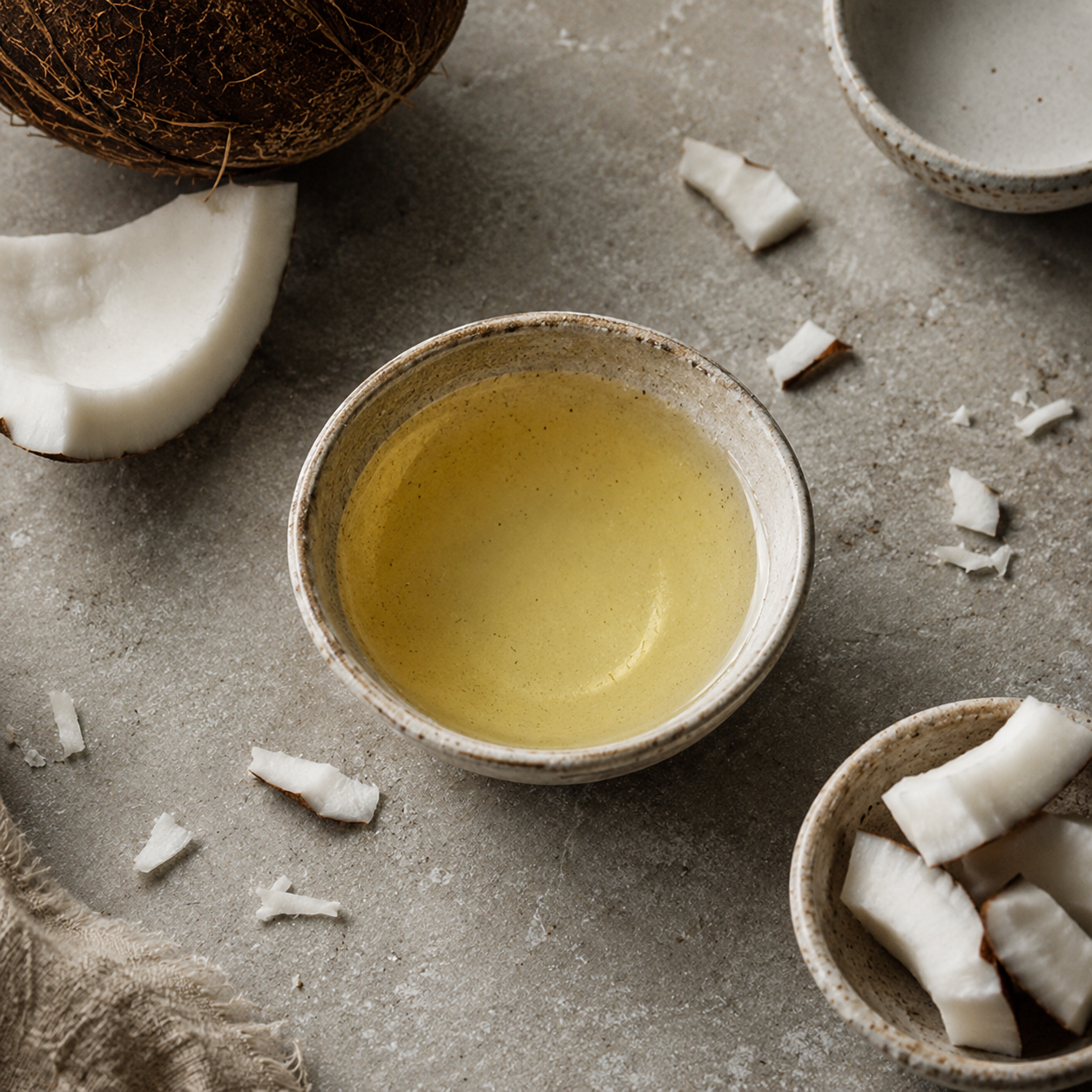
MCT Oil, or Medium-Chain Triglyceride Oil, is a highly bioavailable lipid source commonly derived from coconut or palm kernel oil. Unlike many whole-food oils, MCT Oil is a purified fraction made up of specific medium-chain fatty acids that the body processes differently than longer-chain dietary fats. In modern pet nutritional wellness, MCT Oil is primarily discussed for brain vitality, cellular energy metabolism, senior cognitive support, skin and coat comfort, and as a carrier oil for fat-soluble botanical ingredients.
Unlike traditional dietary fats that require more complex digestion through bile acids and pancreatic enzymes, medium-chain triglycerides are absorbed more rapidly and transported to the liver. There, they may be converted into ketones, which can serve as an alternative energy source for the body and brain. This matters for dogs and cats because senior pets may experience natural changes in brain energy metabolism, alertness, stamina, and day-to-day responsiveness as they age.
MCT Oil is generally well-tolerated when introduced slowly and used appropriately, but it is still a concentrated fat. It can cause loose stools, nausea, stomach gurgling, or digestive upset if added too quickly or given in excess. It also requires caution in pets with a history of pancreatitis, severe hyperlipidemia, advanced liver disease, or unexplained diarrhea. For this reason, MCT Oil should be introduced gradually, at pet-appropriate serving sizes, and under veterinary guidance, especially in pets with pancreatic, liver, digestive, or metabolic concerns.
Ingredient Identification
-
Common name: MCT Oil, Medium-Chain Triglycerides
-
Botanical name: Not applicable, purified lipid fraction typically derived from Cocos nucifera
-
Plant family: Arecaceae, Palm family, when derived from coconut
-
Plant part used: Fixed oil extracted from dried fruit endosperm, or coconut meat, and fractionated
-
Other common names: Fractionated coconut oil, medium-chain fatty acids, caprylic/capric triglyceride
-
Native range: Tropical coastal regions globally as a coconut source
-
Common growing regions: Subtropical and tropical climates across Asia, the Pacific Islands, and the Americas
-
Common preparation forms: Purified liquid oil, emulsified liquids, and microencapsulated powders
-
Main active constituents: Caprylic acid (C8) and capric acid (C10), with minor fractions of caproic acid (C6) and lauric acid (C12)
Associated Pet Wellness Categories
-
Cognitive Health and Brain Vitality: MCT Oil is studied for supporting normal cognitive function and mental sharpness, especially in aging animals. As pets enter their senior years, the brain's ability to use glucose efficiently may change. By providing medium-chain fats that can be converted into ketones, MCT Oil offers an alternate energy pathway that may help support attention, responsiveness, and cognitive wellness.
-
Cellular Energy and Metabolism Support: MCT Oil supports normal metabolic efficiency and physical stamina. Medium-chain fatty acids are rapidly oxidized for fuel and may help support cellular energy without relying on the same digestive pathway as many long-chain fats. This makes MCT Oil a useful nutritional ingredient to discuss for active dogs and senior pets needing metabolic support.
-
Skin, Coat, and Barrier Integrity Support: MCT Oil may help support normal skin moisture and coat condition by providing lipid support for the epidermal barrier. In appropriate formats, it may also be used topically as a light carrier oil for minor dryness or seasonal skin flakiness. Topical use should be pet-safe and should not replace veterinary care for wounds, infection, or severe irritation.
-
Nutrient Absorption and Delivery Enhancement: MCT Oil is commonly used as a carrier matrix for fat-soluble botanical compounds and nutrients. It helps dissolve and stabilize lipophilic ingredients, supporting smooth delivery and absorption when used in properly formulated pet wellness products.
Common Pet Wellness Uses
-
Senior Brain and Behavioral Support: MCT Oil has a documented history of use as a cognitive-supportive nutritional tool. In dogs, it is often discussed for senior changes such as nighttime pacing, altered sleep-wake cycles, temporary disorientation, or reduced focus. In cats, it may be considered for senior mental sharpness and age-related environmental confusion. Direct canine clinical data supports interest in MCTs for cognitive wellness.
-
Physical Stamina and Performance Support: MCT Oil is sometimes used in holistic veterinary nutrition for active dogs, sporting dogs, herding breeds, or agility dogs. Nutritional research and animal models suggest medium-chain fats may help support muscular energy utilization and endurance when used appropriately.
-
Skin Hydration and Topical Support: In holistic canine practice, high-quality MCT Oil may be used as a light topical base for dry ear flaps, seasonal skin flakiness, or cracked paw pads. It should be applied carefully and discontinued if licking, irritation, redness, or digestive upset occurs.
Best Known Nutritional Actions
-
Nootropic Energy Facilitator: A nootropic substance supports normal cognitive function, learning, memory, or mental clarity. MCT Oil functions as a metabolic nootropic by providing medium-chain fats that can be converted into ketone bodies, which may serve as an alternate fuel source for neurons.
-
Metabolic Catalyst: A metabolic catalyst supports efficient cellular energy production. MCT Oil enters portal circulation more directly than long-chain fats and may help support mitochondrial energy production.
-
Bioavailability Enhancer, or Carrier: MCT Oil is an effective carrier lipid for fat-soluble compounds. It helps stabilize certain botanical constituents and supports their delivery through the digestive tract.
Key Constituents and Why They Matter
The primary active compounds found in high-quality MCT Oil are medium-chain saturated fatty acids, especially caprylic acid (C8) and capric acid (C10). Their shorter carbon chain length gives MCT Oil its unique metabolic behavior, light texture, and stability.
Caprylic acid (C8) is often considered the most rapidly converted into ketones, while capric acid (C10) may support mitochondrial and cellular energy pathways. Unlike many long-chain fats, C8 and C10 are processed more directly through the liver and are less dependent on complex fat digestion. This is why MCT Oil is often discussed for senior brain support, energy metabolism, and nutritional delivery.
Western Herbalism Profile
MCT Oil is a modern fractionated lipid rather than a traditional whole-plant herb. Even so, holistic practitioners often use it as a carrier oil for botanical extracts and as a nutritional support tool. It is neutral in taste, light in texture, and less greasy than many traditional fixed oils. Energetically, it may be viewed as neutral to slightly cooling and moistening. It has a practical affinity for the brain, central nervous system, liver metabolism, and skin barrier.
Western herbalists and holistic formulators use MCT Oil when a light, stable carrier is needed for fat-soluble botanicals. It may also be used when a pet needs a gentle lipid source that is easier to incorporate than heavier whole oils. However, because it is still a concentrated fat, it should be measured carefully and introduced gradually.
Traditional Chinese Medicine Profile
MCT Oil is not a classical Traditional Chinese Medicine (TCM) remedy. However, modern holistic veterinarians may evaluate it using TCM-style energetic principles. Through this lens, MCT Oil may be viewed as bland to neutral in flavor with neutral energy. It may be considered to enter the Spleen, Stomach, and Kidney systems.
In TCM, the Spleen supports digestion and the transformation of food into Qi and Blood, while the Kidneys are associated with aging, essence, and vitality. When a senior pet shows mental slowing, lower stamina, or age-related depletion, modern practitioners may view MCT Oil as a clean nutritional support that provides energy without the heaviness often associated with richer fats.
Despite these potential uses, TCM practitioners would avoid or pause MCT Oil during active watery diarrhea, acute digestive upset, or patterns of heavy dampness where added oil may worsen digestive imbalance.
Ayurvedic Medicine Profile
MCT Oil is a modern nutritional ingredient, but its common source, coconut, has a long history in Ayurveda. Whole coconut oil is traditionally known as Narikela Taila. Fractionated MCT Oil differs from whole coconut oil because it is lighter and more refined.
From an Ayurvedic perspective, MCT Oil may be viewed as sweet in taste, cooling in energy, and smooth in quality. Compared with whole coconut oil, it is lighter and less heavy. Its qualities may help balance Vata dryness and Pitta heat when used appropriately, while being less Kapha-aggravating than heavier oils.
Vata dosha rules movement, dryness, and the nervous system. When aggravated by aging or stress, it may appear as anxiety, confusion, dryness, or irregular digestion. Pitta rules heat and intensity. MCT Oil's smooth and cooling qualities may help support these patterns, but it should still be used cautiously in pets with sluggish digestion, dampness, excess weight, or fat-sensitive conditions.
Research Summary
MCT Oil is supported by more pet-specific research than many traditional botanicals, especially in dogs.
-
Pet-Specific Research: Randomized, controlled canine studies have evaluated medium-chain triglycerides for senior cognitive function, attention, learning, and age-related behavioral changes. These studies support interest in MCTs as part of cognitive wellness strategies for senior dogs.
-
Animal Research: Rodent and laboratory models show that medium-chain fatty acids can increase circulating ketone bodies, support mitochondrial energy production, and help protect brain tissue from oxidative stress in aging models.
-
Human Research: Human studies have evaluated MCT Oil for cognitive fatigue, metabolic transitions, and ketone production. These studies provide additional context, though results should not be directly applied to pets without veterinary guidance.
A gap remains in large-scale feline-specific clinical trials. Canine and human data provide useful direction, but cats should be approached with careful serving control and professional guidance.
What the Research Means for Dogs
For dogs, the most relevant wellness categories for MCT Oil are senior cognitive health, behavioral focus, and physical endurance. Senior dogs may experience changes such as nighttime pacing, altered sleep patterns, reduced recognition, or reduced engagement. The strongest support for MCT Oil comes from canine research showing that dietary MCTs may support cognitive function and age-related behavioral scores. The weakest support lies in expecting MCT Oil to act as an immediate fix for sudden panic, pain, or acute behavior changes. Because it is a concentrated fat, pancreatic status, digestive tolerance, and total daily fat intake should be considered. Veterinary oversight is important, especially for dogs with pancreatitis history, hyperlipidemia, liver disease, diabetes, or unexplained gastrointestinal signs.
What the Research Means for Cats
In cats, MCT Oil's most relevant wellness categories are senior cognitive support, metabolic energy, and skin barrier maintenance. Senior cats may show cognitive or sensory changes through nighttime vocalization, disorientation, altered sleep patterns, or changes in routine. MCT Oil may offer a gentle alternate fuel pathway when used carefully. However, cats have unique metabolic needs and may be sensitive to concentrated fats. MCT Oil is odorless and mild, so it is often accepted when blended into wet food, but it should be introduced in very small amounts. Evidence for cats is supported mainly by canine clinical models, nutritional research, and holistic veterinary use rather than large feline-specific trials.
Forms Used in Pet Wellness
-
Liquid Oil: This is the most common and versatile form. Pure liquid MCT Oil can be measured carefully and added to meals in small amounts.
-
Botanical Carrier Oil Base: MCT Oil is often used to dissolve, stabilize, and deliver fat-soluble herbal constituents. This allows botanicals to be carried in a light oil base.
-
Microencapsulated Powder: MCT Oil can be converted into powder form for use in chews, meal mixers, and dry supplement formats.
-
Chews: Chew formats may be used in pet wellness for palatability and daily senior support when appropriate for the individual pet.
Safety Profile
MCT Oil is a concentrated nutritional fat. Its safety profile is generally strong when used gradually and appropriately, but digestive and pancreatic tolerance matter.
-
Dogs: Generally well-tolerated for longer-term use when introduced gradually. Dogs should be monitored for loose stools, nausea, gas, or stomach gurgling.
-
Cats: Generally well-received when properly scaled to small body weights. Start low, introduce slowly, and monitor appetite and stool quality.
-
Puppies and Kittens: Use only under veterinary direction. Growing animals generally do not need concentrated alternative fat support unless a veterinarian recommends it.
-
Pets with Pancreatitis Concerns: Use extreme caution or avoid unless specifically directed by a veterinarian. Pets with active pancreatitis, a history of pancreatitis, or severe fat sensitivity may not be appropriate candidates for concentrated oils.
-
Possible Adverse Effects: Loose stools, nausea, stomach gurgling, vomiting, appetite change, or abdominal discomfort if introduced too rapidly or given in excess.
-
When to Stop Use: Discontinue and consult a veterinarian if the pet shows vomiting, severe abdominal pain, persistent diarrhea, lethargy, bloating, or sudden refusal to eat.
Please note: Before beginning any pet supplements, herbs, or nutritional changes, consult your veterinarian first. This educational information is intended to support informed conversations with your veterinary team and should not replace professional guidance.
Contraindications
-
Active acute pancreatitis or history of severe fat-triggered pancreatitis unless specifically directed by a veterinarian.
-
Severe hyperlipidemia or known fat-metabolism disorder.
-
Advanced hepatic encephalopathy or severe end-stage liver failure.
-
Acute, undiagnosed diarrhea or severe gastrointestinal hypermotility.
-
Unmonitored use with multiple high-fat supplements.
Drug and Supplement Interactions
-
Lipid-Lowering Medications: MCT Oil may theoretically interact with medications used to manage blood lipid levels if given in large or unmonitored amounts.
-
Fat-Soluble Medications: MCT Oil may influence absorption of certain fat-soluble medications or nutrients. Discuss timing and use with a veterinarian if your pet takes prescription medications.
-
Other High-Fat Supplements: Use caution when combining MCT Oil with large amounts of fish oil, vegetable oils, whole coconut oil, or other fat-rich supplements. Total daily fat intake should be balanced to protect digestive and pancreatic comfort.
Dosage and Serving Context
Serving context depends heavily on species, weight, age, pancreatic history, liver status, digestive tolerance, metabolic baseline, and total daily fat intake. There is no safe generic household serving size for MCT Oil. Introducing too much too quickly can cause digestive upset, especially in small dogs or cats. MCT Oil is typically started in very small amounts, often measured in drops or fractions of a teaspoon, and increased gradually over one to two weeks if tolerated. It should usually be given with food to support digestive comfort. For the safest and most appropriate use, discuss MCT Oil with your veterinarian before giving it to your dog or cat. Your veterinarian can help evaluate your pet's health history, medications, age, pancreatic risk, liver status, stool quality, cognitive needs, and wellness goals before use.
How This Ingredient Fits into BARC Formulas
At LivHerbals, ingredients like MCT Oil are approached with care, respect for nutritional function, and attention to pet-specific safety considerations. When an ingredient is used in a BARC formula, it is selected for a specific wellness purpose and balanced within the larger formula rather than treated as a standalone quick fix.
Ingredient Profile Summary
-
Best known for: Supporting normal cognitive function, alternative brain fueling, and cellular energy metabolism.
-
Most relevant pet wellness categories: Cognitive health, senior vitality, cellular energy, skin and coat comfort.
-
Most relevant nutritional actions: Nootropic energy facilitator, metabolic catalyst, bioavailability enhancer.
-
Research strength: Strong in canine clinical trials, animal models, and human data. Feline-specific research is more limited.
-
Main cautions: MCT Oil is generally well-tolerated, but it is still a concentrated fat. It should be introduced gradually, balanced against total daily fat intake, and avoided or used only under veterinary direction in pets with active pancreatitis, severe hyperlipidemia, advanced liver disease, or acute diarrhea. Use this ingredient under veterinary guidance to support your pet's safety and well-being.
Pet Parent Takeaway
MCT Oil is a well-studied nutritional ingredient known for supporting cellular energy, brain vitality, senior cognitive wellness, and fat-soluble nutrient delivery. When a dog or cat is navigating the senior years, changes in focus, reduced stamina, or skin barrier dryness, MCT Oil may offer targeted support within a broader wellness plan. It works best when introduced slowly, given with food, measured carefully, and balanced with the pet's full diet and health history. To use MCT Oil safely and appropriately, partner with your veterinarian and consider your pet's full health picture before starting any new supplement, oil, or wellness routine.
Disclaimer: This content is for educational purposes only and is not intended to diagnose, treat, cure, or prevent any disease. Always consult your veterinarian before starting any new supplement, herb, food, or wellness routine for your pet, especially if your pet is pregnant, nursing, taking medication, has a diagnosed condition, or is under veterinary care.
References
Pet-Specific Studies and Veterinary References
-
Pan, Y., et al. (2010). Efficacy of dietary medium-chain triglycerides for supporting cognitive function in senior dogs: A randomized, controlled clinical trial. British Journal of Nutrition.
-
Wynn, S. G., & Fougère, B. J. (2007). Veterinary Herbal Medicine. Mosby Elsevier.
-
Silver, R. J. (2014). Veterinary Clinical Uses of Functional Lipids and Medium-Chain Fatty Acids. Professional Veterinary Reference Series.
Human and Animal Studies
-
Henderson, S. T. (2008). Ketone bodies as an alternative fuel for brain cells: Metabolic mechanisms in animal models of cognitive decline. Neurotherapeutics.
-
Reger, M. A., et al. (2004). Effects of beta-hydroxybutyrate on cognition in memory-impaired human adults after acute medium-chain triglyceride administration. Neurobiology of Aging.
Safety and Toxicology References
-
American Herbal Products Association (AHPA). Botanical Safety Handbook (2nd ed.).
-
National Research Council. (2006). Nutrient Requirements of Dogs and Cats. National Academies Press.

Written by Angela Petersen